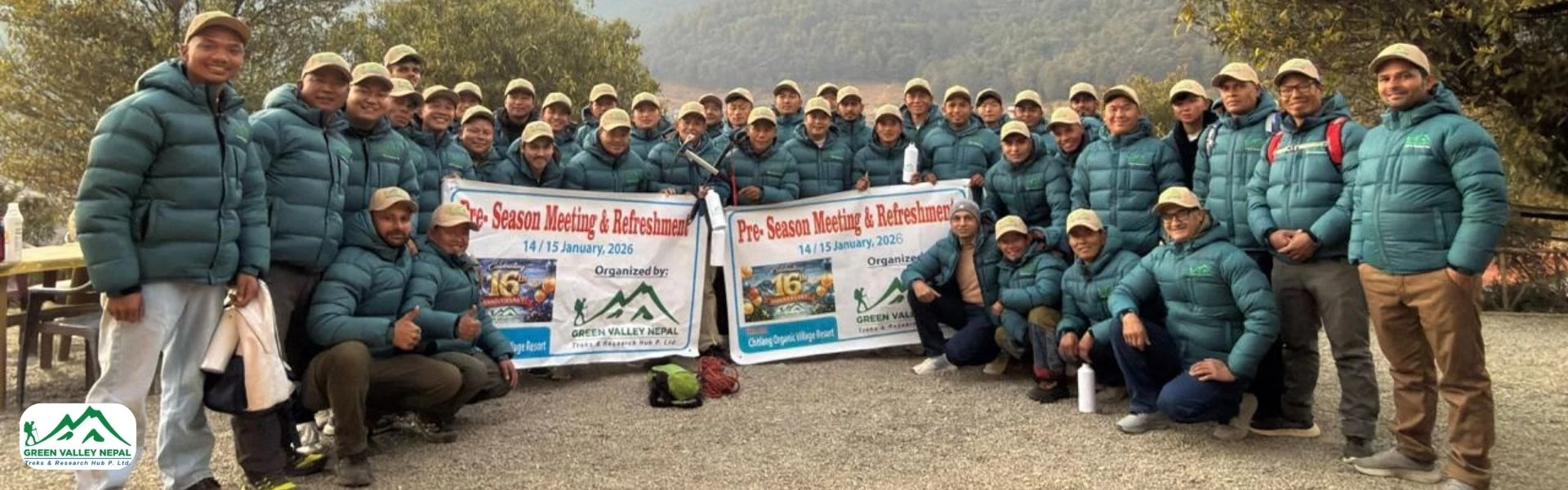
Training Location: Chitlang Organic Village Resort
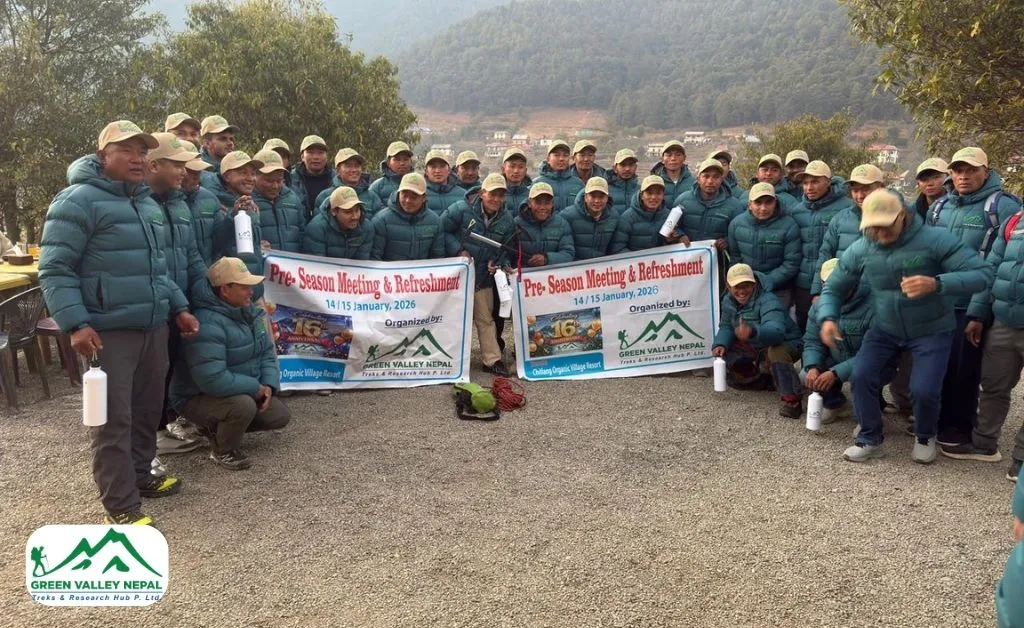
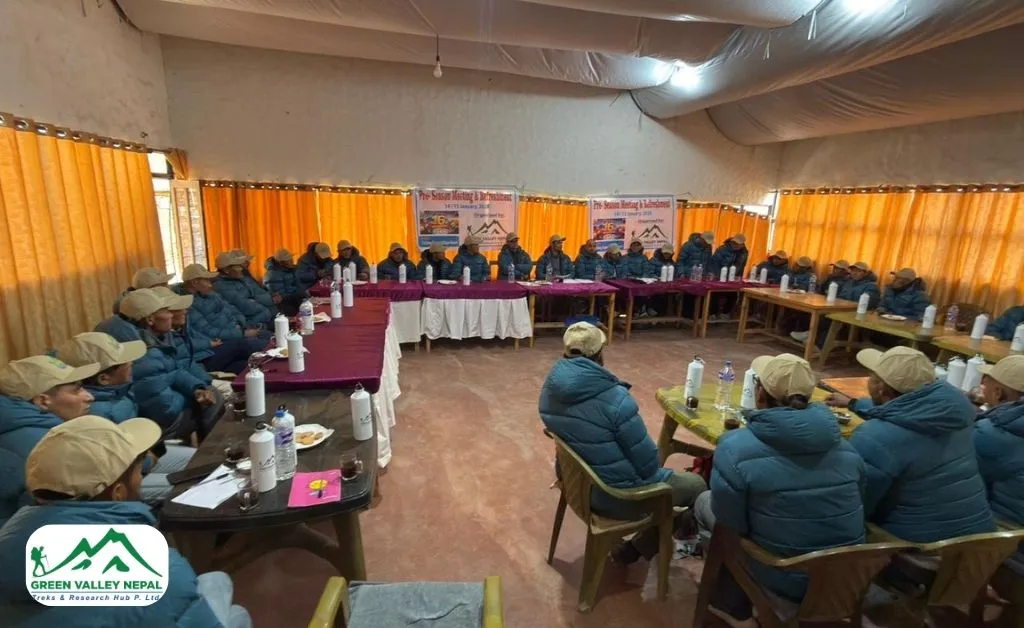
The training was held at Chitlang Organic Village Resort in Makwanpur, a serene destination nestled in the hills southwest of Kathmandu Valley. This peaceful setting provided the perfect environment for focused learning while offering our team a chance to experience sustainable tourism practices firsthand. The resort's organic approach and community-based hospitality align perfectly with Green Valley Nepal Treks' commitment to responsible tourism.
Key Focus Areas of the Training Session
Our expert guides and team members actively participated in various intensive training modules designed to enhance their technical expertise and safety protocols. The session covered the following critical areas:
First Aid and Emergency Medical Response
Comprehensive first aid training formed the foundation of our safety preparation. Our team received hands-on training in:
- Basic life support (BLS) techniques, including CPR and rescue breathing
- Wound management for cuts, abrasions, and fractures is common in trekking
- Recognizing and treating hypothermia and frostbite
- Administering emergency medications for common trekking ailments
- Creating emergency action plans for various scenarios
- Evacuation protocols and coordination with rescue services
This training ensures our guides can respond swiftly and effectively to medical emergencies, providing critical care until professional medical help arrives.
High Altitude Risk Management
Understanding and mitigating high-altitude risks is paramount for safe Himalayan trekking. The training included comprehensive modules on:
- Acute Mountain Sickness (AMS): Identifying early warning signs such as headaches, nausea, dizziness, and loss of appetite
- High Altitude Pulmonary Edema (HAPE): Recognizing severe symptoms, including shortness of breath, chest tightness, and persistent cough
- High Altitude Cerebral Edema (HACE): Understanding neurological symptoms such as confusion, loss of coordination, and altered consciousness
- Preventative strategies, including proper acclimatization schedules, hydration protocols, and gradual ascent planning
- Emergency descent procedures when altitude sickness progresses
- Use of medications such as Diamox and dexamethasone in emergencies
Our guides are now equipped to monitor trekkers' health vigilantly and take immediate action when altitude-related symptoms appear.
Rope Use and Technical Climbing Skills
Safety on technical terrain requires mastery of rope handling and climbing techniques. Our team practiced:
- Rope systems: Setting up fixed lines, belaying, and rappelling techniques
- Knot tying: Essential knots including figure-eight, bowline, prussik, and clove hitch
- Anchoring techniques: Creating secure anchor points for safety systems
- Rope management: Proper coiling, storage, and maintenance of climbing ropes
- Assist techniques: Helping trekkers navigate difficult sections safely
- Self-rescue methods: Techniques for extracting oneself or others from precarious situations
These skills are essential for safely guiding trekkers through challenging passes and technical sections of popular routes.
Ice Axe Proficiency
Ice axe skills are critical for snow and ice travel in the high Himalayas. Training included:
- Self-arrest techniques: Stopping a slide on steep snow slopes
- Ice axe placement: Proper techniques for secure footing on ice
- Cutting steps: Creating footholds in hard snow and ice
- Dagger and cane positions: Using the ice axe for balance and support
- Glissading: Controlled sliding techniques for efficient descent
- Ice axe maintenance: Keeping the tool sharp and in optimal condition
Our guides demonstrated proficiency in all ice axe techniques, ensuring they can confidently lead trekkers across glaciated terrain.
Emergency Response and Crisis Management
Effective emergency handling can make the difference between a resolved situation and a tragedy. Our training covered:
- Emergency communication: Using radios, satellite phones, and emergency beacons
- Incident reporting: Documenting emergencies accurately for rescue coordination
- Triage procedures: Prioritizing care when multiple people need assistance
- Helicopter evacuation protocols: Preparing landing zones and coordinating with pilots
- Search and rescue basics: Techniques for locating missing trekkers
- Crisis communication: Keeping clients calm and informed during emergencies
- Post-incident procedures: Proper documentation and follow-up care
This comprehensive emergency training ensures our team can handle unexpected situations with professionalism and composure.
Map Reading and Navigation
Advanced navigation skills prevent getting lost and enable efficient route planning. Our guides enhanced their abilities in:
- Topographic map interpretation: Reading contour lines, identifying terrain features, and estimating distances
- Compass navigation: Taking bearings, triangulation, and correcting for declination
- GPS usage: Operating GPS devices, waypoint marking, and track recording
- Route planning: Selecting optimal paths considering weather, terrain, and group capabilities
- Altimeter use: Monitoring elevation gain and estimating arrival times
- Alternative route identification: Planning backup routes for adverse conditions
- Night navigation: Using headlamps and natural features for orientation in darkness
With these refined skills, our guides ensure that trekkers can confidently navigate remote trails, minimizing risks and maximizing the adventure experience.
Proper Use of Oximeters and Oxygen Systems
Health monitoring equipment is essential for high-altitude safety. Our team received detailed training on:
- Pulse oximeter operation: Correctly measuring oxygen saturation (SpO2) and heart rate
- Interpreting readings: Understanding normal vs. concerning values at different altitudes
- Oxygen cylinder systems: Setting up, operating, and troubleshooting supplemental oxygen equipment
- Oxygen administration: Proper delivery methods and flow rates for different conditions
- Equipment maintenance: Checking pressure levels, replacing regulators, and ensuring system integrity
- Decision-making protocols: When to administer oxygen and when to initiate descent
This training ensures our guides can effectively monitor trekkers' vital signs and respond appropriately to deteriorating conditions.
Why Does This Training Matter for Trekkers?
At Green Valley Nepal Treks, we are committed to providing safe, well-guided, and professionally managed treks. This pre-season training ensures:
- Enhanced safety protocols across all trekking routes and difficulty levels
- Expert guides with up-to-date technical skills and emergency response capabilities
- Comprehensive risk management for high-altitude and technical terrain
- Professional medical response to health emergencies
- Confident leadership that allows trekkers to focus on enjoying their adventure
- A seamless trekking experience backed by rigorous preparation and training
Role of Our Expert Team
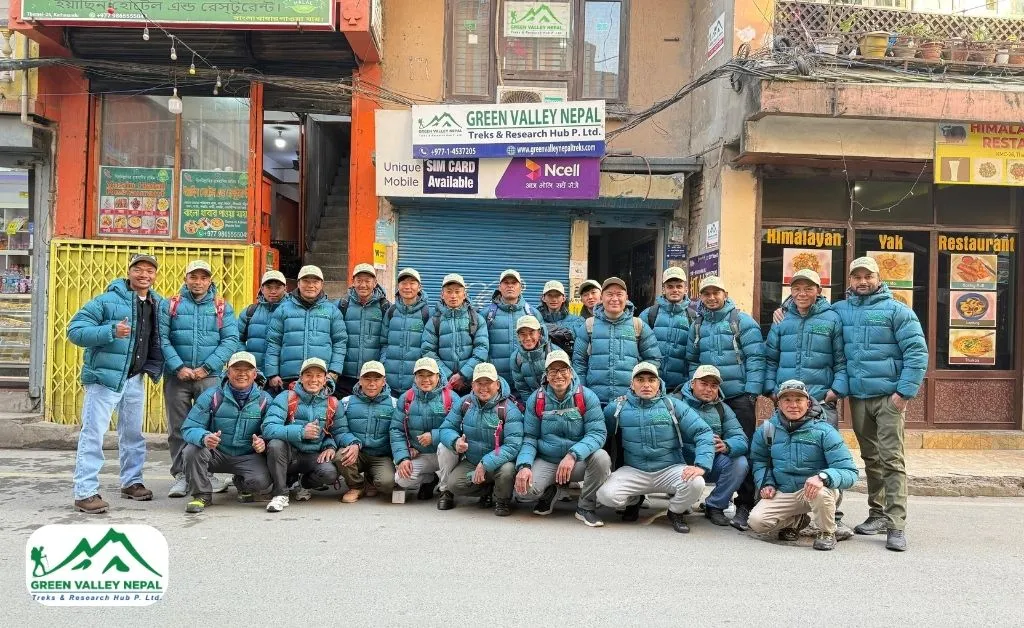
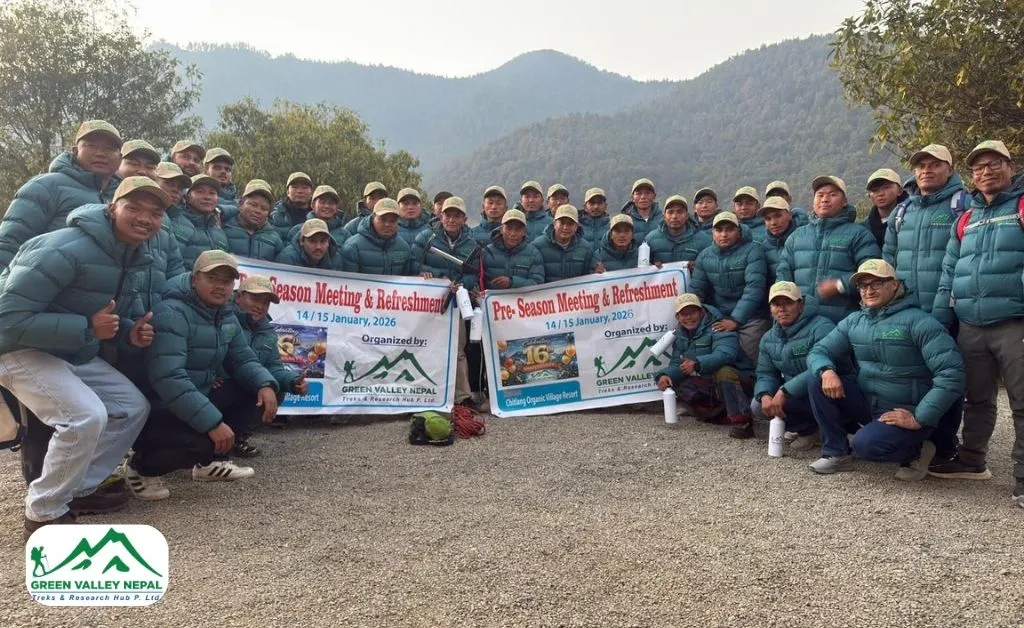
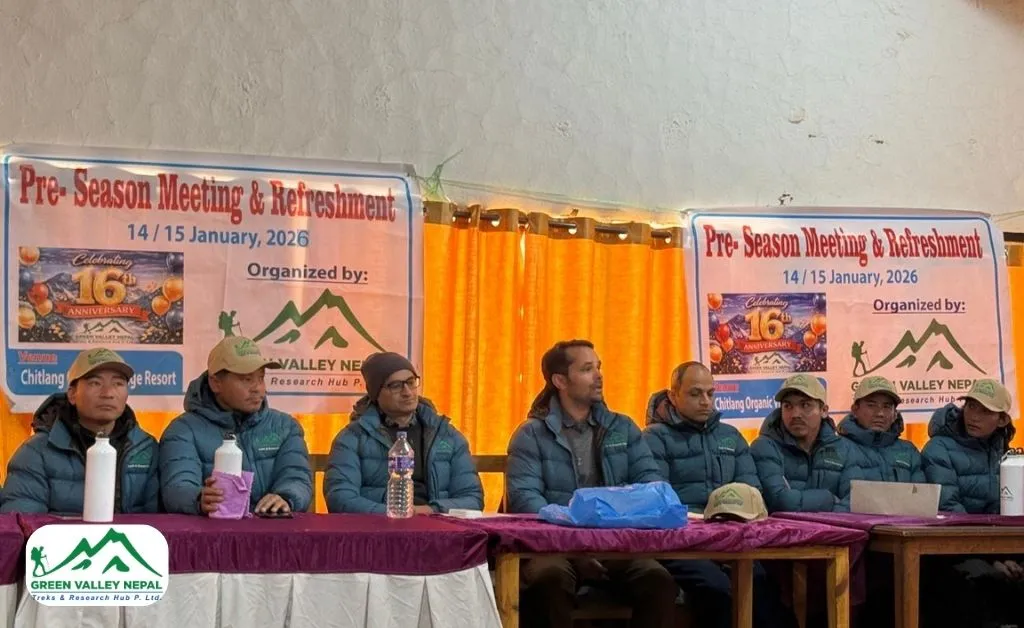
Our team, consisting of highly experienced trekking and climbing guides, actively participated in the training with enthusiasm and dedication. Their commitment to continuous learning reflects our organization's culture of excellence. Each guide demonstrated their skills through practical exercises, scenario-based training, and peer evaluation.
The collaborative atmosphere at Chitlang fostered knowledge sharing and team bonding, creating a unified approach to safety and service quality. This camaraderie translates directly into better coordination during actual treks, benefiting every client we serve.
Recognition: Best Employee of the Year
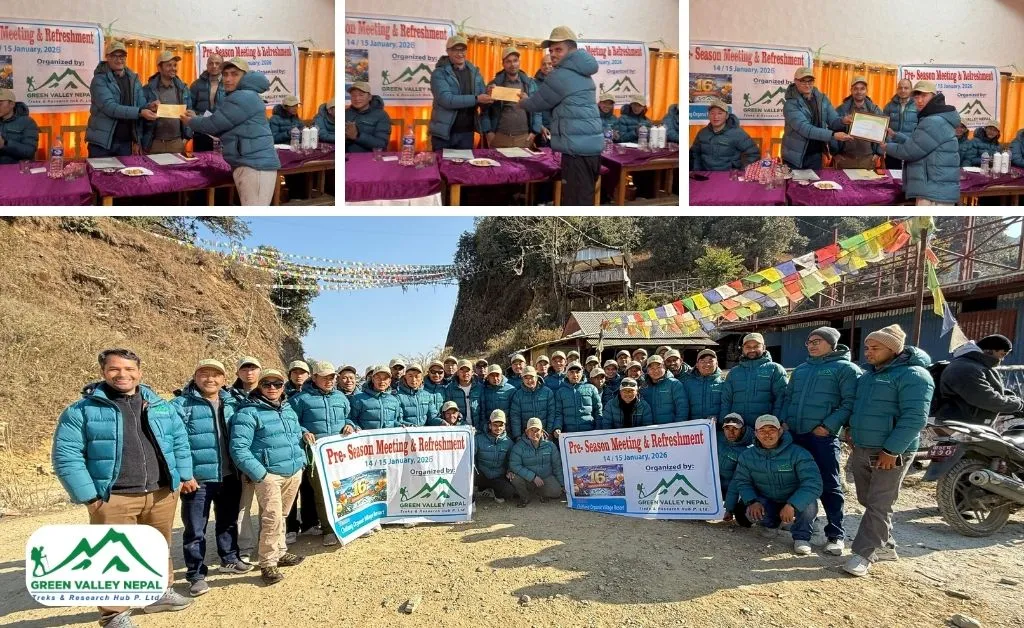
A special highlight of our pre-season meeting was the recognition of our Best Employee of the Year. This prestigious acknowledgment celebrates individuals who have demonstrated exceptional dedication, professionalism, and passion for their work throughout the previous trekking season.
Our award recipients have consistently gone above and beyond in their service to our guests, showing unwavering commitment to safety, customer satisfaction, and team collaboration. Their strong dedication and genuine passion for guiding have truly set an example for the entire staff, inspiring everyone to elevate their performance and put forth greater effort in satisfying our guests.
These outstanding team members embody the core values of Green Valley Nepal Treks:
- Exceptional guest care that transforms treks into unforgettable experiences
- Unwavering commitment to safety in all conditions and circumstances
- Professional excellence in technical skills and knowledge
- Positive attitude that uplifts both colleagues and trekkers
- Cultural ambassadorship that showcases the best of Nepali hospitality
We believe that recognizing excellence motivates the entire team to strive for higher standards. The achievements of our best employees remind us all why we do this work—to create life-changing adventures while ensuring every trekker returns home safely with memories that last a lifetime.
This acknowledgment not only celebrates individual achievement but also reinforces our collective commitment to being the best trekking company in Nepal. We are proud of all our staff and grateful for the dedication each person brings to their role.
Looking Forward to Spring 2026!
With this successful pre-season meeting and training session, Green Valley Nepal Treks is fully prepared to welcome adventurers for the Spring 2026 trekking season. We extend our gratitude to everyone who participated and contributed to making this training session a success. Our team is now ready to lead with confidence, expertise, and professionalism on every trek.
Whether you're planning to conquer the Everest Base Camp, circumnavigate Annapurna, explore the remote Manaslu region, or venture into any other Himalayan destination, you can trust that our guides have the skills, knowledge, and dedication to ensure your safety and satisfaction.
Conclusion
Our Pre-Season Meeting and Training at Chitlang Organic Village Resort was more than just an educational session; it was a commitment to excellence, safety, and professionalism. With each passing season, Green Valley Nepal Treks strives to enhance the trekking experience by ensuring our team stays up to date on the latest trekking techniques, safety protocols, and emergency response procedures.
The comprehensive nature of this training, from first aid and high-altitude risk management to rope work and navigation, demonstrates our unwavering commitment to trekker safety. We don't just meet industry standards; we strive to exceed them.
A big thank you to all our dedicated guides, staff, and trainers who participated in this valuable session. Your dedication allows us to continue leading extraordinary trekking adventures across Nepal while maintaining the highest safety standards.
As we step into the Spring 2026 trekking season, Green Valley Nepal Treks is fully prepared to guide adventurers through some of the world's most breathtaking landscapes. Whether it's the iconic Everest Base Camp Trek, the challenging Annapurna Circuit Trek, the remote Manaslu Circuit, or any other Himalayan adventure, we promise an unforgettable, safe, and professionally managed experience.
Frequently Asked Questions (FAQs)
- Why is pre-season training important for trekking guides?
Pre-season training equips trekking guides with essential skills in navigation, high-altitude risk management, first aid, and technical climbing. Regular training ensures guides stay current with best practices and can provide safe, enriching experiences for trekkers of all levels.
- How does Green Valley Nepal Treks ensure safety during treks?
We conduct rigorous pre-season training covering first aid, altitude sickness management, technical climbing skills, and emergency protocols. Our guides carry essential safety equipment, including oximeters, oxygen cylinders, first aid kits, communication devices, and rescue gear. We also maintain strict safety protocols throughout all treks.
- What should trekkers know about altitude sickness before their trip?
Trekkers should understand that altitude sickness can affect anyone regardless of fitness level. Symptoms include headaches, nausea, dizziness, and fatigue. Prevention includes proper acclimatization, adequate hydration, gradual ascent, and listening to your body. Our guides monitor all trekkers and adjust itineraries as needed for safety.
- What kind of first aid training do your guides receive?
Our guides receive comprehensive first aid training, including CPR, wound management, fracture stabilization, hypothermia and frostbite treatment, emergency medication administration, and evacuation procedures. They are trained to handle the most common trekking injuries and medical emergencies.
- How do guides use rope and ice axe skills during treks?
Rope and ice axe skills are essential for safely crossing technical sections, snow slopes, and glaciated terrain. Guides use these skills to set up safety systems, assist trekkers through challenging areas, and ensure everyone's security on exposed or slippery terrain.
- What emergency equipment do guides carry?
Guides carry comprehensive emergency equipment, including first aid kits, oximeters, supplemental oxygen systems, communication devices (radios/satellite phones), emergency shelters, and technical rescue gear. All equipment is checked and maintained regularly.
- What makes Green Valley Nepal Treks stand out in the trekking industry?
Green Valley Nepal Treks prioritizes safety through rigorous training, expert guidance, and comprehensive risk management. Our commitment to responsible tourism, sustainable practices, and personalized service, combined with our guides' deep local knowledge and technical expertise, makes us a trusted choice for Himalayan adventures.