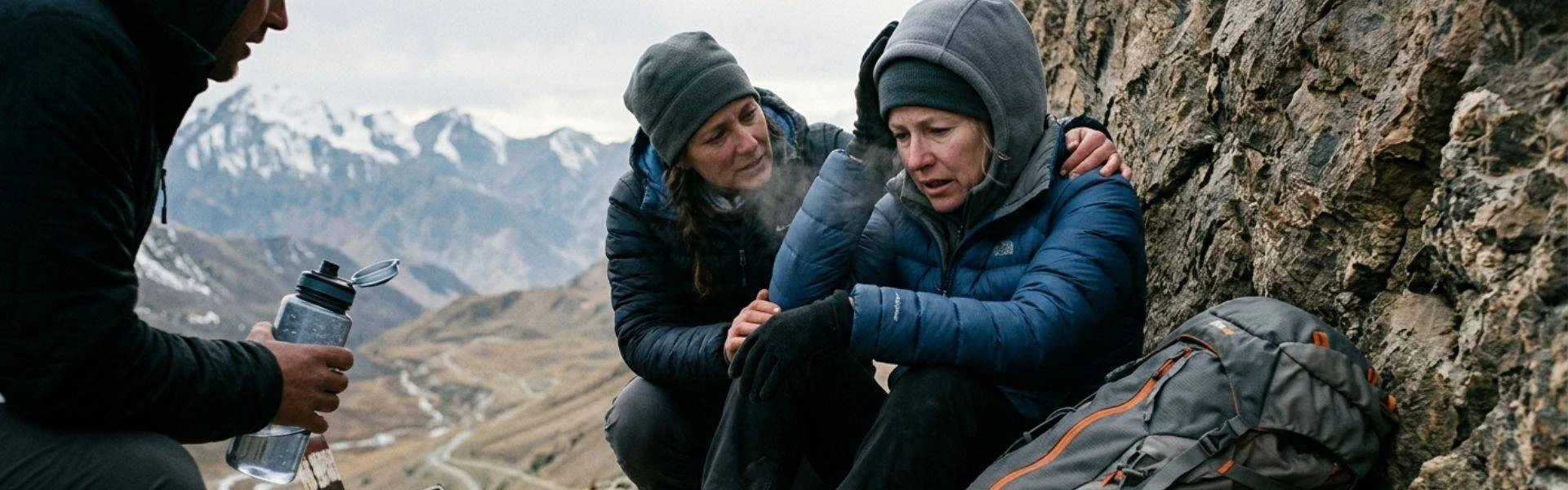
What Is Altitude Sickness and Why Does It Happen in Nepal?
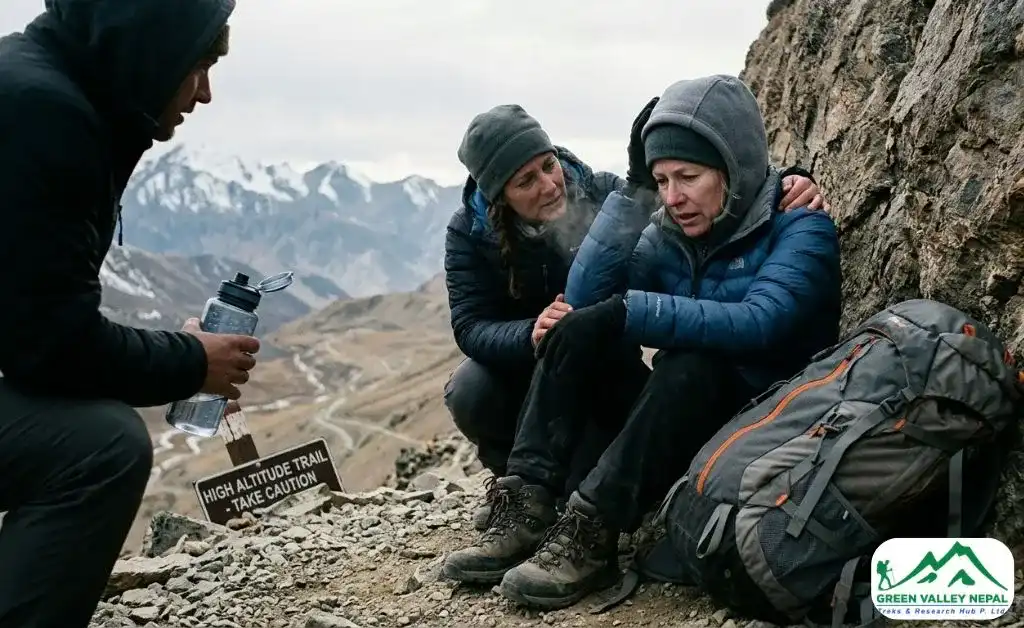
Altitude sickness, also referred to as mountain sickness, medically known as Acute Mountain Sickness (AMS), occurs when your body climbs faster than it can adapt to lower oxygen levels. As you gain elevation, atmospheric pressure drops, and each breath delivers less oxygen. Most people start feeling the effects above 2,500 meters. The risk of high-altitude illness rises sharply above 3,500 meters, and becomes serious above 4,000 meters.
Nearly all popular treks in Nepal cross these thresholds. The Everest Three Passes Trek takes you to 5,420 meters at Cho La Pass. Annapurna Full Circuit Trek crosses Thorong La at 5,416 meters. Even the relatively accessible Annapurna Base Camp trek reaches 4,130 meters. Poon Hill trek, which many consider an easy trek in Nepal, sits at 3,210 meters.
There are three levels of altitude-related illness you need to know:
- AMS (Acute Mountain Sickness): The most common form that shows symptoms like headache, nausea, fatigue, dizziness, and poor sleep.
- HACE (High Altitude Cerebral Oedema): It is a severe form of AMS that leads to brain swelling. Signs include confusion, loss of coordination, and altered consciousness. This is a medical emergency.
- HAPE (High Altitude Pulmonary Oedema): It causes fluid in the lungs. Symptoms include shortness of breath at rest, persistent cough, and chest tightness. Also, in a medical emergency.
AMS does not care how fit you are. The marathon runner and the first-time trekker face the same risk. Preparation and acclimatization are the only variables you can actually control.
How to Prevent Altitude Sickness While Trekking in Nepal?
Acclimatization: Add Rest Days into Your Itinerary
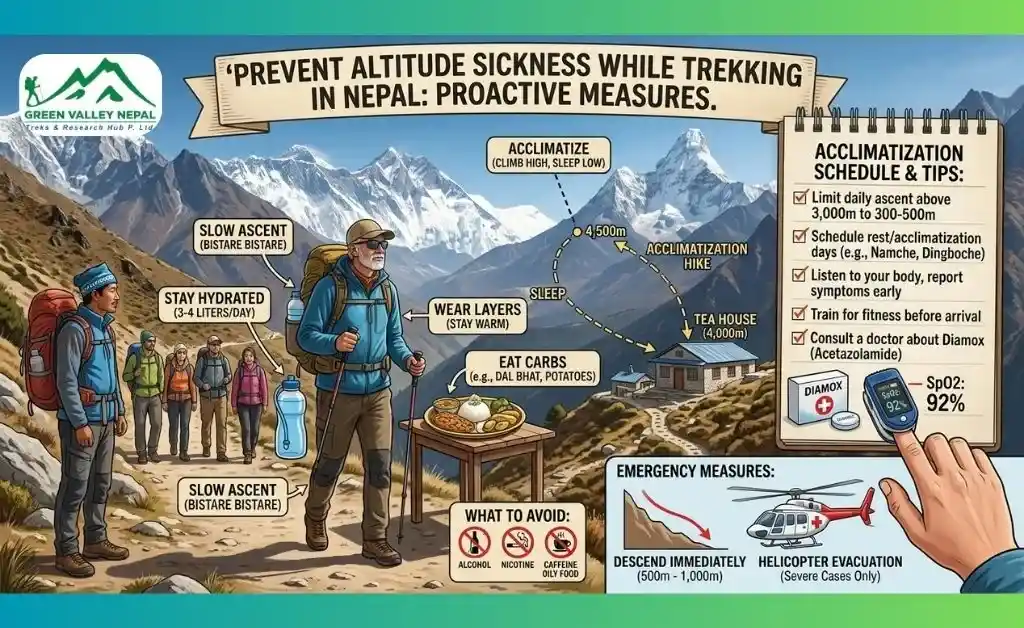
For every 1,000 meters gained above 3,000 meters, plan at least one rest day. Proper acclimatization while trekking at elevation is not optional. It is the foundation of everything. No medication, no level of fitness, and no amount of mental toughness replaces it.
Acclimatization means giving your body enough time at each altitude to adapt before moving higher. Do not treat these rest days as wasted time. They are the reason you reach your goal. Companies that remove acclimatization days to offer a shorter, cheaper trek are removing your safety margin, not your downtime.
The 300–500 Meter Rule
Above 3,000 meters, limit your sleeping altitude gain to 300–500 meters per day. This is the standard recommendation from the Wilderness Medical Society. On most well-planned Nepal trek itineraries, this is already built in. If you are booking a trek, watch out for agencies that compress the schedule to save days. Those ‘savings’ increase your AMS risk dramatically.
Climb High, Sleep Low
This is the best-known acclimatization technique used on all major Nepal trekking routes. On rest days, you hike to a higher elevation during the day and return to sleep at a lower altitude. For example, during the acclimatization day in Namche Bazaar (3,440m) on the EBC trek, you hike up to the Everest View Hotel at around 3,880 meters, spend a few hours there, then descend to sleep at Namche. This active method trains your body to handle the altitude you will face in the following days.
Stay Hydrated: One of the Easiest Altitude Sickness Prevention Tips
Dehydration makes altitude sickness worse. At high altitude, your body loses water faster through increased breathing and low humidity. Most trekkers underestimate how much fluid they actually need.
Drink 3 to 4 litres of water per day while trekking above 3,000 metres. Drink consistently throughout the day rather than in large amounts at once.
Avoid alcohol and limit caffeine above 3,000 metres. Both cause dehydration.
Electrolyte drinks and warm fluids like ginger tea and lemon honey tea are popular among trekkers in Nepal teahouses. They are easy on the stomach and help with hydration. The traditional Nepali Dal Bhat (lentil soup and rice) is also an excellent high-altitude meal: high in carbohydrates, easy to digest, and usually freshly cooked.
Eat Right at Altitude: Diet Tips That Actually Help
Many trekkers lose their appetite above 3,500 meters. It is a common symptom of mild AMS and altitude adjustment. Even when you do not feel hungry, eating is important for maintaining energy and supporting your body’s adaptation.
Your body uses carbohydrates more efficiently than fats or proteins at high altitude. Focus on carb-rich foods: rice, noodles, bread, potatoes, and lentils. Eat small portions frequently rather than large, heavy meals. Light meals are easier to digest in thin air.
Aim for 7 to 9 hours of sleep each night. Sleep quality often decreases at altitude due to irregular breathing patterns. Avoid sedatives. If sleep is a major issue, discuss options with your doctor before the trek.
Should You Take Altitude Sickness Medication?
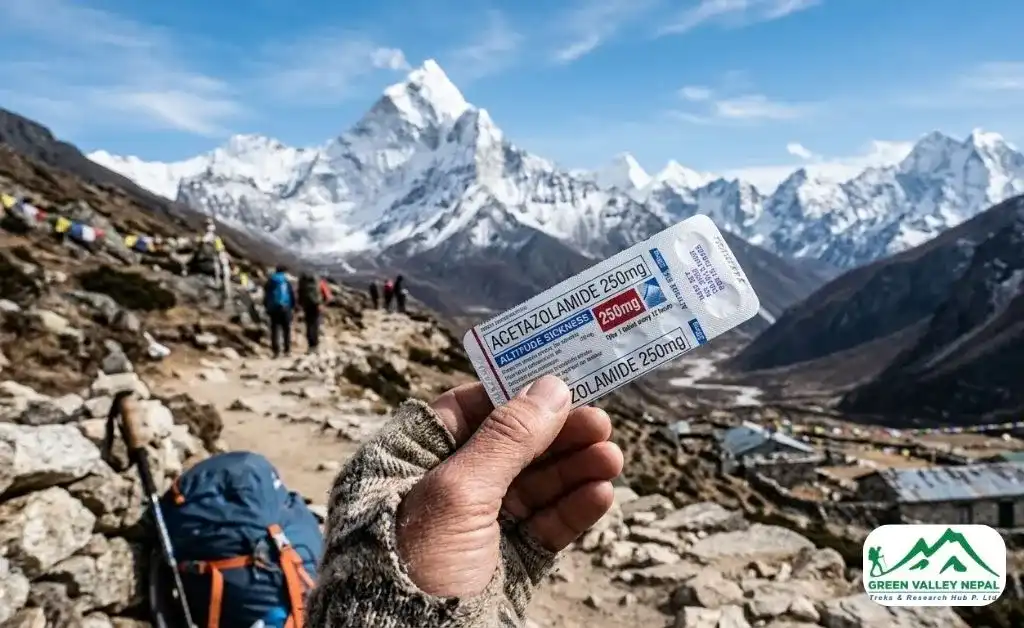
Consult with your physician about trekking in Nepal before departure, particularly if you take medication or you have a health condition. It is not good to downplay or hide anything from your doctor, as he/she will need the complete picture to give you proper advice. Also, remember that in remote trekking locations, there is almost no medical infrastructure so it becomes very difficult to get help if you go to higher altitudes. If altitude sickness sets in, doctors typically turn to one of three medications: Diamox (Acetazolamide), Nifedipine, or Dexamethasone.
Diamox (Acetazolamide)
Diamox works by mildly acidifying your blood, which signals your body to breathe faster and more deeply. It also helps stabilize your breathing patterns, which tend to become irregular at high elevations, particularly during sleep. If you are planning for trekking at a higher altitude, doctors usually recommend starting Diamox the day before and continuing it for a few doses until your symptoms ease.
Possible side effects include: tingling sensations, fatigue, nausea, increased urination, and in some cases, drowsiness or kidney-related issues.
Nifedipine
Nifedipine is a calcium channel blocker commonly used to treat high-altitude pulmonary edema, a dangerous buildup of fluid in the lungs. It works by lowering the pressure in the blood vessels of the lungs, making it easier to breathe. As it lowers blood pressure, avoid standing up quickly after taking it, sudden movements can cause a rapid drop and make you dizzy. Other side effects to watch for include coughing, shortness of breath, irregular heartbeat, headache, and general weakness.
Important: If you have significant coronary artery disease, avoid Nifedipine. Speak with your doctor before using it.
Dexamethasone
Dexamethasone is a corticosteroid, a potent anti-inflammatory used to reduce swelling and treat conditions ranging from breathing problems and allergic reactions to neurological and skin issues. In the context of altitude sickness, trekkers and mountaineers use it to manage symptoms when ascending to extreme elevations.
Side effects can include blurred vision, increased appetite, dizziness, joint pain, sleep disruption, and in some cases, changes to the menstrual cycle.
Know the Symptoms of Altitude Sickness before You Trek
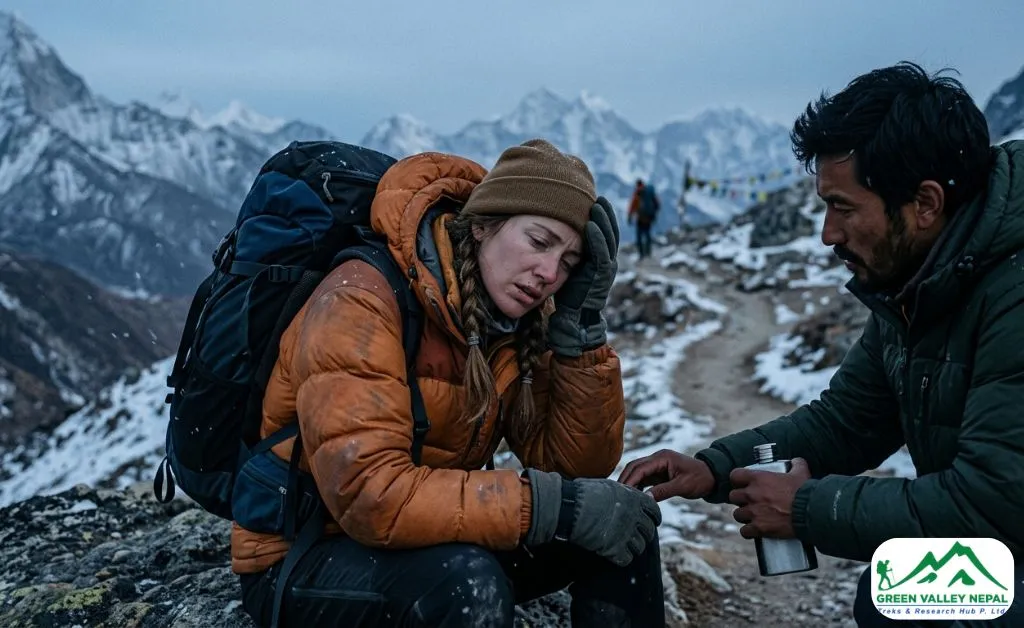
Many trekkers dismiss early AMS symptoms as tiredness or dehydration. That dismissal is where problems start. Recognizing the warning signs early is one of the most important AMS prevention strategies you have.
Mild AMS Symptoms (Usually Appear Within 6–12 Hours of Arriving at a Higher Altitude):
- A headache that painkillers do not fully relieve
- Nausea or loss of appetite
- Fatigue and weakness
- Dizziness
- Difficulty sleeping
Warning Signs That Require Immediate Action (Possible HACE or HAPE):
- Confusion or disorientation
- Loss of coordination or a staggering walk
- Shortness of breath at rest
- Persistent cough or chest tightness
- Blue lips or fingernails
The golden rule: never ascend with AMS symptoms. If symptoms are getting worse overnight, descend. Even dropping 300 to 500 meters can stop AMS from progressing. If you see signs of HACE or HAPE, descend immediately, as far and as fast as safely possible, even at night.
Monitor Your Health Daily: Tools That Help at High Altitude
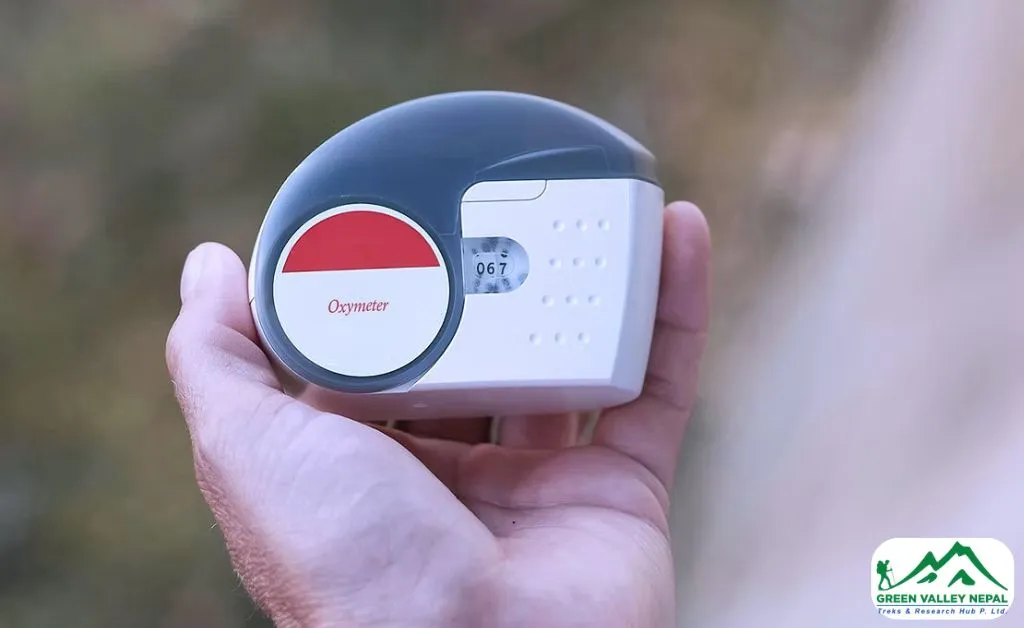
Experienced guides on Nepal treks use a pulse oximeter to check your blood oxygen saturation (SpO2) every morning and evening above 3,500 meters. This small clip-on device gives a real-time reading of how well your blood is carrying oxygen.
General SpO2 reference points for trekking in Nepal:
- Above 95%: healthy at sea level
- 80%+ at 5,000 meters: generally acceptable
- Below 70%: concern. Rest and monitor closely.
- Below 65%: descend immediately
Your guide should also use the Lake Louise AMS Scoring System, a standardized questionnaire that rates symptoms like headache, nausea, fatigue, dizziness, and sleep quality. A score above 5 means rest and monitor. A score above 8 means descend.
Beyond the devices, experienced Sherpa and guides watch less obvious signs: walking rhythm, appetite, mood, and whether trekkers are making sense in conversation. These human observations often catch problems before the numbers do.
Choose the Right Itinerary for Your Trek in Nepal
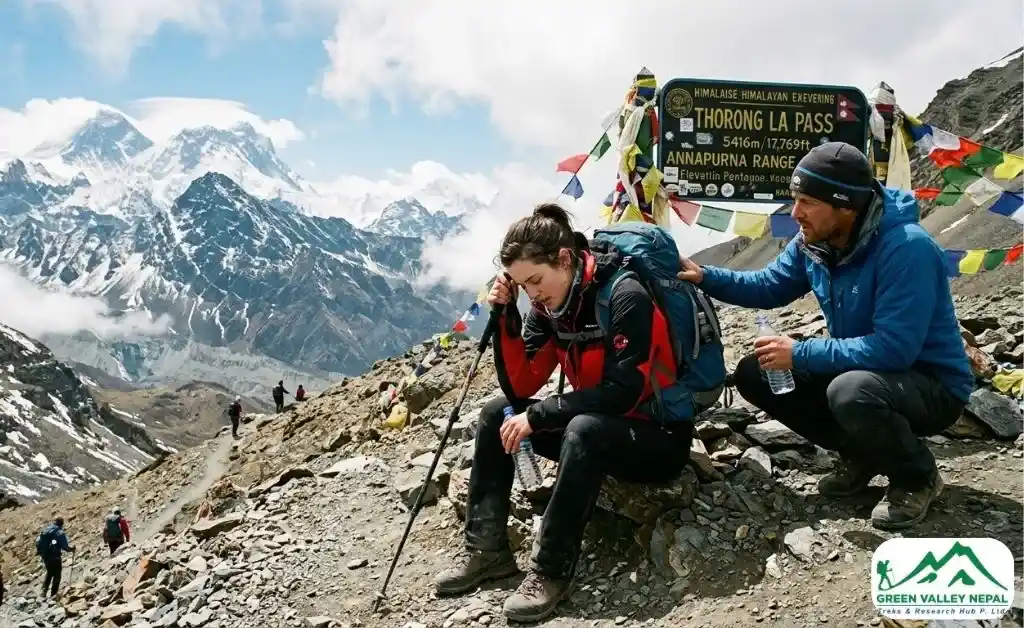
One of the most overlooked altitude sickness prevention tips for trekking is choosing an itinerary that is actually designed for your safety, not just for price or speed.
A 14-day EBC itinerary is safer than a 12-day one. The extra days are acclimatization insurance. On the Annapurna Circuit, do not skip the Manang rest day even if you feel fine. Do not take shortcuts through road-accessible sections that bypass gradual ascent, particularly after Chame in 2026, where new road extensions now make it possible to drive further than recommended.
For beginner trekkers, starting with a lower-altitude route like Poon Hill or Langtang Valley before attempting EBC or Annapurna Circuit is a sensible approach. It lets your body build some altitude experience and helps you understand how your body responds before you commit to a more serious route.
Since 2023/2024, all regulated trekking routes in Nepal require a licensed, registered guide. Your guide is your primary safety officer. They are trained in wilderness first aid and altitude management. When your guide advises you to rest or turn back, listen to them. Their judgment is not a suggestion.
Pre-Trek Preparation Tips for Altitude Readiness
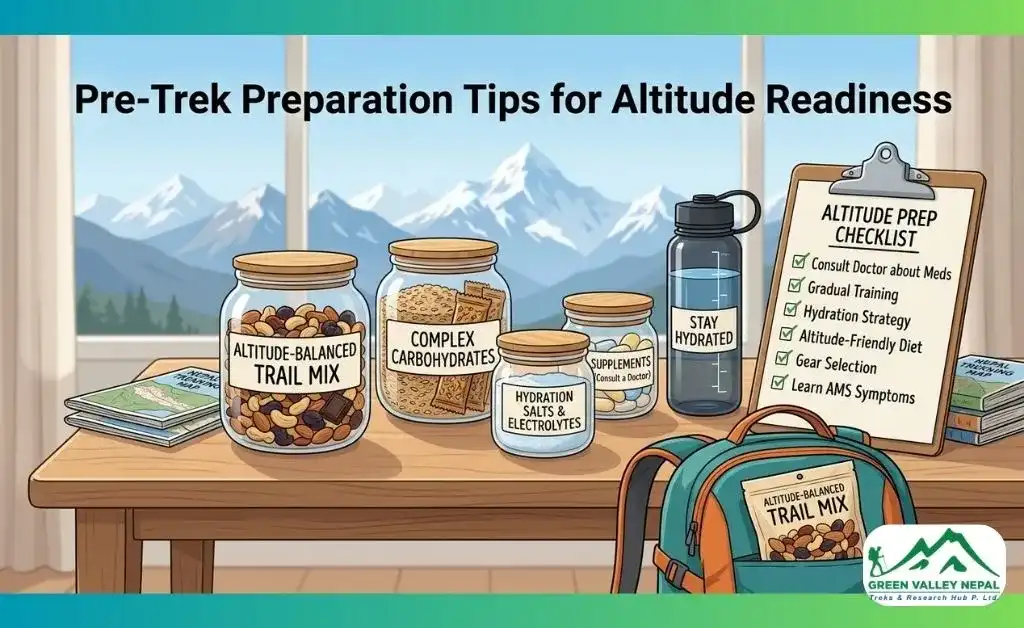
Good preparation before your trek gives you the best possible start. Here is what to do before you land in Kathmandu:
- Visit a travel medicine doctor, 4 to 6 weeks before your trek. Discuss whether Diamox is appropriate for you and get a prescription if needed.
- Inform your doctor of any conditions: kidney or liver disease, sulfa allergy, high blood pressure, diabetes, or heart conditions. These affect your altitude risk and medication options.
- Build cardiovascular fitness. While fitness does not prevent AMS, being physically fit means you will handle the demands of trekking better and be less exhausted, which helps your body focus energy on acclimatization.
- If possible, spend a night or two at a moderate altitude (above 2,000 meters) before starting your main trek. Flying straight from a sea-level city to Lukla (2,860m) and beginning immediately is not ideal.
- Get comprehensive trekking insurance that covers high-altitude evacuation and helicopter rescue up to at least 6,000 meters. In Nepal, helicopter evacuation can cost USD 3,000 to 5,000 without insurance. Since 2026, travel insurance with these specific coverage minimums has been mandatory for permit issuance.
To get prepared more effectively, you can also take a look at our blog: Recommended Packing List for Nepal Trekking. This blog will demonstrate the best trekking boots as well as the best trekking jacket for trekking in Nepal.
What to Do If You Get Altitude Sickness on the Trail?
Despite all precautions, AMS can still happen. Knowing what to do when it does is part of your preparation.
- Stop ascending immediately. Rest at your current altitude.
- Tell your guide exactly how you feel. Be honest about your symptoms.
- Take ibuprofen (400mg) or paracetamol for a headache. If painkillers are not touching the headache, that is a warning sign.
- Drink more water and rest.
- If symptoms do not improve after a full rest day, or if they are getting worse, descend 300 to 500 meters.
- For signs of HACE or HAPE, descend immediately and call for emergency evacuation.
Never descend alone. Always stay with your guide or a trekking partner. And never push through worsening symptoms because you are determined to reach your goal. The mountain will be there next season. Your health is the only thing that matters.
Final Thoughts: Respect the Altitude, Enjoy the Trek
Altitude sickness prevention in Nepal is not about being fearful of the mountains. It is about respecting them. The Himalayas are extraordinary, and with the right approach, the vast majority of trekkers reach their goals safely and come home with memories that last a lifetime.
Acclimatize slowly. Drink enough water. Be honest with your guide. Listen to your body. Do not let pride push you past the warning signs your body is giving you. The trekkers who make it to Base Camp or over the high passes are not the fittest or the most determined. They are the ones who went slowly, rested when they needed to, and trusted the process.
Frequently Asked Questions (FAQs)
- How do you prevent altitude sickness while trekking in Nepal?
Ascend slowly, limit sleeping altitude gain to 300–500 m/day above 3,000 m. Take rest days at key stops during your trek, drink 3–4 liters of water daily, and never push on if AMS symptoms appear. Consult your doctor about Diamox (acetazolamide) before your trek for added protection.
- At what altitude does altitude sickness start in Nepal?
Symptoms can begin above 2,500 m, become common above 3,500 m, and rise sharply above 4,000 m. Major treks in Nepal such as Everest Base Camp, Annapurna Circuit, and Manaslu Circuit, all cross these thresholds, so altitude awareness is essential.
- What are the first signs of altitude sickness on a trek?
The earliest sign of AMS is a persistent headache that doesn't fully clear with painkillers, followed by nausea, loss of appetite, fatigue, dizziness, and poor sleep. Symptoms usually appear 6–12 hours after reaching a new altitude. Stop ascending and rest if any occur.
- How long does it take to acclimatize to high altitude in Nepal?
Expect 1–3 days per significant altitude gain. Above 3,000 m, allow one rest day per 1,000 m of sleeping altitude gained. At 5,000 m and above, full acclimatization can take up to a week, so a well-spaced itinerary with built-in rest days is critical.
- What should you avoid at high altitude while trekking in Nepal?
Avoid alcohol and sedative sleeping pills above 3,000 m, as they both suppress breathing and worsen dehydration. Don't skip rest days, don't exceed 500 m of daily sleeping altitude gain, and never ignore worsening AMS symptoms hoping they'll pass. Always follow your guide's advice to rest or descend; it can save your life.