Choosing when to trek the Annapurna Circuit matters more than on shorter Himalayan treks. The circuit crosses Thorong La Pass at 5,416 meters, where weather conditions determine success or failure. Unlike lower-altitude treks, where rain just makes things uncomfortable, at Thorong La, heavy snow can completely close the pass, forcing route changes or trek cancellations.
Understanding the best time to visit the Annapurna Circuit requires examining weather patterns, temperature ranges, rainfall, and conditions at Thorong La Pass throughout the year.
The Annapurna Circuit trek crosses multiple climate zones from subtropical lowlands at 800 meters to the high-altitude Thorong La Pass, making seasonal timing critical for trek success.
This complete guide answers "when is the best time to trek Annapurna Circuit" with detailed month-by-month weather analysis, temperature data at different elevations, rainfall patterns, crowd levels, and specific recommendations based on your travel style and preferences.
Quick Seasonal Overview of Annapurna Circuit Trek
- Best months overall: October and April.
- Most reliable weather: October-November.
- Best for rhododendrons: March-April.
- Emptiest trails: December-February, June-August
- Thorong La Pass is safest: October-November, March-May
- Most challenging: January-February (extreme cold), July-August (heavy rain)
- Peak season pricing: October and April see 15-20% higher costs for guides, accommodations, and flights.
Understanding the Best Time to Visit the Annapurna Circuit
The best time to take part in the Annapurna Circuit Trek depends on the weather conditions at Thorong La Pass. At 5,416 meters, Thorong La Pass is the highest point this journey, and pass conditions determine whether you can complete the full circuit or need alternative routes.
When considering the best time for the Annapurna Circuit trek, you must evaluate:
- Weather stability: How predictable and safe are conditions?
- Temperature ranges: Can you handle the cold at altitude?
- Rainfall patterns: Will monsoon rains affect the trail?
- Thorong La Pass accessibility: Is the pass open and safely crossable?
- Crowd levels: Do you prefer busy trails or solitude?
- Cost variations: Are you trekking during peak or off-season pricing?
Annapurna Circuit Trek in Spring (March to May)
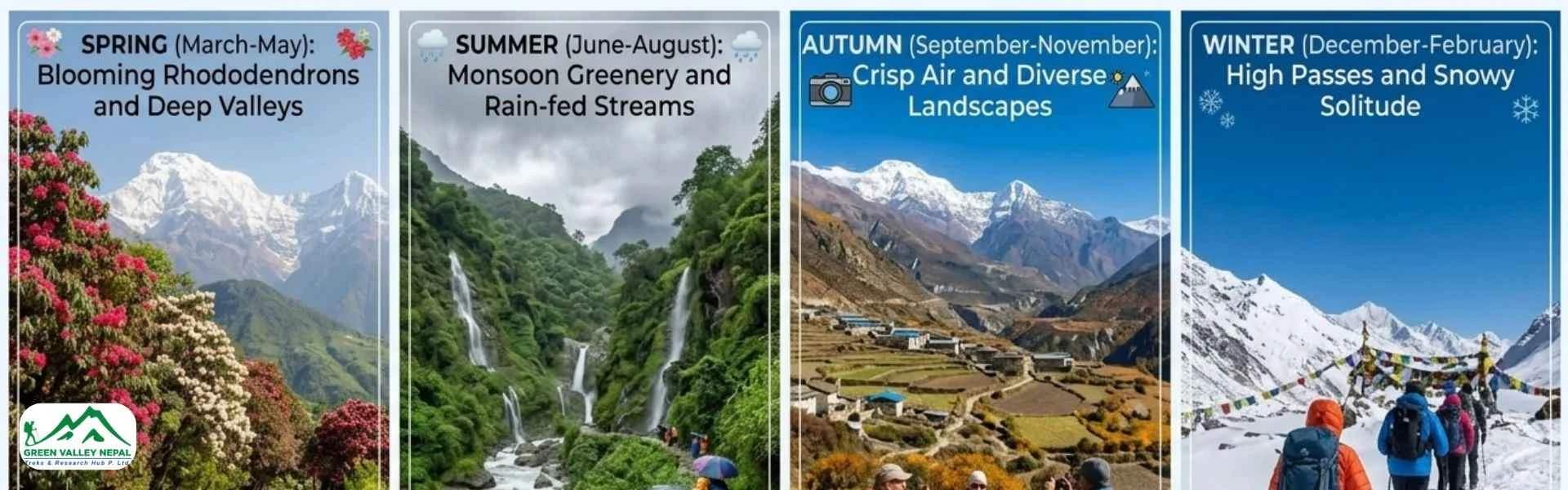
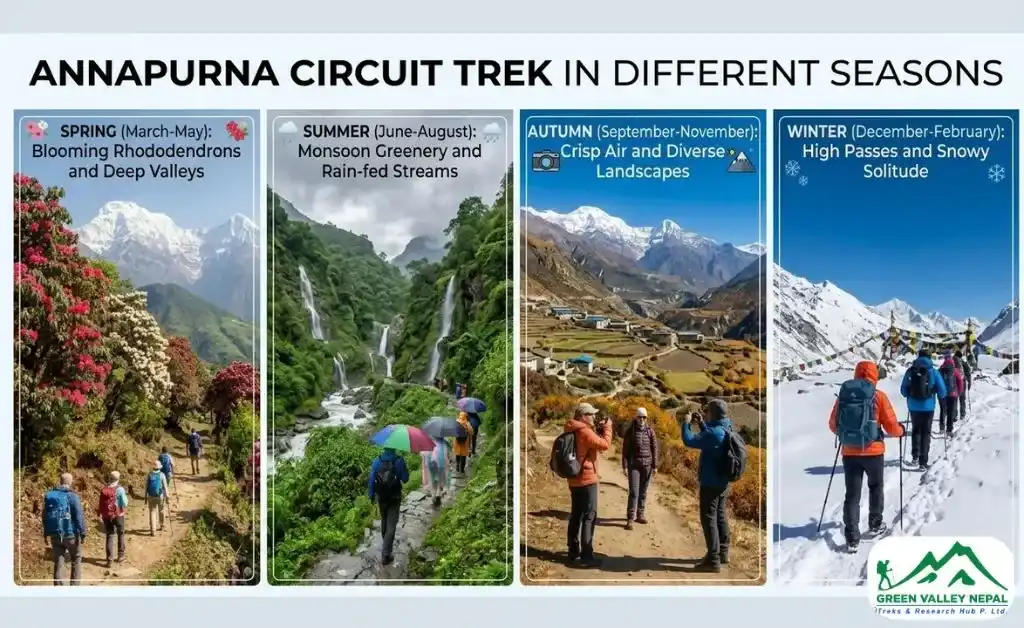
Spring is one of the best times for the Annapurna Circuit Trek, offering warming temperatures, blooming rhododendrons, and increasing weather stability as the season progresses. Many trekkers consider spring the best time for the Annapurna Circuit if they prefer warmer conditions over autumn's colder but clearer weather.
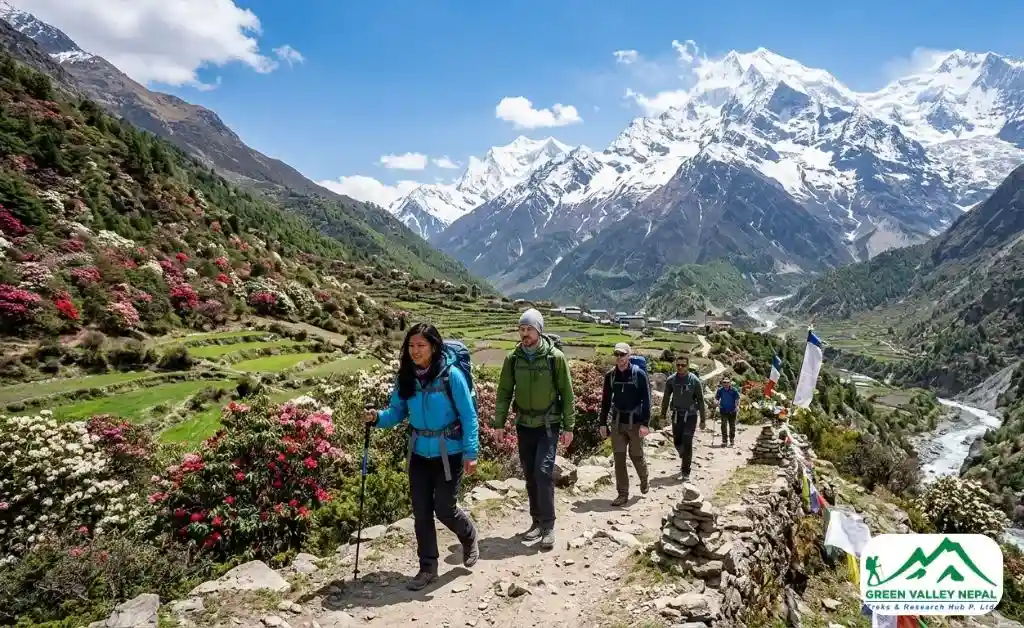
March: Best Time for Fewer Crowds
Temperatures
- Thorong La Pass: -15°C to 5°C (day), -25°C to -15°C (night)
- Manang (3,500m): 5°C to 12°C (day), -5°C to 0°C (night)
- Lower elevations: 15°C to 22°C (day)
What to Expect?
- Clear mornings, occasional afternoon clouds
- Light snow possible at higher elevations
- Snow patches above 4,000m early in the month
- Microspikes are useful for Thorong La
- Rhododendrons beginning to bloom (2,000–3,000m)
Crowd Level
- Moderate (20–25% of spring trekkers), quieter than April.
- Best for: Trekkers who want spring scenery, fewer crowds, and don’t mind cold nights at altitude.
April: Peak Spring - Best Time for Rhododendrons
Temperatures
- Thorong La Pass: -10°C to 8°C (day), -18°C to -8°C (night)
- Manang (3,500m): 8°C to 15°C (day), 0°C to 3°C (night)
- Lower elevations: 18°C to 28°C (day)
What to Expect
- Excellent weather stability
- Clear blue skies most days
- Minimal rain, occasional afternoon clouds
- Snow mostly melted near Thorong La
- Dry, well-maintained trails
- All teahouses are fully operational
Crowd Level
- Very high (50–55% of spring trekkers).
- Second busiest month after October.
- Book teahouses 3–4 weeks ahead, especially in Manang, Thorong Phedi, and Muktinath.
- Best for: Trekkers who want classic Annapurna Circuit conditions, peak rhododendron blooms, and reliable weather, and don’t mind bigger crowds and slightly higher costs.
May: Late Spring Heat
Temperature
- Thorong La Pass: -5°C to 12°C daytime, -12°C to -3°C nighttime
- Mid-elevations (Manang): 12°C to 18°C daytime, 3°C to 7°C nighttime
- Lower elevations: 22°C to 32°C daytime (hot)
What to Expect:
- Warming temperatures throughout
- Increasing afternoon cloud cover
- Pre-monsoon moisture building
- Occasional afternoon rain showers at lower elevations
- Thorong La is still generally clear in the mornings
- Lower sections can feel uncomfortably hot midday
- Afternoon thunderstorms are becoming more common
- Trails are dusty at lower elevations
- High-altitude sections remain pleasant
Crowd levels:
- Moderate-low (20-25% of spring trekkers). May sees declining crowds as people avoid pre-monsoon conditions.
- Cost advantage: Prices begin dropping from April peaks. Better negotiating room for last-minute bookings.
- Best for: Budget-conscious trekkers who tolerate heat and don't mind occasional rain. Still reliably good for Thorong La crossing.
In spring, many trekkers also enjoy detours like the Tilicho Lake route. Check out our Annapurna Circuit Trek with Tilicho Lake for this extended adventure.
Annapurna Circuit Trek in Autumn (September to November)
Autumn is widely considered the absolute best time for the Annapurna Circuit Trek. October specifically is the best month for the Annapurna Circuit trek, offering maximum weather stability, crystal-clear mountain views, and optimal conditions for crossing Thorong La Pass.
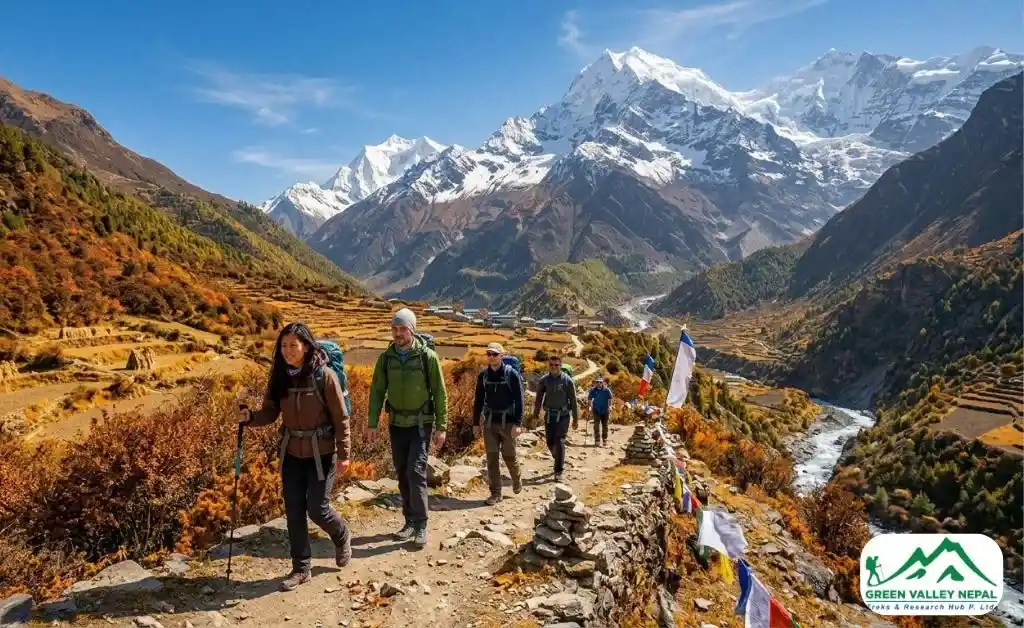
September: Post-Monsoon Transition
Temperature
- Thorong La Pass: -5°C to 15°C daytime, -12°C to 0°C nighttime
- Mid-elevations (Manang): 10°C to 18°C daytime, 3°C to 8°C nighttime
- Lower elevations: 20°C to 28°C daytime
What to expect:
- Monsoon officially ends in early September
- Actual conditions vary year-to-year
- Early September: possible multi-day rain episodes
- Mid-to-late September: rapidly improving conditions
- Thorong La is generally passable, but the weather is less predictable
- Everything is extremely green from the monsoon rains
- Waterfalls at maximum flow
- Trails can be muddy early in the month
- Leeches are possible below 2,500m in early September
- Conditions improve dramatically by month's end
Crowd levels:
- Low-moderate (15-20% of autumn trekkers).
- September remains underutilized despite improving conditions.
- Best for: Trekkers wanting lush green landscapes, powerful waterfalls, and fewer crowds. Accept slightly higher weather uncertainty.
Climate change note: Recent years (2023-2024) saw monsoons extending into late September. Check current weather reports before departing.
October: The Best Month for Annapurna Circuit Trek
Temperature:
- Thorong La Pass: -8°C to 12°C daytime, -15°C to -5°C nighttime
- Mid-elevations (Manang): 8°C to 16°C daytime, 0°C to 5°C nighttime
- Lower elevations: 15°C to 24°C daytime
What to expect:
- Maximum weather stability all year
- Clear skies dominate (80-90% of days)
- Minimal precipitation
- Cold nights, pleasant days
- The Thorong La crossing conditions are optimal
- Perfect, dry, clear, well-maintained
- All teahouses are fully operational
- Trail infrastructure at peak condition
Crowd levels:
- Maximum (55-60% of autumn trekkers).
- October is the single busiest month for the Annapurna Circuit.
- Festival impact: Dashain and Tihar (Nepal's major festivals) fall in October-November. Many guides and porters return to villages for 1-2 weeks during Dashain. Book guides 6-8 weeks ahead during festival periods.
- Best for: Trekkers prioritizing optimal weather and mountain views over solitude. Accept crowds and higher costs.
October offers the best cross‑pass conditions. You can see our Annapurna Full Circuit Trek package for a comprehensive route that maximizes views and weather windows.
November: Crystal Clear and Cold
Temperature:
- Thorong La Pass: -12°C to 8°C daytime, -20°C to -10°C nighttime
- Mid-elevations (Manang): 5°C to 12°C daytime, -3°C to 2°C nighttime
- Lower elevations: 12°C to 20°C daytime
What to expect:
- Maintains October's clarity
- Colder temperatures throughout
- Near-zero precipitation
- Crystal-clear mountain views
- Stable conditions continue
- Thorong La approach can have ice patches
- Microspikes are recommended for pass crossing
- Lower elevations are pleasant but cool
- All trails remain accessible
Crowd levels:
- Moderate (25% of autumn trekkers).
- Thinning significantly after mid-November as cold deters casual trekkers.
- Best for: Trekkers who handle cold well and want October's clarity without the crowds. Excellent choice for experienced trekkers.
Annapurna Circuit Trek in Winter (December to February)
Winter transforms the Annapurna Circuit into a serious high-altitude challenge. Only experienced winter trekkers should attempt the circuit during these months. At Thorong Phedi, your breath forms ice crystals on your sleeping bag. Despite wearing thermal layers, a down jacket, and a hat, you will still feel cold. But daytime sunshine provides surprising warmth; by noon at Manang, you might even remove your jacket in direct sun. The contrast between sun and shade feels extreme.
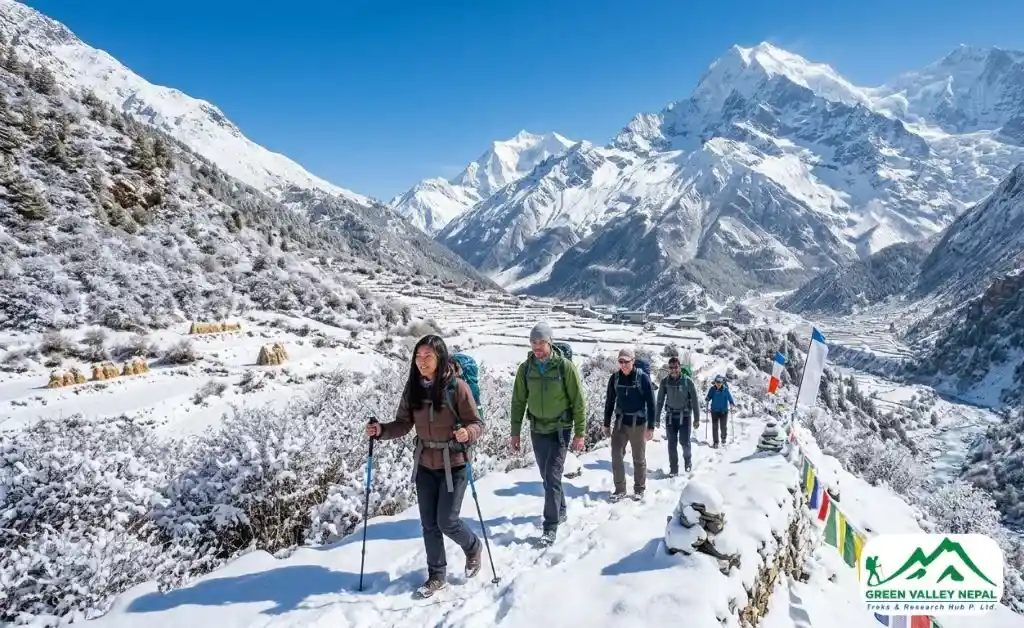
December: Early Winter
Temperature
- Thorong La Pass: -18°C to 5°C daytime, -25°C to -15°C nighttime
- Mid-elevations (Manang): 0°C to 8°C daytime, -8°C to -2°C nighttime
- Lower elevations: 8°C to 15°C daytime
What to expect:
- Clear skies continue into the autumn
- Extreme cold sets in
- Very low precipitation
- Bitter winds at high altitude
- Daytime sunshine provides some warmth
- Snow and ice above 3,500m
- The Thorong La Pass is crossable but challenging
- Some high-altitude teahouses begin closing
- Lower sections remain accessible
Crowd levels:
- Very low (5-8% of annual trekkers).
- Approximately 30-40% of high-altitude teahouses closed. Confirm accommodation availability before departing.
January & February: Deep Winter
Temperature
- Thorong La Pass: -25°C to 0°C daytime, -30°C to -20°C nighttime (extreme)
- Mid-elevations (Manang): -5°C to 5°C daytime, -12°C to -5°C nighttime
- Lower elevations: 5°C to 12°C daytime
What to expect:
- Coldest months of the year
- Generally clear but extreme temperatures
- Light snowfall possible
- Strong winds at Thorong La
- Dangerous wind chill factors
- Heavy snow above 4,000m
- The Thorong La Pass is often closed from January to early February
- Ice on trails requires microspikes or crampons
- Serious avalanche risk in some sections
Crowd levels:
- Minimal (2-5% of annual trekkers).
- Complete solitude is possible for days.
- 50-60% of high-altitude lodges closed. Limited food menu options even at open teahouses.
- Best for: Experienced winter mountaineers seeking extreme solitude and challenge. Not recommended for first-time circuit trekkers.
Annapurna Circuit Trek in Monsoon (June-August)
Monsoon trekking on the Annapurna Circuit receives near-universal discouragement. The reasons are valid, but the conditions aren't as impossible as some sources suggest. The Annapurna region sits in a rain shadow, receiving significantly less monsoon rainfall than the Everest region. It still rains regularly but not continuously.
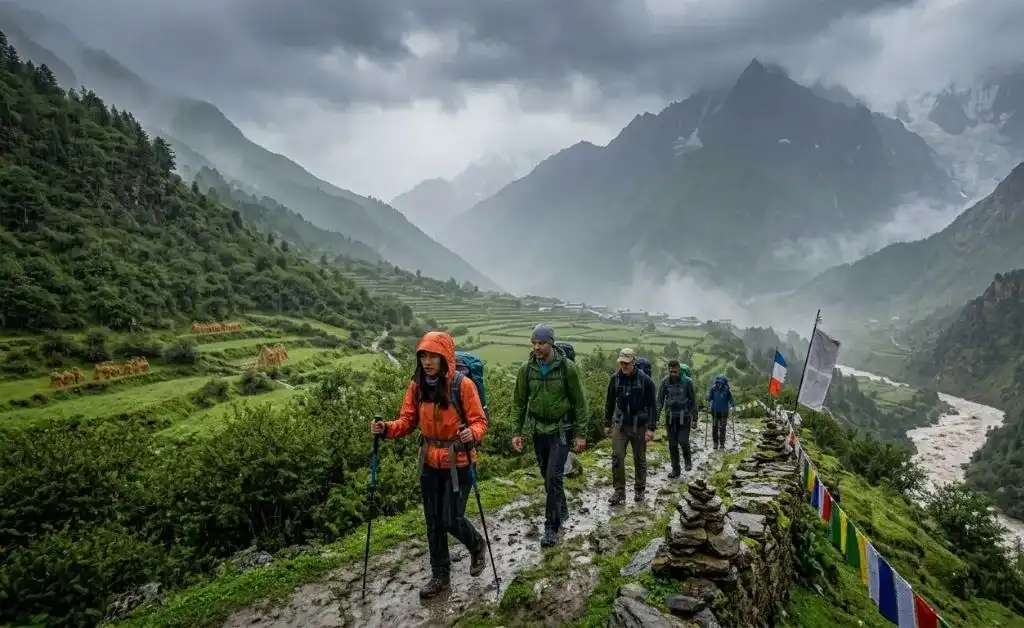
June-August: Monsoon Conditions
Temperature
- Thorong La Pass: 0°C to 15°C daytime, -5°C to 5°C nighttime
- Mid-elevations (Manang): 12°C to 20°C daytime, 5°C to 10°C nighttime
- Lower elevations: 20°C to 30°C daytime
What to expect:
- Regular afternoon/evening rainfall
- Morning often clear
- Cloud cover obscures the mountains 70-80% of the time
- Humidity is very high below 3,000m
- The Upper Mustang side (rain shadow) receives less rain
- Muddy and slippery below 3,000m
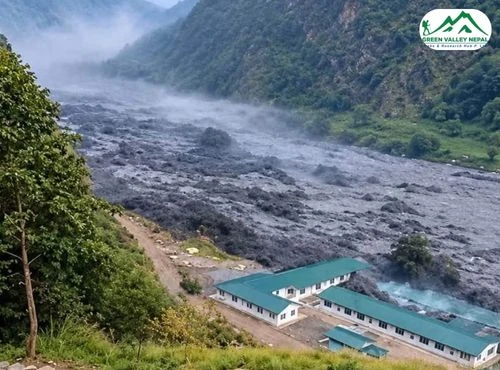
- Landslide risk on certain sections
- Leeches are common below 2,500m (harmless but unpleasant)
- River crossings can be challenging
- The Thorong La approach is often clear in the mornings
Crowd levels:
- Minimal (3-5% of annual trekkers).
- Near-complete solitude.
- Most teahouses remain open but with reduced staff and limited menus.
- Very limited. Cloud cover blocks views most of the time.
- Best for: Trekkers who genuinely don't prioritize summit views, enjoy lush green landscapes, want absolute solitude, and have proper waterproof gear. Not recommended for first-timers.
How Cold Is Thorong La Pass Really?
The pass crossing is the circuit's critical weather concern. Here's a realistic Thorong La condition assessment:
Month | Daytime Temp | Nighttime Temp | Passability | Conditions |
January | -25°C to 0°C | -30°C to -20°C | Risky | Often closed, extreme cold |
February | -20°C to 2°C | -28°C to -18°C | Difficult | Heavy snow, very cold |
March | -15°C to 5°C | -25°C to -15°C | Good | Some snow, cold but doable |
April | -10°C to 8°C | -18°C to -8°C | Excellent | Optimal conditions |
May | -5°C to 12°C | -12°C to -3°C | Excellent | Warm, clear, ideal |
June | 0°C to 15°C | -5°C to 5°C | Fair | Possible rain, clouds |
July | 3°C to 18°C | 0°C to 8°C | Fair | Monsoon affects the lower route |
August | 5°C to 18°C | 2°C to 8°C | Fair | Similar to July |
September | -5°C to 15°C | -12°C to 0°C | Good | Improving conditions |
October | -8°C to 12°C | -15°C to -5°C | Excellent | Best visibility all year |
November | -12°C to 8°C | -20°C to -10°C | Good | Very cold but clear |
December | -18°C to 5°C | -25°C to -15°C | Difficult | Starting to close |
Critical note: Temperature drops approximately 6.5°C per 1,000 meters of elevation. What feels comfortable at Manang (3,500m) will be significantly colder at Thorong Phedi (4,540m) and extreme at the pass (5,416m).
Decision Framework: When Should You Go?
- Choose October if: You want the absolute best weather, clearest mountain views, and don't mind crowds or higher costs. You can book 2-3 months ahead.
- Choose April if: You want to see rhododendrons in bloom, prefer warmer temperatures, and accept crowds. You can book 1-2 months ahead.
- Choose November if: You want October's clarity with fewer crowds, can handle colder temperatures, and have proper cold-weather gear.
- Choose March if: You want early spring conditions, some flower viewing, and moderate crowds. You're prepared for occasional snow at high altitude.
- Choose May or September if: You want decent weather with fewer crowds, can handle some uncertainty, and prioritize budget savings.
- Choose December if: You're an experienced winter trekker, have full winter gear, want solitude, and have a flexible schedule for weather delays.
- Avoid January-February unless: You're a serious winter mountaineer with extensive cold-weather experience and proper equipment.
- Avoid June-August unless: You genuinely don't care about mountain views and want absolute solitude.
Frequently Asked Questions (FAQs)
- What is the best month to trek the Annapurna Circuit?
October is the best month for the Annapurna Circuit due to stable weather, clear skies, and safe conditions at Thorong La Pass (5,416m). April is the second-best month with warmer temperatures and rhododendron blooms.
- Can a beginner do the Annapurna Circuit?
Yes, beginners can complete the Annapurna Circuit if they are reasonably fit and follow proper acclimatization. However, the high altitude and long duration (12–18 days) make it more challenging than shorter treks.
- Is the Annapurna Circuit harder than the Everest Base Camp?
Yes, the Annapurna Circuit is generally harder than Everest Base Camp because it reaches a higher altitude (5,416m vs 5,364m), covers a longer distance, and requires crossing a high mountain pass.
- How many days do you need for the Annapurna Circuit?
Most trekkers need 14–18 days to complete the full circuit safely. Shorter itineraries are possible, but increase the risk of altitude sickness.
- When should you avoid trekking the Annapurna Circuit?
Avoid mid-January to February due to extreme cold and possible pass closures. July and August (monsoon season) are also not ideal due to heavy rain, muddy trails, and poor mountain visibility.
- How cold is Thorong La Pass?
Temperatures at Thorong La vary by season. In peak months (April and October), daytime temperatures range from -10°C to 12°C. In winter, it can drop to -25°C or lower at night.