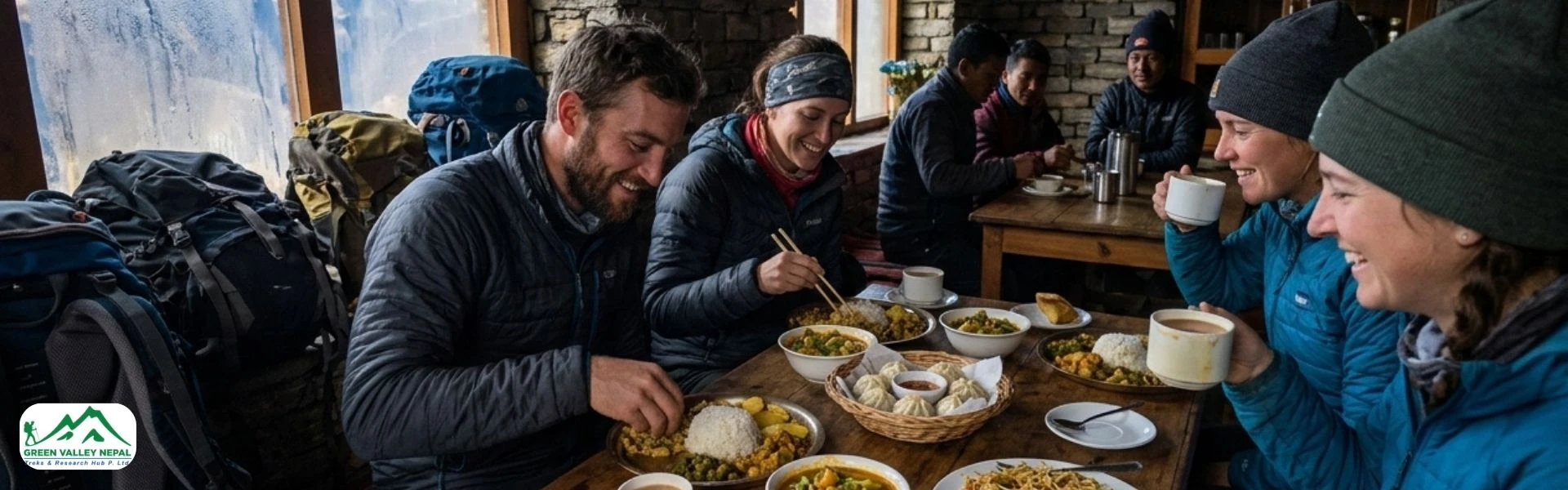
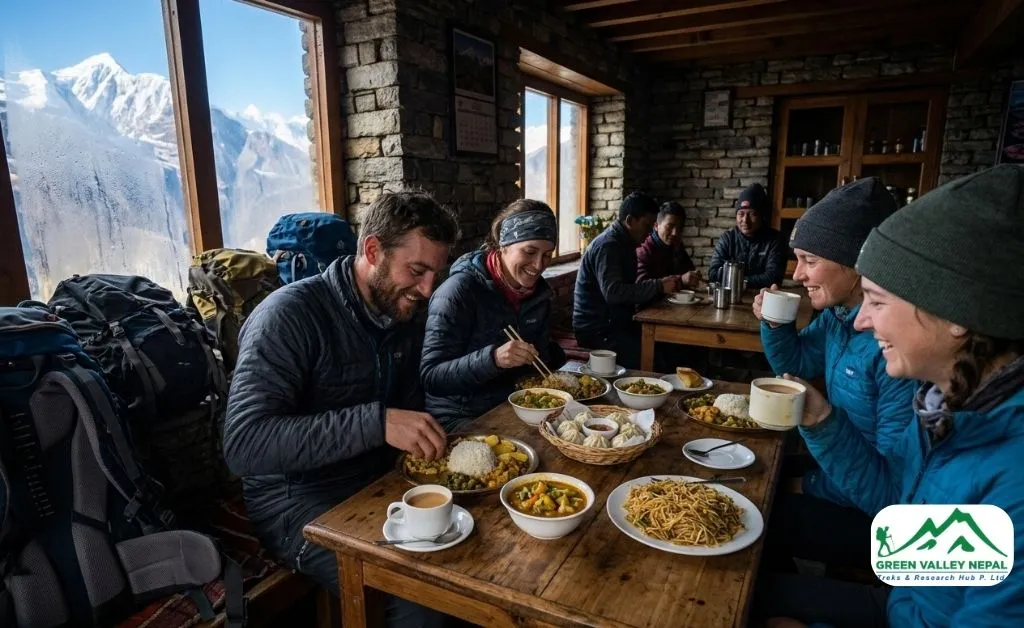
What Kind of Food Is Available on the Annapurna Circuit?
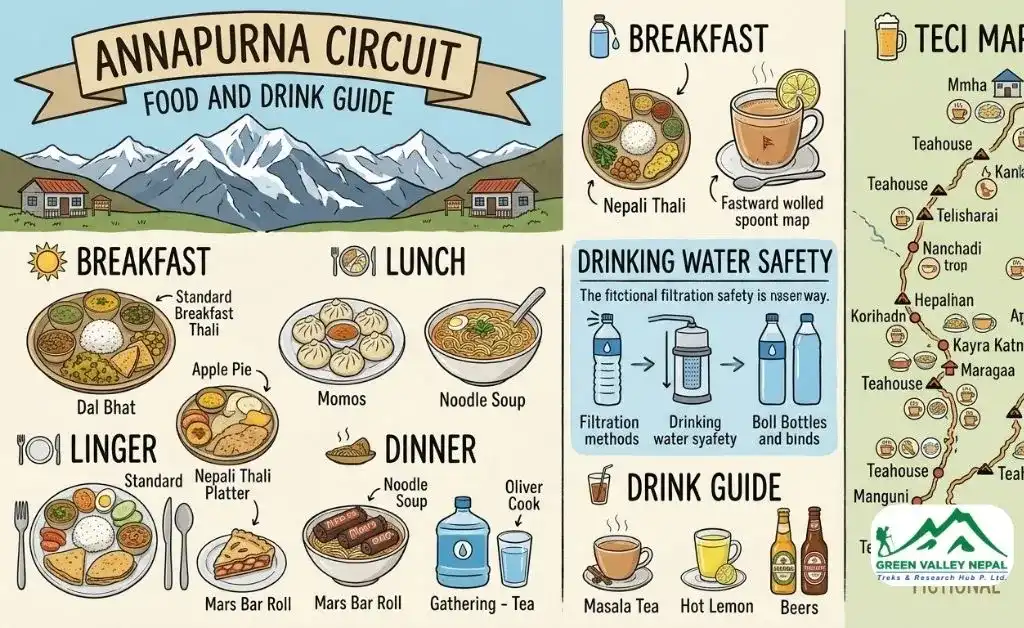
The teahouse menus on the Annapurna Circuit are more varied than most people imagine. In the lower and mid-altitude villages, you will find a variety of local Nepali dishes and international options. As you go higher toward Manang and Thorong Phedi, the menus get shorter and simpler. But at every stage of the trek, there is always something hot, filling, and good for your body on the table.
The food reflects the cultures of the communities along the route. In the lower elevations, you pass through Gurung villages. And when you go higher, you enter the Thakali and Manangba territory. Each community has its own food traditions, and many teahouses serve dishes rooted in local flavors rather than a generic trekker menu.
Dal Bhat: The Best Thing You Will Eat on the Trek
There's a slogan every Nepali says: "Dal Bhat Power 24 Hour." And after a few days on the trail, you will understand exactly why. Dal bhat is Nepal's national dish and, honestly, the most important thing you will eat on this trek. It's steamed rice with lentil soup, vegetable curry, a little salad, and pickles. Simple as that. But after six hours of walking uphill, nothing hits quite like it.
Every experienced trekker recommends it for good reason; it's not just tasty, it's the right fuel for your body at altitude. High in carbs, decent protein from the lentils, and most teahouses give you unlimited refills at no extra charge. Below 3,000m, you're paying around USD 5-6 per plate. Up near Manang and Thorong Phedi, it creeps up to USD 8 to 10, but it's still the best value on the menu at any elevation.
Note: From 3,000m upward, stick to dal bhat for lunch and dinner. Appetite drops at altitude, but your body still needs the fuel, and dal bhat is easy to digest, warming, and covers everything you need for the next day's climb.
Momos, Noodles, and Fried Rice
Momo: steamed or fried dumplings with a spiced tomato dipping sauce are everywhere from Besisahar all the way to Muktinath. A plate runs USD 4 to 7, depending on altitude. Noodle soups, chowmein, and fried rice are solid lunch options too; quick to make and easy on your stomach for the afternoon walking ahead.
International Food on the Trail
In lower villages and bigger stops like Chame, Pisang, and Manang, menus stretch to pasta, pizza, pancakes, eggs, Tibetan bread, and even apple pie. Quality varies, but it's usually better than expected. Manang especially has a small but decent bakery scene, one of the few places on the circuit where you can get a proper coffee and a fresh pastry.
Above Manang, the international options disappear fast. By Thorong Phedi, it's dal bhat, noodle soup, and fried rice. That's all you need up there anyway.
Local Specialties Worth Trying
The Annapurna region has some food that you will not find easily anywhere else. Keep an eye out for:
- Thakali (Dal Bhat): A richer, more layered version of the standard plate, with extra side dishes and a distinct Thakali spice profile. It is considered some of the best food in all of Nepal trekking
- Buckwheat Pancakes and Bread: Grown locally in the Manang area, buckwheat is used to make thick, slightly nutty pancakes that are filling and delicious
- Gundruk Soup: Made from fermented leafy greens, this is a traditional Nepali dish that is earthy and warming on cold evenings
- Yak Meat Dishes: In Manang and the higher villages, some teahouses serve yak burgers or yak steak. If you eat meat, try it at least once
- Apple Products: The Manang valley is famous for its apple orchards. Apple pie, apple juice, apple brandy, and dried apples all appear on menus in this section of the trek
You can do a short trek to other Nepali Villages in the Annapurna Region, like Ghandruk Village and Poon Hill Trek, for typical local food and drinks, which reflect their culture, just at a lower altitude with very good mountain scenery.
What Do You Eat for Breakfast, Lunch, and Dinner on the Annapurna Circuit?
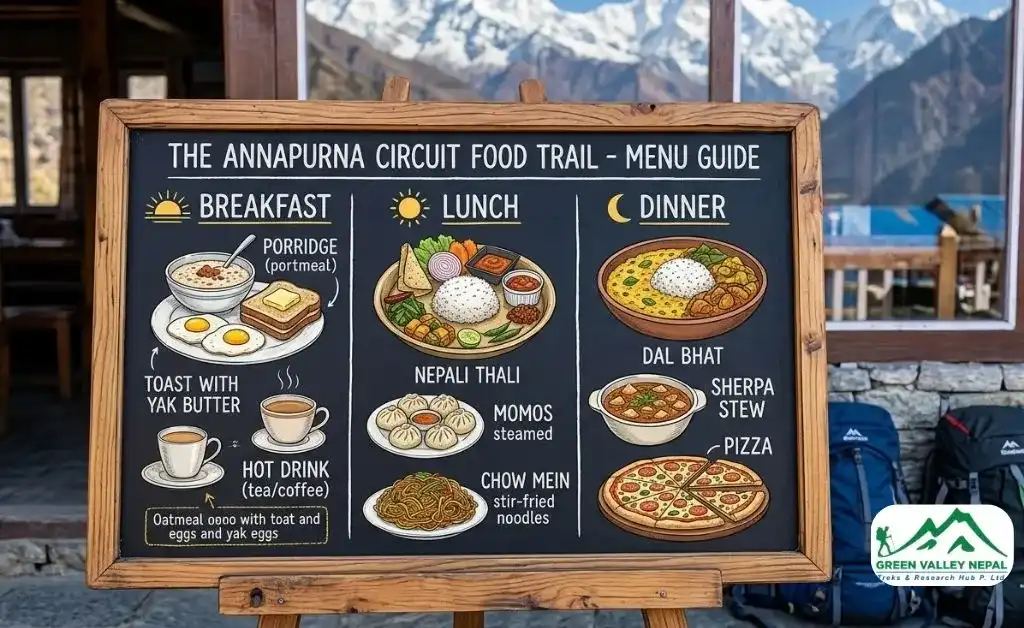
A typical day on the Annapurna Circuit follows a simple pattern: early breakfast, a light lunch on the trail, and a proper hot dinner at your teahouse in the evening. Knowing what to order at each meal makes a real difference to how your body feels and performs throughout the day.
Breakfast
Breakfast on the Annapurna Circuit is eaten early, usually between 6 and 7 AM, especially on days when you have a long walk ahead. Most teahouses open their kitchens from around 5:30 AM to accommodate trekkers who need an early start.
The most popular breakfast options on a trek are porridge, muesli with hot milk, eggs cooked any style, Tibetan bread with jam or honey, pancakes, and toast. Porridge is one of the best choices at altitude; it is warm, easy on the stomach, and releases energy slowly throughout the morning. A big bowl of porridge with a cup of ginger tea is honestly one of the better ways to start a cold Himalayan morning.
Avoid heavy or oily food at breakfast, especially at higher altitudes where digestion slows down. Keep it warm, simple, and filling. Most breakfasts cost between USD 4 and 8, depending on where you are on the circuit.
Lunch
Lunch is usually eaten at a teahouse somewhere along the trail, roughly halfway through your walking day. Most trekkers stop for around 30 to 45 minutes, long enough to eat, rest their legs, and warm up with a hot drink before the afternoon section.
The best lunch options are fried rice, noodle soup, vegetable chow mein, momos, and a light dal bhat if you are particularly hungry. These dishes are quick to prepare, sit well in the stomach, and give you enough energy to finish the afternoon without feeling heavy on your feet.
One thing to keep in mind: teahouse kitchens at altitude can be slow. If you arrive at a busy lunch stop during peak season, order as soon as you sit down. Do not wait until you are in a rush to order, or you will end up leaving before your food arrives.
Dinner
Dinner is the most important meal of the day on the Annapurna Circuit. After five to seven hours of walking, your body needs a proper, substantial meal to recover, repair, and prepare for the next day. This is the meal where dal bhat earns its reputation.
Most experienced trekkers and guides will tell you the same thing: order dal bhat for dinner every night from Manang upward. At altitude, your appetite can drop significantly, but your body still needs fuel. Dal bhat is easy to digest, comes with unlimited refills at most teahouses, and gives your body exactly what it needs: carbohydrates, protein, and warmth in one bowl.
Try to eat dinner early, between 5 and 6 PM. Teahouses fill up quickly in the evenings during peak season, kitchens take time to prepare fresh food, and an early meal gives your body time to digest before you sleep. Going to bed by 8 or 9 PM is completely normal on this trek, and your body will thank you for it the next morning.
Food Cost Breakdown on the Annapurna Circuit Trek
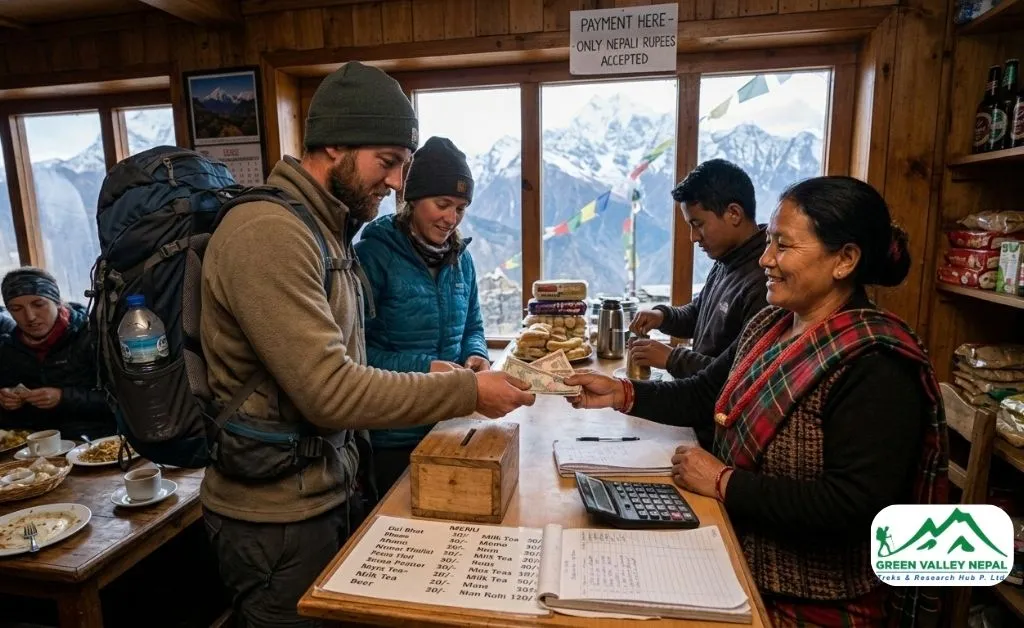
One of the key things to understand about food on the Annapurna Circuit is that prices rise steadily with altitude. Every ingredient has to be carried up by porters, pack horses, or mules. By the time you reach the high-altitude section, the effort of getting food up the mountain is reflected in what you pay for it.
Food / Drink | Lower Section (below 3,000m) | Upper Section (above 3,500m) |
Dal Bhat | USD 5–6 | USD 8–10 |
Momos (Plate) | USD 4–5 | USD 6–8 |
Fried Rice/Noodles | USD 4–5 | USD 6–8 |
Eggs (2, Any Style) | USD 3–4 | USD 4–6 |
Porridge / Muesli | USD 3–4 | USD 5–7 |
Pancakes | USD 3–4 | USD 5–6 |
Tea (Black / Milk/Masala) | USD 1–2 | USD 2–3 |
Coffee | USD 2–3 | USD 3–5 |
Bottled Water (1 Liter) | USD 1–2 | USD 2–3 |
Soft Drinks | USD 2–3 | USD 3–5 |
Snack Bar/Chocolate | USD 2–3 | USD 3–5 |
Most trekkers spend between USD 15 and 30 per day on food and drinks, with costs naturally higher in the upper sections of the trail.
What Should You Drink on the Annapurna Circuit?
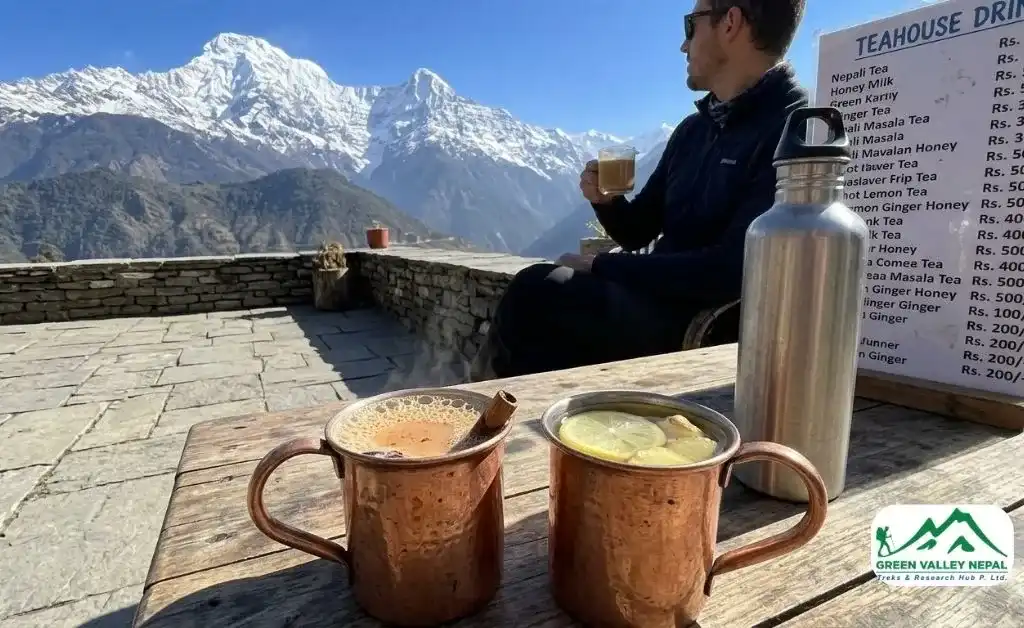
Staying hydrated on the Annapurna Circuit is not optional; it is one of the most important things you can do to avoid altitude sickness and keep your energy up. But what you drink and where it comes from matters a lot at high altitude.
Water: Drink Carefully
Never drink directly from taps, rivers, streams, or wells along the trail. The water may look clean, but it can carry bacteria that will make you seriously ill. Your options for safe drinking water are:
- Boiled Water from Teahouses: Most teahouses sell boiled water at a small charge. This is safe and the most eco-friendly option
- Water Purification Tablets: Carry iodine or chlorine tablets in your pack. They are cheap, lightweight, and make any water source safe within 30 minutes
- Filter Bottle: A UV water purifier or a filter bottle like a LifeStraw allows you to drink from most water sources safely. They are a worthwhile investment for a long trek
- Bottled Water: Available everywhere, but creates plastic waste and gets expensive at altitude. Try to avoid it where possible
Aim to drink at least 3 to 4 liters of water per day once you are above 3,000 meters. Your body needs more water at altitude than at sea level, even if you do not feel thirsty.
Tea and Coffee
Tea is everywhere on the Annapurna Circuit, and it is excellent. You will find black tea, milk tea, green tea, ginger lemon honey tea, masala chai, and herbal teas at every teahouse along the route. A cup costs USD 1 to 3, depending on where you are and what you order. Ginger lemon honey tea is particularly popular among trekkers because ginger helps with nausea and digestion at altitude.
Coffee is available in most teahouses, though the quality varies. In lower villages and Manang, you can get decent filter coffee or Nepali-grown coffee. Higher up, expect instant coffee. It does the job, but bring your own coffee sachets if you are particular about your morning cup.
Local Drinks
The Mustang and Manang areas are known for producing local apple brandy, tongba (a warm millet-based drink popular in the hills), and various fruit wines. These are worth trying in the evenings after a long day on the trail. However, drink in moderation at altitude. Alcohol dehydrates your body and slows acclimatization. One glass is a pleasure; three glasses at 3,500 meters is a bad idea.
Soft Drinks and Juice
Cola, Sprite, Fanta, and packaged fruit juices are available in most teahouses, but they get more expensive the higher up. A can of Coke that costs USD 1.50 in Kathmandu can cost USD 3 to 4 by the time you reach Manang. They are fine as occasional treats, but water and tea should be your main drinks throughout the trek.
How Does Food Change as You Go Higher?
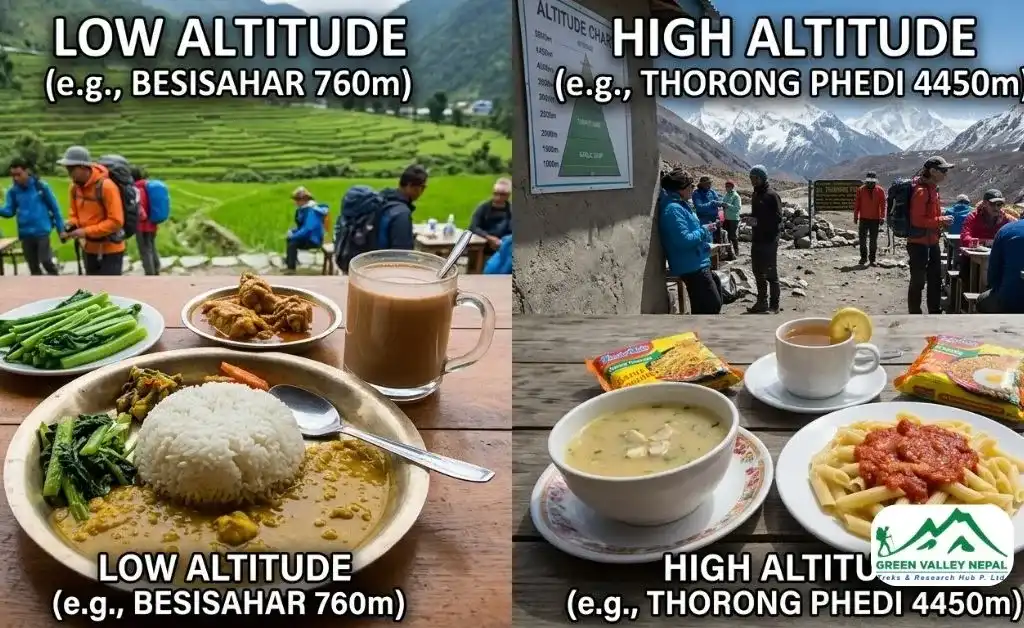
- Lower Section: From Besisahar to Chame
This is where menus are at their most varied, and prices are lowest. You will find full breakfasts, extensive lunch and dinner menus, fresh fruit, bakery items, and a good range of drinks. Enjoy the variety here because it gets simpler as you climb.
- Mid-Section: From Chame to Manang
The menus stay reasonably varied through Pisang and into Manang. Manang itself has a small bakery scene and some of the best food on the entire circuit. This is a good place to eat well before the high-altitude push. Take your acclimatisation day here to explore the food options — there are a few proper cafes and apple-based specialties you will not find elsewhere.
- High Section: From Yak Kharka to Thorong Phedi
Above Manang, the menus shrink fast. At Yak Kharka and Thorong Phedi, most teahouses serve a short list of dal bhat, fried rice, noodle soup, and eggs. Prices are noticeably higher. Eat well, drink plenty of water, avoid alcohol, and go to bed early. Your body is preparing for the hardest day of the trek.
- Descent Section: From Muktinath to Nayapul
Once you cross Thorong La and descend toward Muktinath, the menus open up again. Tatopani is famous for its natural hot springs and also has good teahouses with solid food options. The Ghorepani section near Poon Hill has comfortable teahouses with warm dining halls and good food. By the time you reach the lower villages heading toward Nayapul, you are back to full menus and lower prices.
Dietary Needs on the Annapurna Circuit Trek
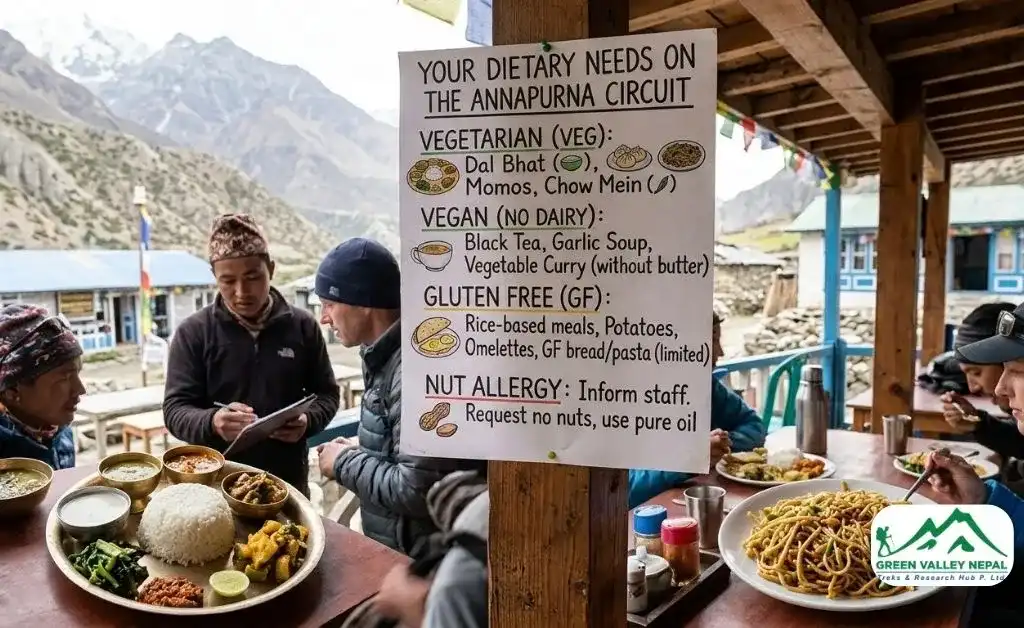
- Vegetarians will have no trouble on the Annapurna Circuit. Dal bhat, vegetable momos, fried rice, pasta, eggs, and soups are all vegetarian and available throughout the route. Most teahouse owners understand vegetarian requirements well.
- Vegans will find it manageable, but need to be more careful. Eggs and dairy appear in many dishes, including bread, sauces, and curries. If you are vegan, communicate clearly with the teahouse staff and stick to simple dishes like plain dal bhat with no ghee, vegetable soups, and plain rice. It gets harder above 3,000 meters, where menus are shorter.
- Gluten-free trekkers will find rice-based dishes safe throughout the circuit. Dal bhat, plain rice, vegetable soups, and boiled eggs are all naturally gluten-free. Noodles, bread, and momos all contain gluten and should be avoided.
- Nut allergies: be cautious as peanuts appear in some Nepali sauces and garnishes. Always ask before ordering an unfamiliar dish.
Useful Food and Drink Tips for the Annapurna Circuit
- Always eat where you sleep. Teahouses make most of their money from food, not accommodation. Eating at a different teahouse than where you sleep is considered disrespectful and may result in being charged more for your room
- Buy snacks, chocolate bars, energy bars, dried fruit, and nuts in Kathmandu or Pokhara before you start. They are significantly cheaper there than on the trail
- Carry a reusable water bottle and purification tablets to save money and reduce plastic waste
- Above 4,000 meters, your appetite will likely drop. Force yourself to eat even if you are not hungry. Your body needs fuel to perform and acclimatize
- Avoid raw salads and unpeeled fruit above 2,500 meters, where hygiene standards can be harder to maintain
- Ginger tea is your best friend on the trail. It helps with nausea, digestion, warmth, and general well-being at altitude
Frequently Asked Questions (FAQs)
- What do trekkers eat on the Annapurna Circuit?
The most common food on the Annapurna Circuit is dal bhat, steamed rice with lentil soup, vegetable curry, and pickles. Beyond that, teahouse menus offer momos, fried rice, noodle soup, eggs, porridge, pancakes, and Tibetan bread. In larger villages like Chame and Manang, you can also find pasta, pizza, and fresh bakery items. As you go higher, the menus get shorter, but the food stays hot and filling.
- How much does it cost to eat on the Annapurna Circuit?
Food and drink on the Annapurna Circuit typically costs between USD 15 and 30 per day, covering three meals and a few hot drinks. Breakfast runs around USD 4 to 8, lunch USD 5 to 8, and dinner USD 6 to 10. Prices rise steadily as you go higher because all things should be carried out either by mules or humans.
- How much cash should I take on the Annapurna Circuit?
There are no ATMs on the trail itself, so you need to carry all your cash before you start. Most trekkers need around USD 500 to 800 for the full trek, covering food, drinks, hot showers, WiFi, device charging, and small extras. Always carry more than you think you need and keep it in a waterproof bag inside your day pack.
- Is dal bhat really the best food to eat on the trek?
Yes, without question. Dal bhat is high in carbohydrates, easy to digest at altitude, warming, and comes with free refills at most teahouses. It is what local guides eat every single day on the trail because it works. At higher altitudes where your appetite drops, a big plate of dal bhat gives your body exactly what it needs to recover and prepare for the next day.
- What snacks should I bring for hiking on the Annapurna Circuit?
Buy your snacks in Kathmandu or Pokhara before you start; they are significantly cheaper there than on the trail. Good options are energy bars, trail mix, nuts, dried fruit, chocolate, and instant noodles for emergency days. Snacks on the trail can cost two to three times more than in the city, especially above 3,500 meters.
- Is the food safe to eat on the Annapurna Circuit?
Yes. Teahouses serve freshly cooked hot meals, and food safety is reasonable throughout the route. The main rules to follow are to avoid raw salads and unpeeled fruit above 2,500 meters, never drink tap water or river water, and always eat at the teahouse where you are sleeping. Stick to hot, freshly cooked food, and your stomach will hold up well for the whole trek.
- What do vegetarians and vegans eat on the Annapurna Circuit?
Vegetarians eat very well on the Annapurna Circuit. Dal bhat, vegetable momos, fried rice, pasta, eggs, and soups are all vegetarian and available everywhere. Vegans can manage well on lentil-based dishes like dal bhat, but should tell teahouse staff about dairy restrictions since ghee and milk appear in many sauces and breads. Above Manang, where menus get shorter, plain rice, vegetable soups, and boiled eggs are the safest and most reliable vegan options.