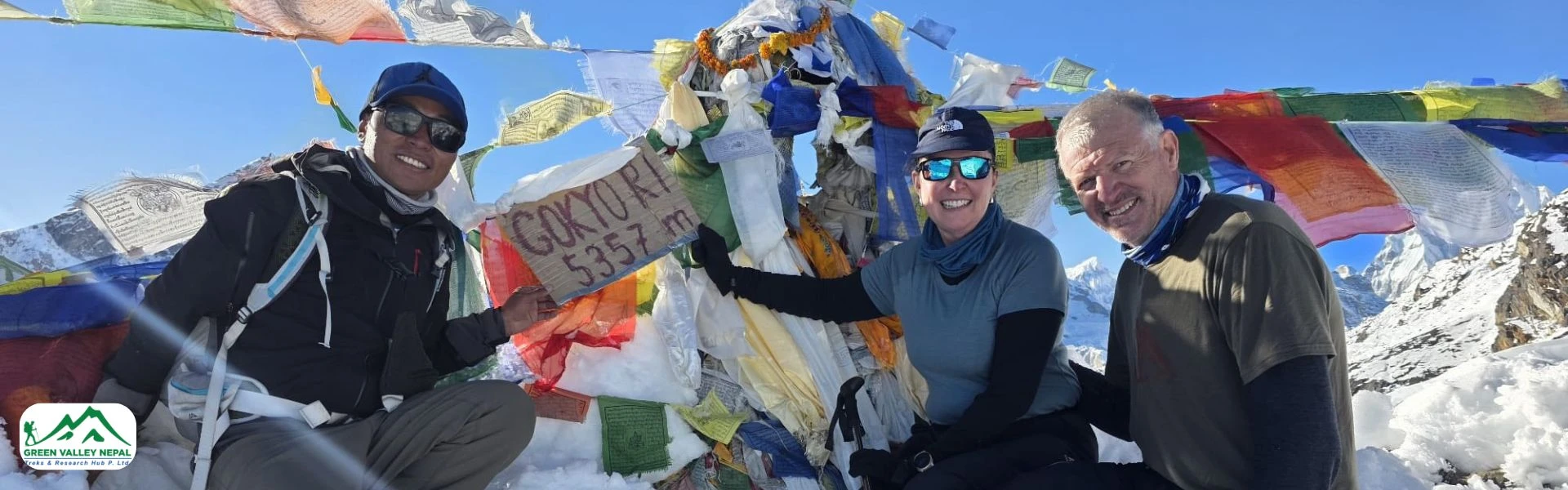
Standing at a daring height of (5,644 m | 18,517 ft.), the Everest Three Passes Trek is hardly a challenging mountain pursuit in the Everest region. Designed ideally for active mountain climbers and bold seekers, this 18-day tour offers the world’s best Himalayan treasure with neat green scenery. Across the three tough passes: Kongma La (5,535m | 18,160ft.), Cho La Pass (5,420m | 17,782ft.), and Renjo La Pass (5,464m | 17,927ft.), you will push your limit and cover approximately (170km | 106 miles). However, it all depends on the itinerary and route you prefer. If you are curious about the Everest Three Passes Trek Distance, stay tuned to our blog for updates on the daily distances covered.
Everest Three Passes Trek Distance
Table of Contents
Everest Three Passes Trek Distance Overview
If you have excellent physical and mental strength and dare to conquer monster mountains, this 18-day-long Everest Three Passes Trek is for you. Designed and preferred especially for mountain adventurers and summit chasers, it ultimately crossed the (5500m | 18045ft.) threshold and covers approximately (170 km | 106 miles) on the standard route. Equally, you will test your limit across three passes, Cho La, Renjo La, and the most demanding Kongma La (among the three), making them one of the arduous quests of the Everest region.
Our well-executed Three Passes Trek itinerary begins exclusively from the Lukla flight. You will scale the passes in order of difficulty: Kongma La, Cho La, and then Renjo La. Simultaneously, the Three Passes Trek by road is possibly available.
When you reach the summits, the shimmering Glaciers, lovely lakes, and enormous mountain backdrops appear out of the valley. Every step and every view here introduces the new magic of the Nepal Everest region. Simultaneously, many difficulties stand ahead in the journey. Before you book, some gentle research into the Everest Three Passes Trek itinerary, map, and route's difficulties is equally important.
Everest Three Passes Trek Distance Breakdown and Altitude Coverage
Trekking Trail | Distance | Duration | Altitude |
Lukla to Phakding | 7.8 km/ 4.8 miles | 3 to 4 Hours | 2,610m/ 8562 ft. |
Phakding to Namche Bazaar | 10.4 km/ 6.4 miles | 4 to 6 Hours | 3,440m/ 11,286 ft. |
Namche Bazaar to Tengboche | 8.6 km/ 5 miles | 4 to 5 Hours | 3,860m/ 12,664 ft. |
Tengboche to Dingboche | 10.7 km/ 6.6 miles | 5 to 6 Hours | 4,410m/ 14,468 ft. |
Dingboche to Chhukung | 4.5 km/ 2.7 miles | 3 to 4 Hours | 4,730m/ 15,518 ft. |
Chhukung to Lobuche via Kongma La Pass | 7.7 km/ 4.7 miles | 8 to 9 Hours | 5,540m/ 18,175 ft. |
Lobuche to Gorakshep | 4.1 km/ 2.5 miles | 3 to 4 Hours | 5,140m/ 16,863 ft. |
Gorakshep to Everest Base Camp | 3.5 km/ 2 miles | 3 to 4 Hours | 5,364m/ 17,598 ft. |
Gorakshep to Kalapatthar | 2 km/ 1 miles | 2 to 3 Hours | 5,644m/ 18,517 ft. |
Gorakshep to Dzongla | 11.5 km/ 7 miles | 7 to 8 Hours | 4,830m/ 15,846 ft. |
Dzongla to Thagnak via Cho La Pass | 8 km/ 4.9 miles | 7 to 8 Hours | 5,367m/ 17,608 ft. |
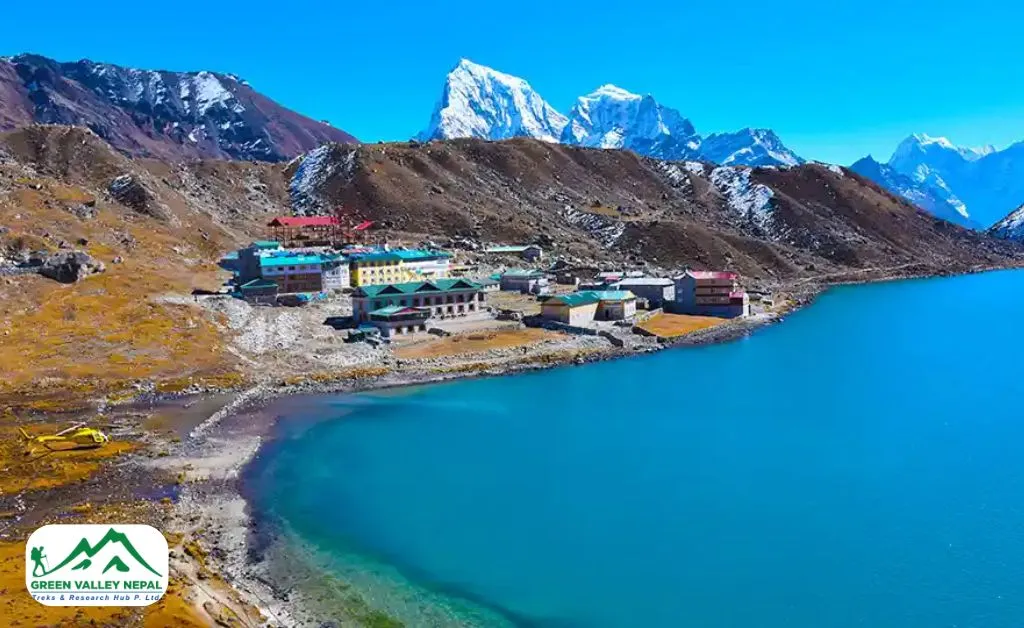
Thagnak to Gokyo | 2.7 km/ 1.6 miles | 2 to 3 Hours | 4,750m/15,586 ft. |
Gokyo to Gokyo Ri | 4 km/ 2.4 miles | 3 to 4 Hours | 5,357m/ 17,575 ft. |
Gokyo to Marulung via Renjo La | 7.4 km/ 4.5 miles | 6 to 7 Hours | 5,360m/ 17,585 ft. |
Marulung to Namche Bazaar | 11.5 km/ 7 miles | 7 to 8 Hours | 3,440m/ 11,286 ft. |
Namche Bazaar to Lukla | 21 km/13 miles | 8 to 9 Hours | 2,840m/ 9317 ft. |
Everest Three Passes Trek Distance Coverage
Day 1: Arriving in Kathmandu (1,400m | 4,593ft.)
The first day of the Three Passes Trek to Tribhuvan International Airport will start on your own arrangement. On arrival, our office staff will pick you up and shift you to your hotel. It is a short-distance vehicle ride with enough time to settle in. Later in the evening, you will join a casual pre-trek session with the Green Valley team and your trekmates.
Day 2: Flight from Kathmandu (1,400m | 8,562ft.) to Lukla (2,840m | 9,317ft.), then Trek to Phakding (2,610m | 8,562ft.)
Day 2 begins early for Lukla, an access point for most Everest trips, and then Phakding. En route, you will cross a few suspension bridges during a descent through the Thado Koshi River before Phakding. The walking will be relatively short, 7.8 kilometers (4.8 miles), allowing time to acclimatize.
Day 3: Trek from Phakding (2,610m | 8,562ft.) to Monjo (2,835m | 9,301ft.), then Namche Bazaar (3,440m | 11,286 ft.)
On this day, you will get deeper into the Khumbu region and hike to the lively Everest known hub, Namche Bazaar. Heading up along the Dudh Koshi River, you will arrive in the wonderful Sagarmatha National Park area via Monjo through a wide pine forest, small settlements, prayer flags, and a few suspension bridges. Good weather days offer the first incredible view of Mount Everest. The next leg opens to Namche Bazaar. Overall, the distance covered was nearly 10.4 kilometers (6.4 miles).
Day 4: Acclimatization and Rest Day at Namche Bazaar (3,440m | 11,286 ft.)
Namche is best for altitude acclimatization. Hang out, amazing visit to Namche Bazaar. The destination includes numerous cozy Wi-Fi spots, Sherpa settlements, restaurants, gear, and souvenir shops, as well as additional options, such as the Sagarmatha National Park visitor center, Dingboche Airport, and Everest Hotel View.
Day 5: Trek from Namche Bazaar (3,440m | 11,286 ft.) to Tengboche (3,860m |12,664ft.)
Exit Namche Bazaar and go to Tengboche for about 8.6 kilometers (5 miles). The trail rises along Dudh Koshi River through tall rhododendron forest, past stone mani walls and prayer flags, and offers a grand vista of Ama Dablam, Thamserku, Nuptse, and Everest. En route, herding yaks, wildlife, prayer flags, chanting monks, and lovely scenery can be cherished. After a gentle hike, you will reach Tengboche and take a short visit to Tengboche Monastery.
Day 6: Trek from Tengboche (3,860m |12,664ft.) to Dingboche (4,410m |14,468ft.)
From Tengboche, Dingbcohe is a way up of 10.7 kilometers (6.6 miles) and a height gain of about 550 m. Passing through the lovely rhododendron forest, along the Imja Khola, the elegant mountain tops of Kantega, Thamserku, Ama Dablam, Taboche, Kwangde, Lhotse, and Nuptse stand out of the valley. Further walking leads to Dingboche, where a nice visit to the monastery will connect you with the Buddhist nunnery.
Day 7: Trek from Dingboche (4,410m |14,468ft.) to Chhukung (4,730m | 15,518ft.) then Chhukung Ri (5,5546m |18,195ft.)
Today, you will go uphill about 4.5 kilometers (2.7 miles) to Chhukung with an altitude gain of 320 m. The trails wind through Glacier Moraines along the Imja Khola and offer you glossy mountain backdrops, including Lhotse and Ama Dablam. Walking next for half an hour will lead you to Chhukung via Bibre, where you will lodge and prepare for the next big hike or stroll to Chhukung Ri for more mountainous magic.
Day 8: Trek from Chhukung (4,730m | 15,518ft.) to Lobuche (4,910m | 16,108ft.) via Kongma La Pass (5,540m | 18,175ft.) (First Pass)
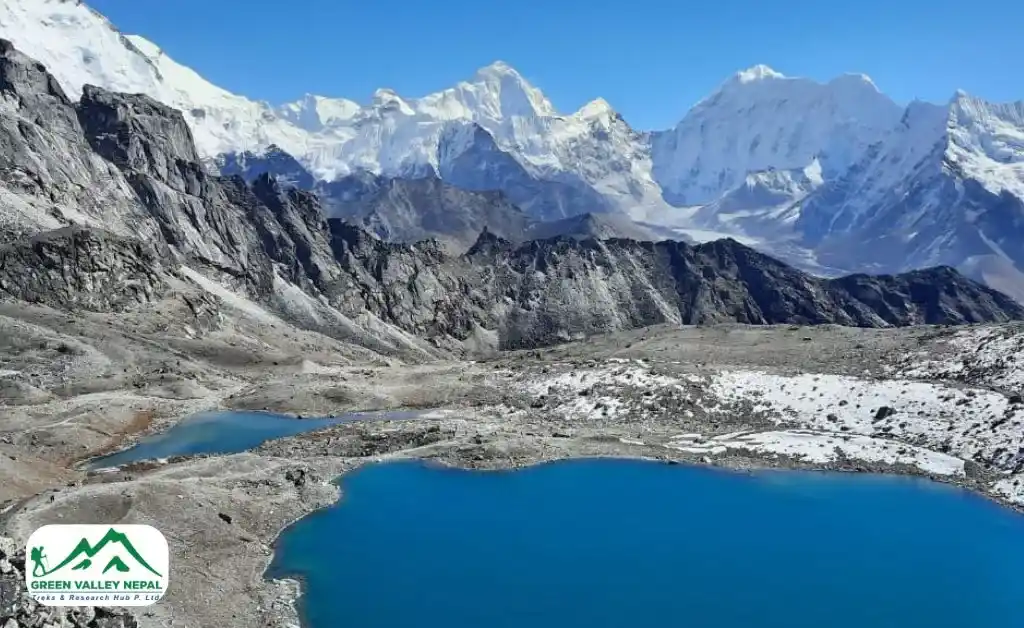
Today, you will mount the first pass of the Everest Three Pass quest, Kongma La. Departing from Chhukung, Kongma La is the most solid (among the three) 7.7-kilometer (4.7-mile) uphike dotted with shiny frozen lakes and mummy-wrapped crane smear the pass. When you reach the pass, luxurious mountain treasures will amuse trekkers. The hike further continues toward Lobuche, where you lodge for the night. However, the valley lacks permanent residents and is mostly used by Sherpas for their yak grazing.
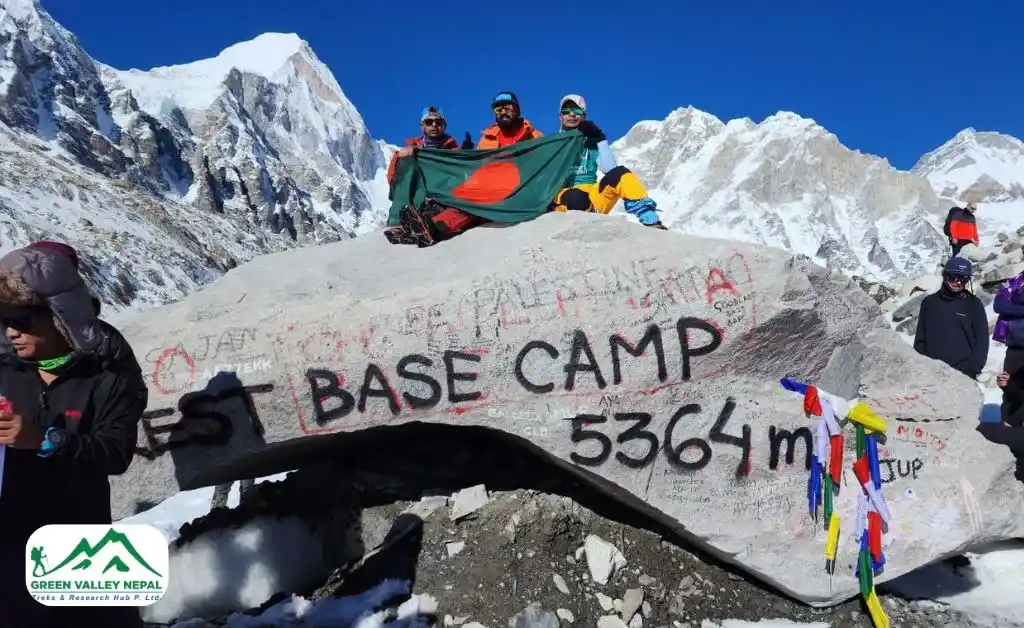
Day 9: Trek from Lobuche (4,910m | 16,108ft.) to Gorakshep (5,140m | 16,863ft.), then Everest Base Camp (5,364m | 17,598 ft.)
Day 9 is literally exhausting. You will primarily walk uphill to Everest Base Camp via Gorakshep and then back to Gorakshep. Heading to Everest Base Camp along the shimmering Khumbu Glaciers offers superb mountain vistas and covers 5.2 kilometers (3 miles). An approach to EBC is not smooth; however, the uphill hike and descent to EBC form a mountaineering base. Indeed, results are an achievement over your physical and hiking effort. Cherish the charm, drop back to Gorakshep, and take a rest.
Day 10: Trek from Gorakshep (5,140m | 16,863ft.) to Kalapatthar (5,644m | 18,517 ft.) for sunrise, then Dzongla (4,830m |15,846ft.)
An early start is necessary to reach the iconic Everest Viewpoint, Kalapatthar, and the sun casts its light on the brilliant surroundings, and Everest is resplendent. Chill out this charisma with some snap and drop back to Gorakshep for breakfast before Lobuche. After breakfast, you will walk downhill to Dzongla and take a rest. Walking along the excellent mountain covers 11.5 kilometers (7 miles) within 8 hours.
Day 11: Trek from Dzongla (4,830m |15,846ft.) to Thagnak (4,750m | 15,583ft.) via Cho La Pass (5,367m | 17,608ft.) (Second Pass)
Departing from the Dzongla is literally long and laborious. Struggling through the streaming glacier moraines and rocky path introduces you to the tough Cho La Pass and lovely monster peaks. Equally, the rocks falling from the top are horrible. The further walk is a descent to Thagnak, where you lodge warmly and covers approximately 8 kilometers (4.9 miles) in 7 to 8 hours.
Day 12: Trek from Thagnak (4700m |15,419ft.) to Gokyo (4,750m | 15,583ft.)
The day hike begins on rocky trails dotted with ice and fairly covers a short distance, about 2.7 kilometers (1.6 miles). Passing through the gorgeous Ngozumpa Glacier and past settlements, treats you to the delights of the Gokyo lakes. Besides this, some Gokyo settlements near the border may be visible as you approach the Gokyo third lake.
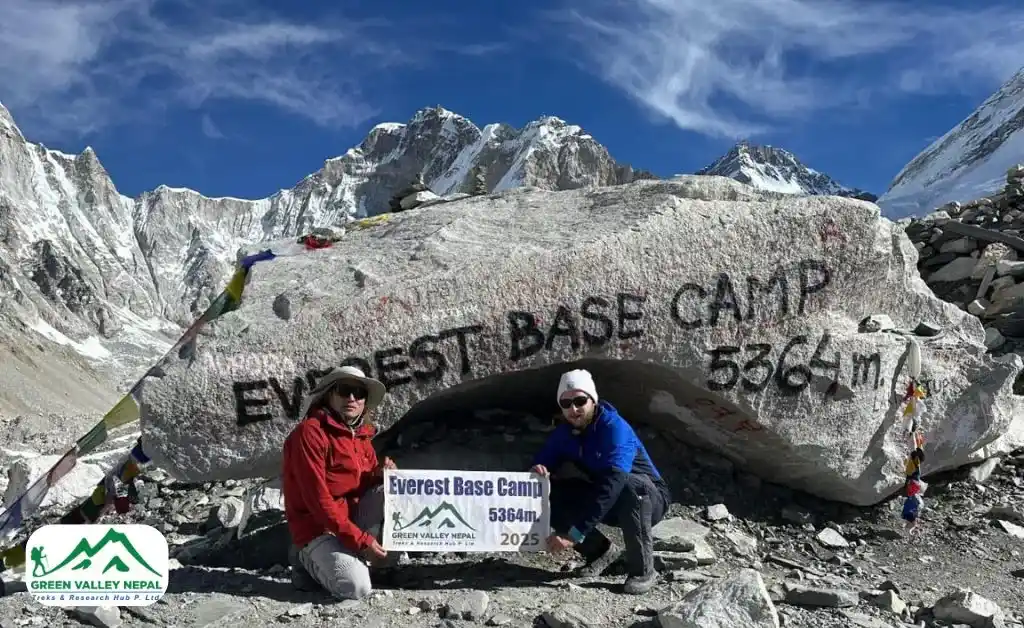
Day 13: Acclimatization in Gokyo (4,750m | 15,583ft.) and Hike to Gokyo Ri (5,357m | 17,575ft.) (For Sunrise or Sunset)
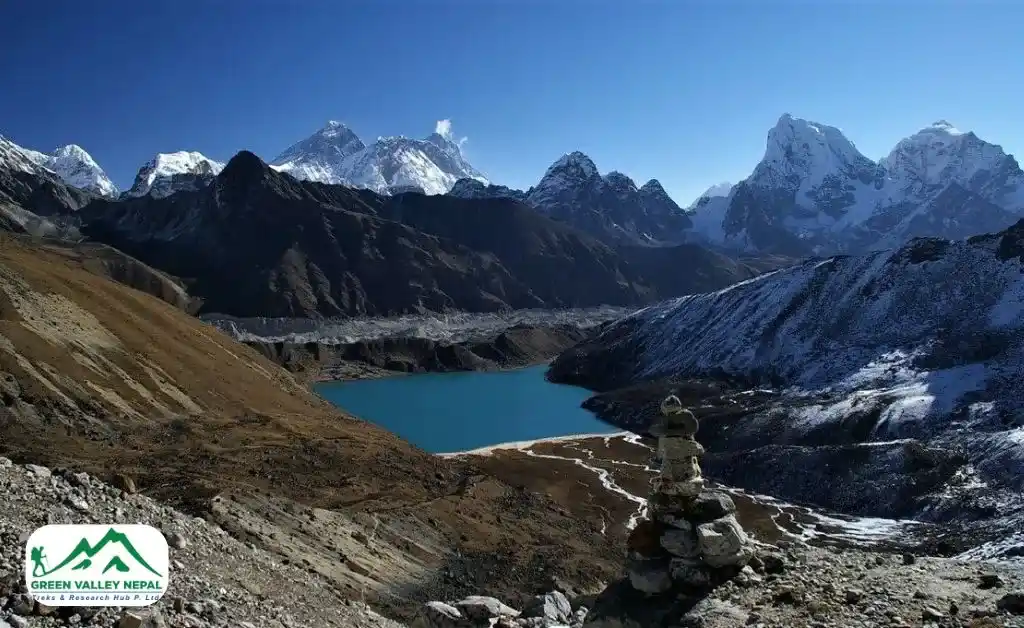
After two difficult passes and a long hike, acclimatization is significant before the final pass ascent. Apply this time to thoroughly re-check your climbing equipment and set yourself up for the most difficult pass, Renjo La, after the two. Additionally, a short Gokyo Ri outing offers lovely lakes and an elegant sunrise over magnificent peaks.
Day 14: Trek from Gokyo (4,750m | 15,583ft.) to Marulung (4,210m |13,812ft.) via Renjo La Pass (5,360m |17,585ft.) (Third Pass)
Finally, the day arrives. Today, you will scale on the final pass of the Three Pass adventure, Renjo La. Departing the main Gokyo route, Renjo La is a tough 7.5-kilometer uphike on a standard rough trail. When you reach the pinnacle, pretty Relama Tsho and Renjo Lake, and the miracle of jumbo peaks wins your heart. The hike further continues down to Marulung, where you lodge for the night.
Day 15: Trek from Marulung (4,210m | 13,812 ft.) to Thame (3,750m | 12,303 ft.) then back to Namche Bazaar (3,440m |11,286ft.)
Today, you will walk more and precisely cover 11.5 kilometers (7 miles). Heading downhill along the Bhote Koshi River, you step into Thame, where the surrounding mountain charm will amaze visitors. Further down, reach Namche Bazaar, which offers numerous monasteries, prayer flags, Chortens, and mani walls.
Day 16: Trek from Namche Bazaar (3,440m |11,286ft.) to Phakding (2,610m | 8,562ft.), then Lukla (2,840m | 9,317ft.)
Day 16 remarks that the Three Passes excursion is almost over. Climbing downhill along the Dudh Koshi River introduces you to Lukla village through a few Sherpa hamlets and suspension bridges. En route, you will enjoy the neat greenery, and the last panoramic mountain views from the lower part may invite you again. The day hike ideally covers 20 kilometers (12 miles) on an excellent route.
Day 17: Flight from Lukla (2,840m | 9,317ft.) to Kathmandu (1,400m |4,593ft.)
Finally, an exit from the Everest region begins early in the morning from Tenzing-Hillary Airport. The air ride covers approximately 138 kilometers, and the neat greenery field will be cherished from the top.
Day 18: Final Departure or Onward for Next Program
Today is your last morning in Nepal. After a hearty breakfast, you will load your backpack and head to the Kathmandu International Airport as scheduled. If your spirit wants more, we have a lot to offer. Inbox us via WhatsApp or send an inquiry.
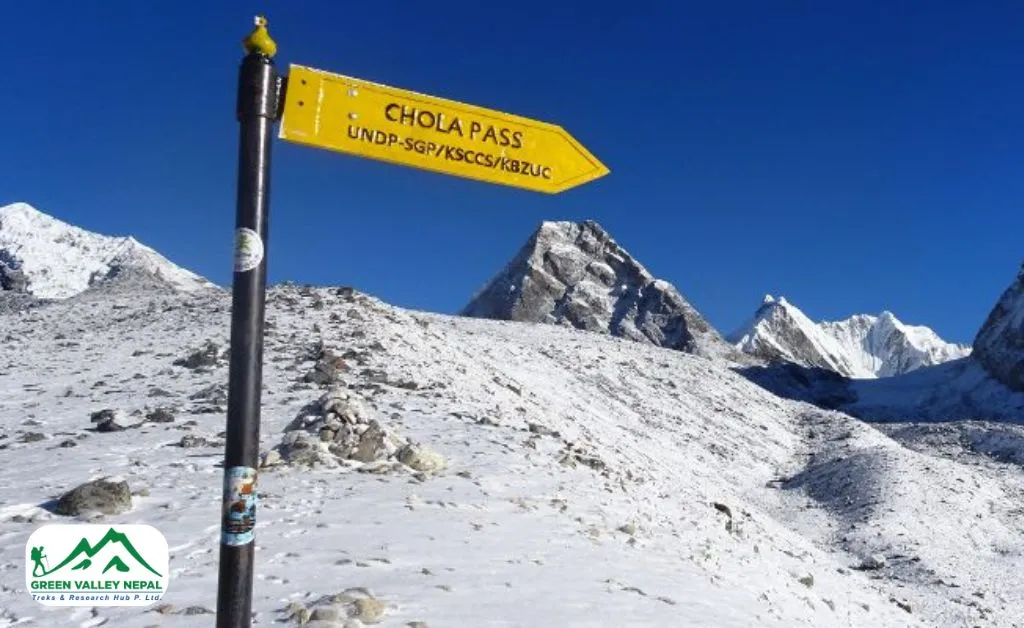
Difficulties of the Everest Three Passes Trek Distance
Although the Three Passes expedition remains a formidable climb for some trekkers who have made our well-executed Everest Base Camp Trek and Gokyo Valley Circuit Trek, it has long been considered a more strenuous and demanding trek. The terrain itself here is taxing. Additionally, the long trekking days, high altitude, and climbing over solid passes, sometimes with heavy snowfall, make the climb even more difficult. When you reach its peak, breath struggles are often felt. No matter what level of physical strength you hold. We refuse to begin on a high-grade, challenging trip as the first mountain experience. This is by no means required to be a gym professional; good fitness people are even good to go.

Training Tips for the Everest Three Passes Trek Distance
Trekking in the Everest region is a highly strenuous journey that requires thorough preparation, training, and planning to reach the summit. Before you set out on the main trail, our experts’ verified and preferred training regimen is highly recommended; however, a fitness test is required. If you are a beginner with good physical strength, then you are well set for this amazing expedition.
Precisely, a gentle light workout, including cycling, running, swimming, or a short uphill climb, creates a mountaineering base. An open-air breathing practice, mountaineering courses, an ice axe, crampons, and technical climbing skills can even make your journey cool.
We have a track record of 100% safe, successful journeys with a legally authorized and experienced guide, with a porter. Meanwhile, some climbers enjoy solo treks.
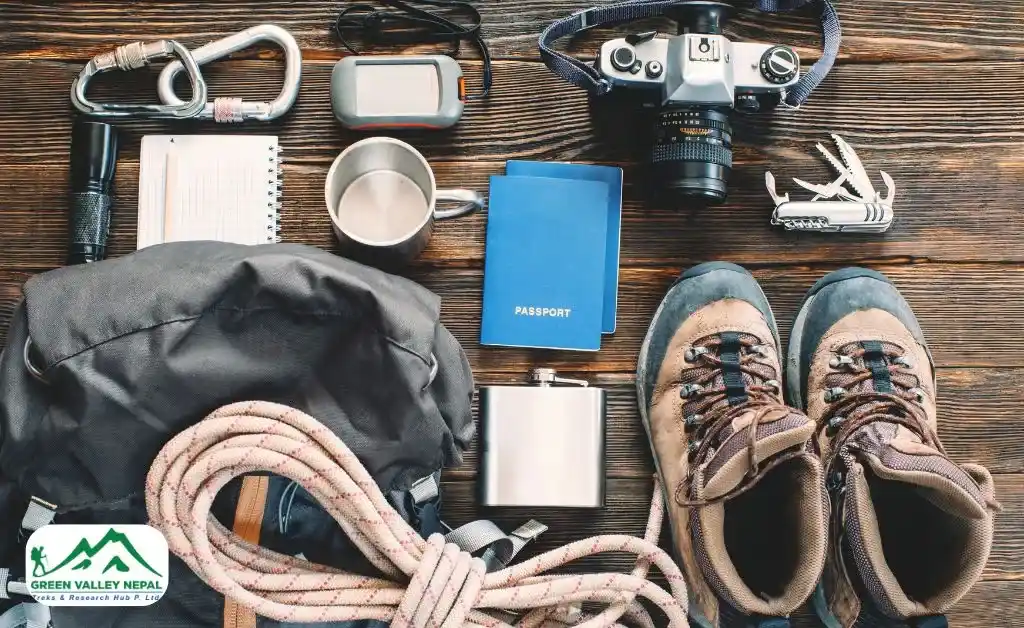
Trek Essentials for Everest Three Passes Trek Distance
Our well-executed and recommended packing checklist is the primary consideration to win the challenges of the Three Pass Trek. In addition, well, smart and light packing does great in the high hills. Some of the essentials that perfectly equip you for the entire Everest Three Passes excursion are listed as:
General Trekking Equipment
- Sleeping bag (rentable if required)
- Spacious Daypack (34-45L with rain cover)
- Duffle Bag (provided by company; must return after trek)
Clothing
- Windproof and waterproof jackets
- Insulted and down jackets
- Thermal wear (inner and outer)
- Trekking Trousers
- Gloves
- Short and long sleeve trekking shirts ( quick-dry fabric)
Head and Footwear
- Warm beanie
- Suncapor sunhat
- Neck gaiter
- Quality wool socks
- Sturdy trekking boots
- Comfortable shoes or sandals
Document and Trek Permits
- Valid Passport and Nepal visa
- Trekking Information Management System (TIMS) card
- Sagarmatha National Park entry permit
- Copies of insurance with high-altitude coverage
- Pocket-friendly map of the Everest Three Passes
Medical and Safety Essentials
- Hand sanitizer and First Aid box
- Altitude medication (after doctor consult)
- Water bottles (2-3 liters) and water purification tablets
- Blister care
- UV protection sunglasses
- Sunscreen(SPF 35-60)
- Lip balm
Toiletries and Personal Items
- Quick-dry towel
- Biodegradable soap
- Wet wipes
- Small-size Toothbrush and Toothpaste
- Toilet paper
Additionals
- GPS tracker
- Harness, axes, and crampons
- Trekking poles
- Powerbank
- Charger
- Headlamp with spare batteries
- Camera
Conclusion
The Everest Three Passes Trek Distance is not exactly measured. However, the overall distance experienced during this masterpiece adventure is approximately 160-170 kilometers. The Lukla flight is 135 kilometers; the expected daily distance is 12 kilometers, and the walking distance over the solid Passes exceeds 12 kilometers. Beyond this, the route and itinerary you choose may vary the trek distance.
Frequently Asked Questions
- How can I get the Three Pass Trek map?
You can easily download the map from the internet. However, the printed map that we provide will be more user-oriented for approaching the summit.
- Can a beginner do the Everest Three Pass Trek?
The Everest Three Passes Trek is rigorously a complex trek, designed especially for the expert and avid hikers. Some hikers with nice physical and mental strength get it amazing. However, novices are totally refused to take this expedition.
- How far is the Three Passes Trek?
The Three Passes Trek has long been a challenging expedition and ultimately goes to a 5,644 m threshold. Meanwhile, it extends for 18 days on the standard trial and covers about 170 kilometers.
- What is the difficulty level of the Three Passes Trek?
The challenging Three Passes Trek encompasses several difficulties, including long trekking days, steep rocky trails, and high altitude, along with the arduous three passes: Kongma La, Cho La, and Renjo La, the most demanding part of the trek, which even tests passionate climbers.

Arjun Pandey
Call us on WhatsApp+977 9841 392186OrChat with us


