Understanding Tipping Culture in Nepal
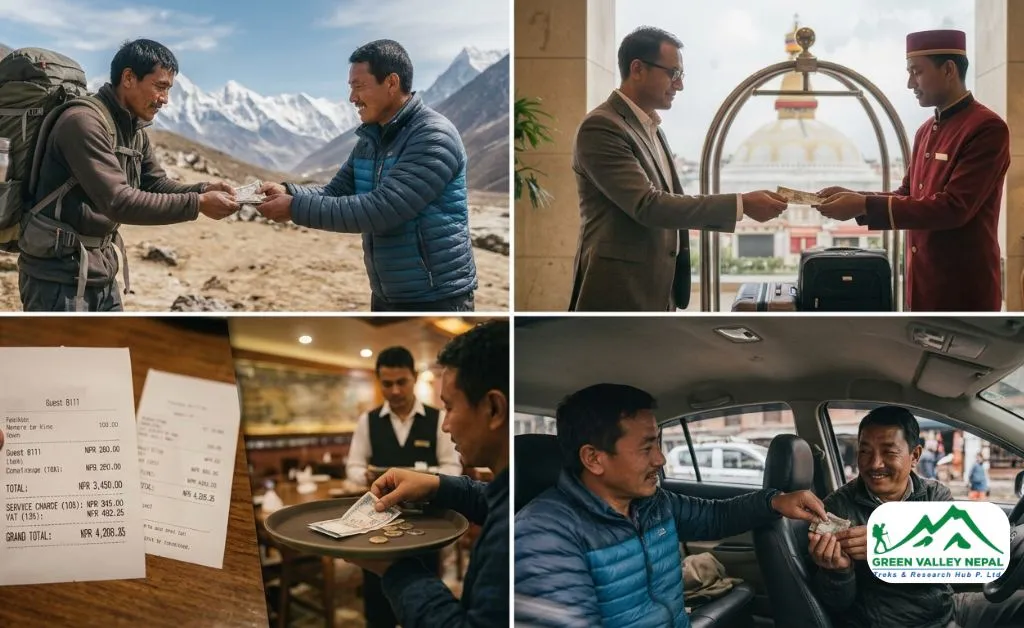
Is Tipping Mandatory or Optional?
Technically, tipping in Nepal is not mandatory. In Nepal, a tip is generally considered a gratuity, a voluntary gesture of appreciation for good service rather than a mandatory payment. Nobody will chase you down the trail demanding money. But in practice, tipping trekking staff, guides, and porters has become an expected part of the experience, especially on organized treks and tours.
The distinction that matters here is between "expected" and "required." Nothing is legally or contractually required unless a service charge is already built into your bill (more on that later). For many trekking staff, tips are an important supplement to seasonal income and are widely considered part of Nepal's trekking culture.
For everyday transactions like buying vegetables at a local market or paying for a bus ticket, tipping isn't part of the culture at all, and offering one can actually come across as strange.
Why Tipping Matters?
Trekking and pottering work in Nepal is seasonal. Guides and porters might have steady work from September through November and again in March through May, but the monsoon and winter months can be quiet. Tips earned during peak season often need to stretch through leaner months.
There's also the nature of the job itself. A trekking guide is responsible for far more than showing the trail. They help keep trekkers safe, solve problems along the route, and ensure the journey runs smoothly from start to finish.
After guiding trekkers on Nepal's most popular routes for many years, we have found that questions about tipping almost always come up during the pre-trek briefing. By the end of the journey, however, most travelers already know exactly who they want to thank for making their experience safer, smoother, and more enjoyable.
Porters, meanwhile, carry loads that most of us wouldn't manage on a flat road, let alone up a Himalayan pass. Tipping fairly is one of the most direct ways trekkers support the people who make these journeys possible.
When You Don't Need to Tip
Not every transaction in Nepal calls for a tip. You can skip it for:
- Small local shops and general stores
- Local buses (not private tourist coaches)
- Government offices and permit counters
- Self-service restaurants or fast-food style spots
If you are unsure whether a situation calls for a tip, a good rule of thumb is to ask yourself if someone provided a personal service to you specifically. If it was just a standard commercial transaction, you can leave it out.
Tipping Trekking Guides in Nepal
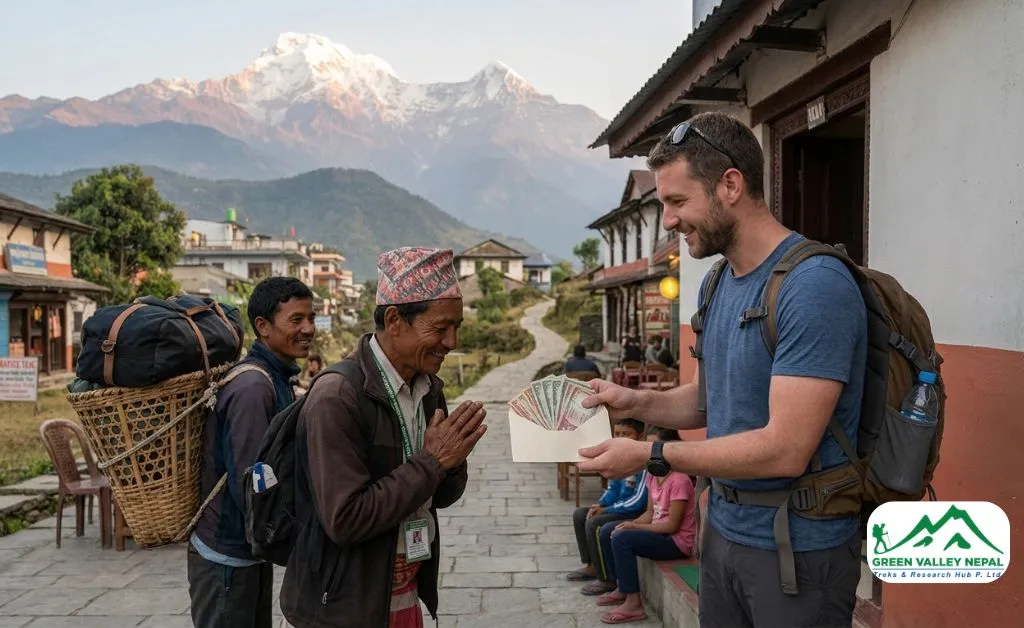
Tipping trekking guides in Nepal is a common way to show appreciation for their professionalism, dedication, and the important role they play throughout your journey. A guide does much more than lead the trail; they arrange accommodation, manage transportation, adjust itineraries when weather conditions change, communicate with tea houses, and closely monitor your health and safety during the trek.
While tips are usually presented as a single amount at the end of the trek, many trekkers also choose to tip daily. As a general guideline, you should tip your trekking guide NPR 2,000–2,500 per day (approximately USD 12–15), depending on the quality of service and your overall trekking experience.
How Group Tips Are Usually Shared?
Here's something a lot of blogs skip entirely. On group treks, tips for guides and porters are usually collected from all trekkers and given as one lump sum, then divided by the guide or company among the staff involved.
If you are trekking with a group of six, for example, everyone might contribute USD 20–25 total toward the guide tip pool rather than each person tipping individually and separately. This avoids awkwardness and ensures a fair, consistent amount reaches each staff member.
When planning your budget, remember that guide and porter tipping in Nepal is usually handled as a shared contribution, especially on organized group treks.
How Much Should You Tip Porters?
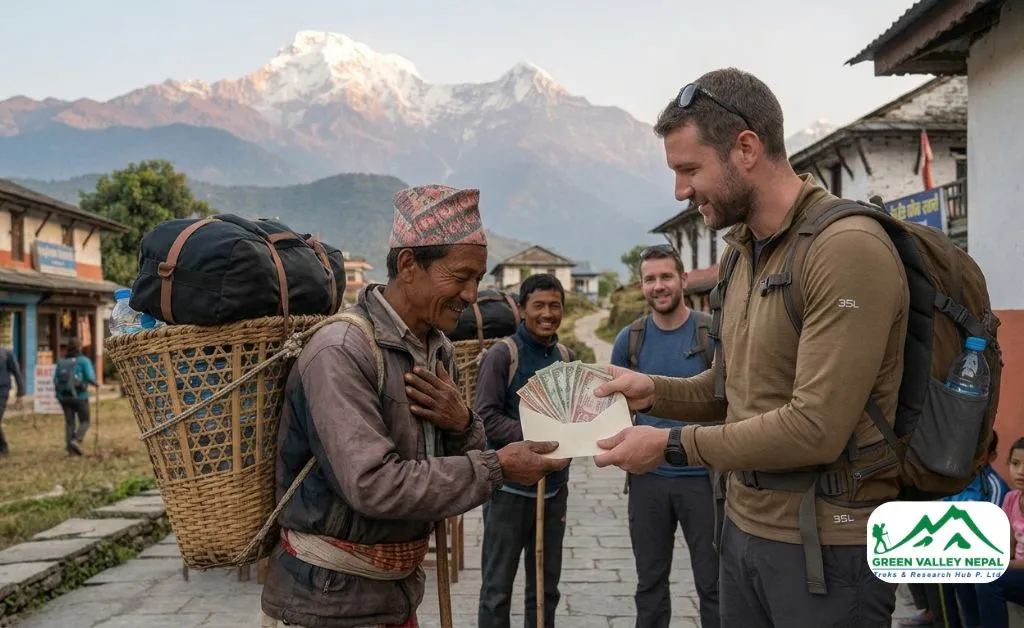
Porters carry your duffel bags (and sometimes shared gear) for the entire trek, often managing 15-20 kg loads across steep, rocky terrain at altitude.
If you hire a porter during your trek, it is customary to provide a tip as a gesture of appreciation for their hard work and support. A recommended tipping amount is NPR 1,200–1,500 per day (approximately USD 10–12), depending on the quality of service and your overall satisfaction. While tipping is not mandatory, it is a widely appreciated practice that helps recognize the porter’s dedication in carrying your luggage and assisting you throughout the journey.
- High-Altitude and Difficult Routes
Treks involving high passes (Thorong La, Larkya La, Renjo La) or longer stretches without easy resupply points generally warrant tips at the higher end of the range. The physical toll on porters increases significantly above 4,000 meters, and this is usually reflected in trekker tipping practice.
This is worth keeping in mind if you are trekking during the best trekking season in Nepal, when porters are working their heaviest loads of the year.
Tipping Assistant Guides and Sherpas
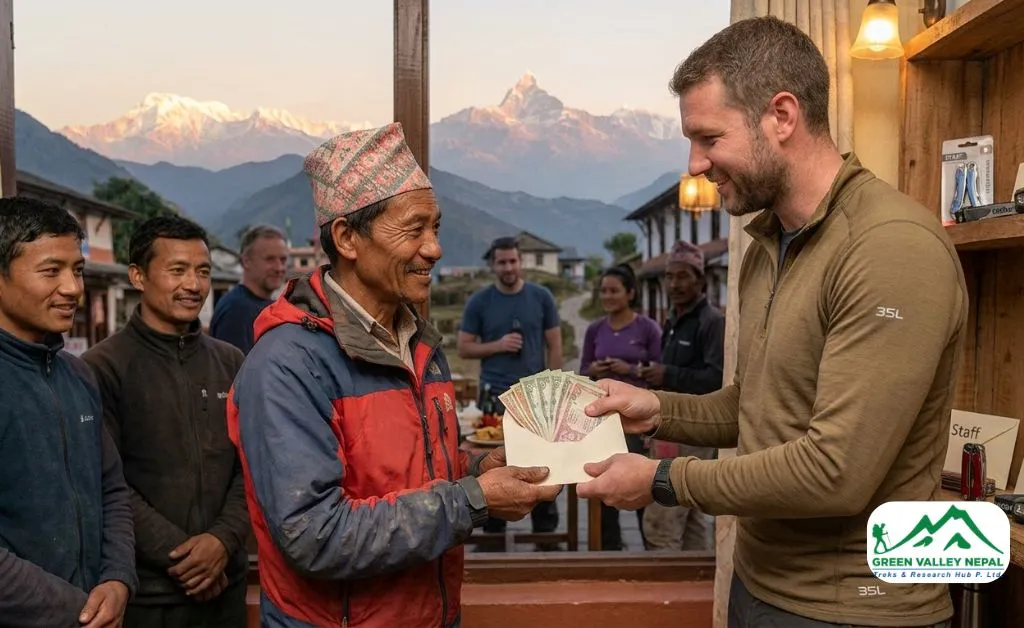
Many trekking companies now include an assistant guide on larger groups or on treks above a certain altitude, partly for safety and partly to help manage groups that split into faster and slower walkers.
- When Are Assistant Guides Included?
Typically on groups of 6 or more trekkers, or on any trek above 4,000 meters where having a second set of eyes matters for altitude monitoring.
Around NPR 1200–1500 (USD 10-12) per day is a common guideline, though the amount can vary depending on group size, trek length, and the assistant guide's role.
- How Companies Usually Divide Tips?
Some trekking agencies pool all staff tips (guide, assistant guide, porters) together and divide based on role and seniority. It's worth asking your agency directly how tips get distributed, since practices vary between companies.
Tipping Tour Guides around Nepal
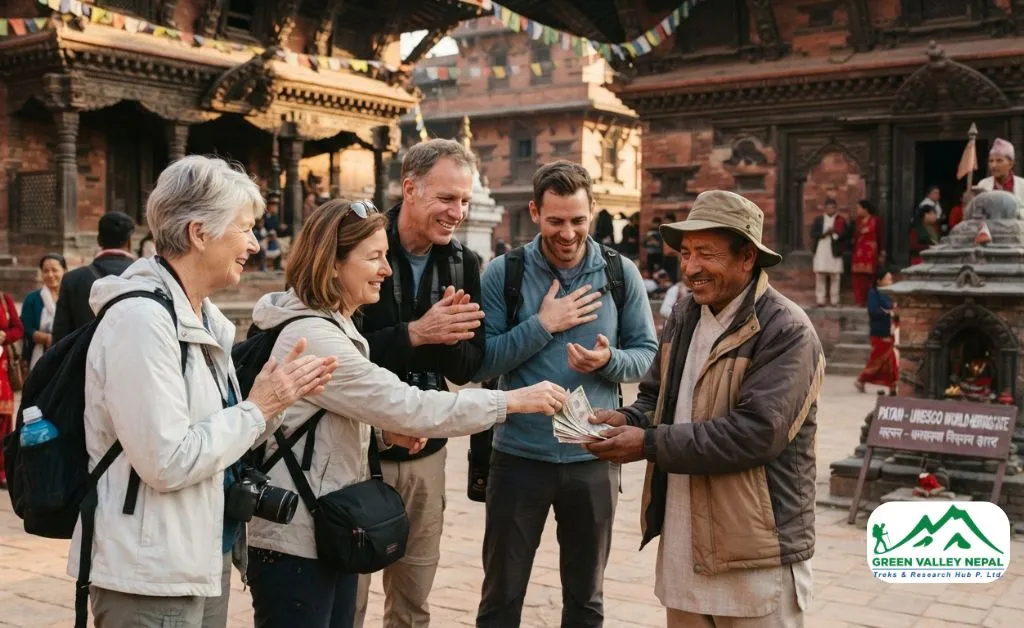
Outside of trekking, Nepal has a strong day-tour and cultural tour industry, particularly around Kathmandu, Pokhara, and the southern plains.
For a half-day or full-day Kathmandu day tour covering Durbar Square, Swayambhunath, Boudhanath, and Pashupatinath, a tip of NPR 1000-1,500 per day is standard for a private guide.
A similar range applies for Pokhara Sightseeing tours, Sarangkot sunrise trips, or day hikes around Pokhara's viewpoints.
For jungle safari guides in Chitwan or heritage guides in Lumbini, NPR 1,000-1,500 per day is typical, sometimes slightly higher if the guide arranges wildlife spotting or specialized cultural explanations.
If you have booked a specialized private guide (art history, Buddhist philosophy, architecture-focused tours), tipping tends to run higher, in the NPR 1,000-1,500 range, reflecting the specialized knowledge involved.
Tipping Drivers in Nepal
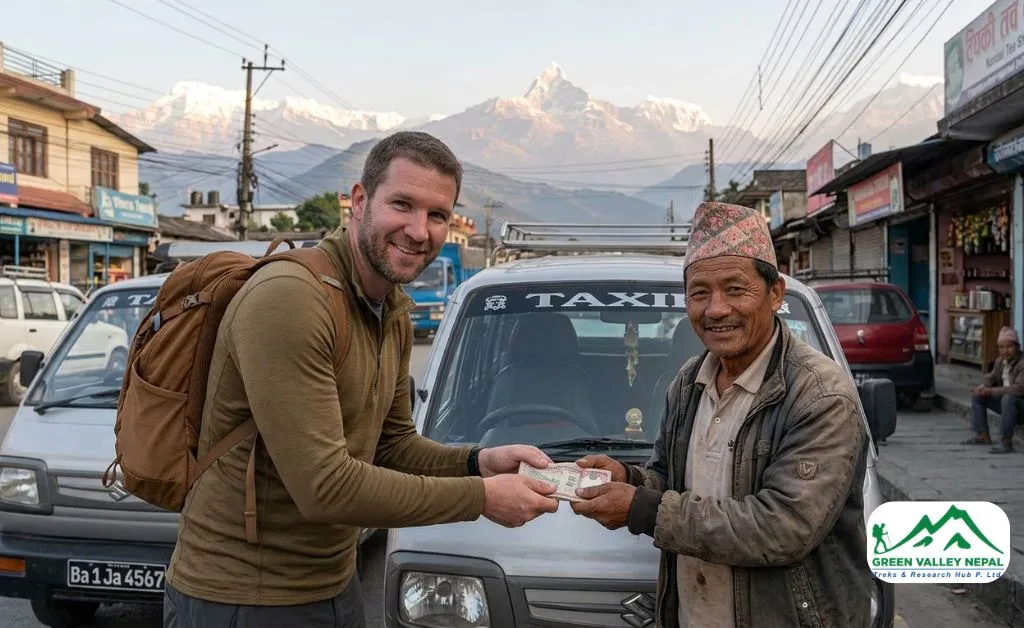
On mountain roads, jeep drivers navigate difficult terrain while often helping with luggage and local logistics. NPR 500–1000 per day is appropriate, with higher amounts for particularly challenging journeys or exceptional service.
For city taxis in Kathmandu or Pokhara, tipping isn't strictly expected, but rounding up the fare or adding NPR 50-100 for good service (helping with bags, waiting during stops) is a nice gesture.
Airport transfers are slightly different. If a driver has arranged your pickup, tracked your flight, and helped with luggage at an early morning or late-night arrival, NPR 200-300 is a fair thank-you.
For multi-day private vehicle hires (say, a Kathmandu-Pokhara-Chitwan circuit), a total tip of NPR 1,000-2,000 for the whole trip is reasonable, depending on trip length and how much extra effort the driver put in.
Hotel and Lodge Tipping Etiquette
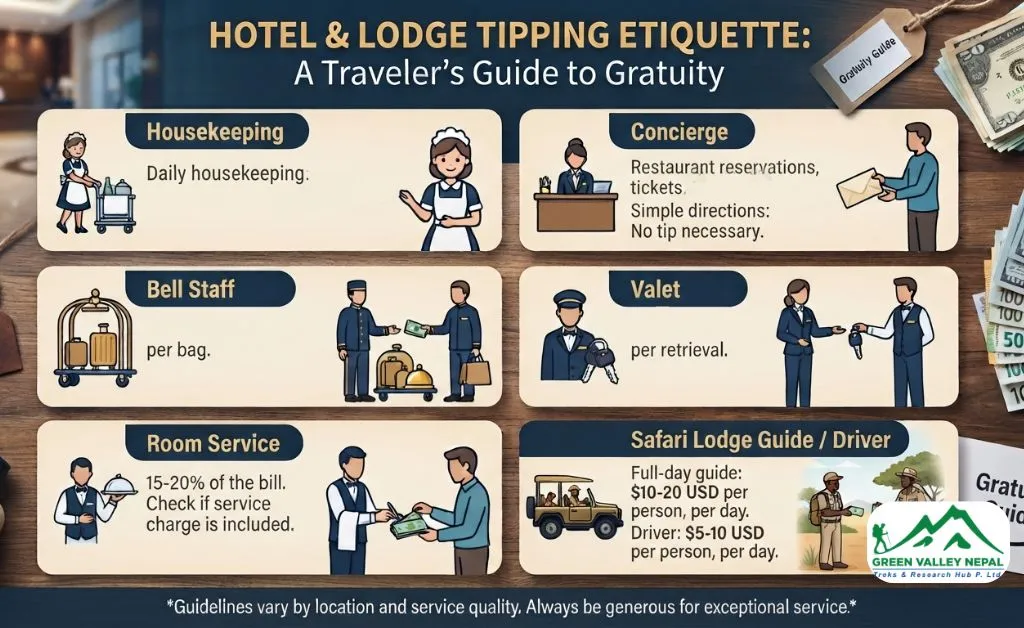
NPR 100-300 per service is standard in most hotels, similar to international norms.
Leaving NPR 100-300 per stay (not per night necessarily, unless it's a longer stay) is appreciated, particularly in budget and mid-range hotels where housekeeping staff rarely see tips directly.
If a concierge has arranged something specific for you (hard-to-get restaurant reservations, transport bookings, problem-solving), a tip of NPR 300-500 is reasonable.
- Luxury Hotels vs Budget Hotels
In luxury hotels, service charges are often already included in your bill, so additional tipping is optional and usually reserved for exceptional service. In budget hotels and guesthouses, there's rarely a built-in service charge, so direct tips to individual staff members carry more weight and are more meaningfully appreciated.
Tipping at Restaurants in Nepal
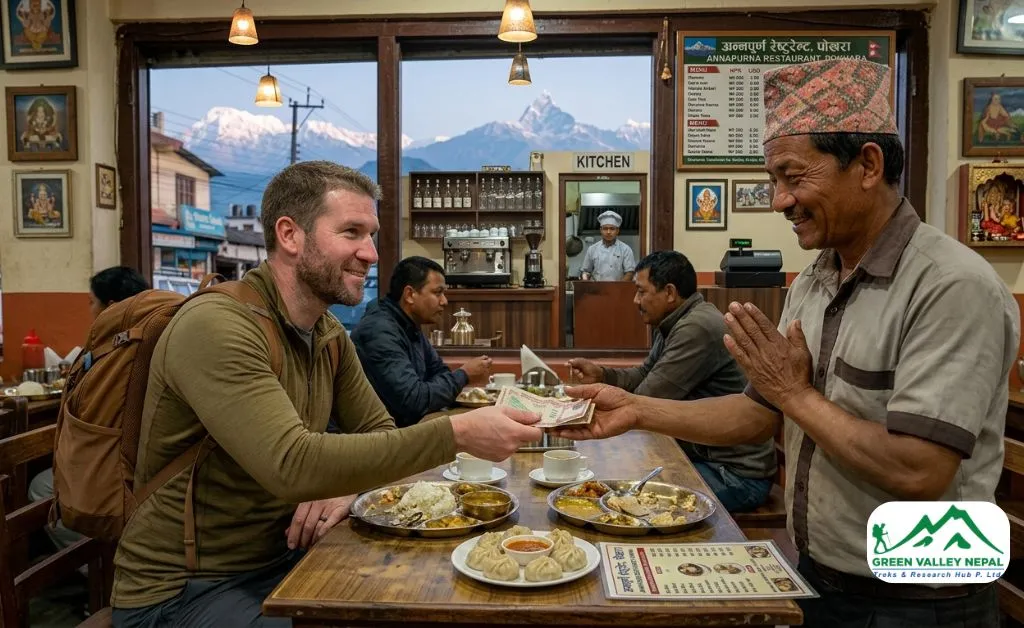
Nepal is well known for its warm hospitality, and understanding basic service etiquette helps travelers reward excellent service without feeling obligated.
- When a Service Charge Is Already Included
Many restaurants in Kathmandu and Pokhara, especially those catering to tourists, add a 10% service charge to the bill automatically. Check your bill before adding a tip. If it's already there, you're not obligated to add more, though rounding up small amounts is always welcome.
- When There Is No Service Charge
At restaurants without a listed service charge, a tip of 5-10% is a reasonable and appreciated gesture, similar to international norms in casual dining.
- Local Restaurants vs Tourist Restaurants
At small local eateries (the kind serving dal bhat to Nepali customers as much as travelers), tipping isn't really part of the culture, and leaving a large tip can feel out of place. Rounding up the bill by a small amount is fine, but there's no expectation here at all.
Tipping in Tea Houses during Treks

In most tea houses, the same family or small team prepares meals, serves guests, and manages the lodge. Rather than tipping individuals, it's common to leave one combined tip for the entire team at the end of your stay. If the staff has gone out of their way to accommodate special requests or provide exceptional hospitality, a tip of NPR 200–500 is a thoughtful gesture.
You generally don't need to tip lodge owners directly the way you would guides or porters, since the accommodation itself is a paid transaction. However, a modest gesture of appreciation (NPR 200-500 for the whole stay) is common if the family has gone out of their way to help.
- Is individual tipping expected?
Not usually. Most trekkers leave one combined tip for the tea house staff as a group rather than tipping the cook, server, and owner separately, which can get confusing and sometimes uncomfortable in smaller family-run lodges.
Tipping During Peak Climbing Expeditions
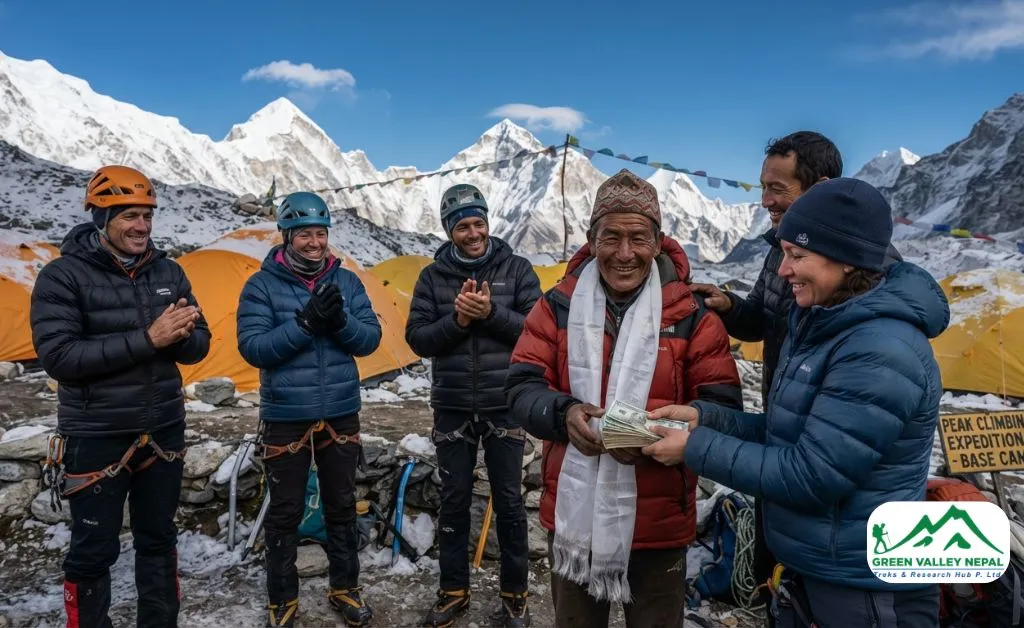
Expedition tipping operates on a different scale entirely compared to standard trekking, and it's worth understanding the difference if you are heading toward Everest, Ama Dablam, Manaslu, or other peak climbs.
Unlike standard trekking, climbing expeditions involve a larger support team, including climbing guides, Sherpas, cooks, and Base Camp staff. Because each role carries different responsibilities and levels of risk, tipping recommendations vary by expedition and operator.
Given the technical skill, risk, and training involved, tips for climbing guides on expeditions are significantly higher than trekking guide tips, often in the range of USD 500-1,500 depending on the peak and season length.
Climbing Sherpas working above Base Camp, particularly those involved in rope-fixing, load-carrying to higher camps, or summit support, are typically tipped based on established expedition norms, which vary by company and peak but generally run into the hundreds of dollars per climbing member.
Managers, liaison officers, and general Base Camp support staff usually receive a separate, smaller collective tip from the team.
- Cook Team and Kitchen Staff
Expedition cook teams work long hours under difficult conditions to keep climbers fed at altitude. A collective tip pooled by all expedition members, then divided among the kitchen team, is standard practice.
If you are on a commercial expedition, your operator can usually advise on current norms specific to that mountain and season, since these figures shift more than standard trekking tips do.
What Currency Should You Use?
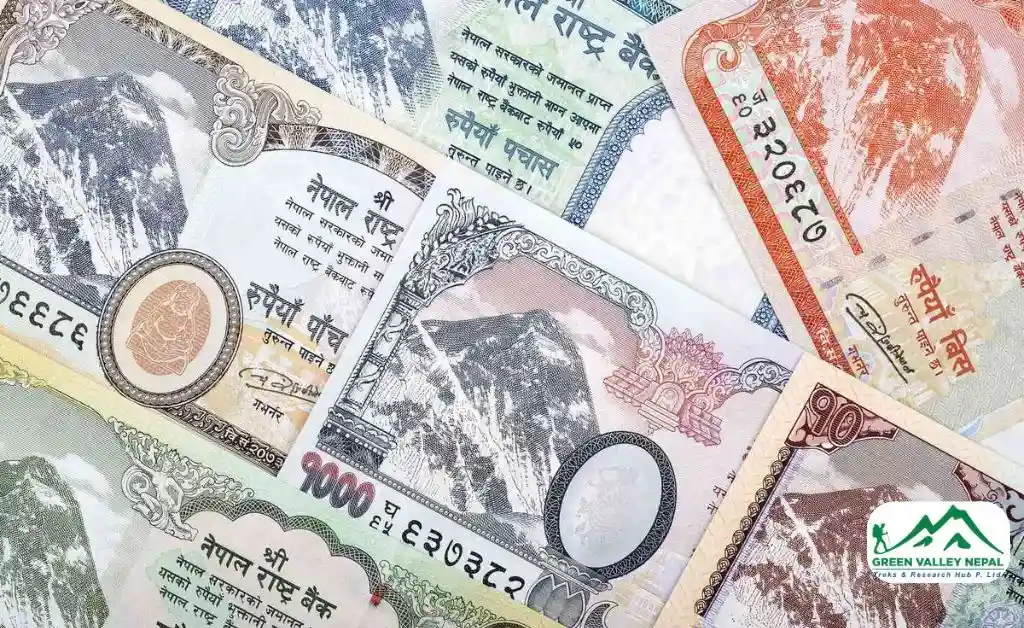
- Nepalese Rupees (Best Option)
For virtually every tipping situation, Nepalese Rupees are the most practical and appreciated choice. Guides, porters, and lodge staff can use rupees immediately without needing to exchange currency in remote trekking regions.
USD is widely accepted for larger tips, especially for guides at the end of a trek, since it's a stable and easily exchangeable currency. Just make sure your bills are clean and undamaged, since torn or heavily worn USD notes are sometimes refused by banks and exchange counters in Nepal.
Euros and British pounds are accepted in some tourist-heavy areas, but exchanging them can be less convenient outside Kathmandu and Pokhara. If you're carrying other currencies, it's best to exchange them into rupees before heading out on trek.
- Should You Tip Digitally?
QR code payments (via apps like eSewa or Khalti) have become extremely common in Nepal's cities, and some guides and drivers do accept digital tips now. That said, cash is still strongly preferred in trekking regions, where internet connectivity is unreliable, and many tea house staff don't have consistent access to mobile banking. Carry enough small-denomination rupee notes before you head into the mountains.
When Is the Best Time to Give a Tip?
Not typical for guides and porters on organized treks, though some independent trekkers with a single porter or guide choose to tip small amounts throughout the trip.
The most common approach. Tips are usually given as one collected amount on the final day or evening.
For multi-day treks, the last evening at the final tea house or lodge before returning to Kathmandu is the traditional moment for the tipping ceremony, often alongside a farewell dinner.
For hotel staff, tipping at checkout (for housekeeping, bellboys) rather than at check-in is standard practice.
How to Give Tips Respectfully?

A few small things make a real difference in how a tip is received:
Where possible, hand tips directly to the person rather than leaving them on a table or with a third party, especially for guides and porters.
A tip accompanied by a genuine thank-you and maybe a few words about what you appreciated (their patience, their humor, their local knowledge) means more than the money alone.
- Use An Envelope For Groups
For group tips, using an envelope keeps things organized and avoids the awkwardness of counting bills in front of everyone.
- Avoid Making Staff Uncomfortable
Don't insist on tipping someone who politely declines, and avoid making a big public show of the amount you're giving. Quiet appreciation goes further than a grand gesture.
Common Tipping Mistakes Travelers Make
- Assuming tipping is mandatory: It's expected in many situations, but treating it as a strict obligation misses the point of it being a gesture of appreciation.
- Forgetting Assistant Guides: Trekkers often tip the lead guide generously and completely overlook the assistant guide who's been just as involved.
- Carrying Only Large Bills: Small denomination rupee notes are essential in remote areas where change simply isn't available.
- Waiting until Returning to Kathmandu: By the time you're back in the city, the moment (and sometimes the staff member) has passed. Tip before you say goodbye at the trailhead or final lodge.
- Using Damaged Foreign Currency: Torn, taped, or heavily worn USD notes are frequently rejected by exchange counters, making them a poor tipping choice.
- Confusing Service Charge with Gratuity: A service charge on your restaurant or hotel bill is not the same as a tip, and checking your bill before adding extra saves confusion.
Final Thoughts
At the end of the day, tipping in Nepal comes down to reflecting your experience. If your guide kept you safe through a tough pass, if your porter carried your bags without complaint through pouring rain, if your tea house family made sure you had hot food after a long day, that's worth recognizing.
Nepalese people generally value genuine appreciation more than obligation. A tip given with a real thank-you means more than a bigger amount handed over reluctantly.
Including a tipping budget in your travel plans helps you avoid last-minute uncertainty and ensures you're prepared to thank the people who make your journey memorable. Even a modest tip, given respectfully and with genuine appreciation, goes a long way.
Have questions about tipping, budgeting, or planning your trek? Contact us at Green Valley Nepal Treks; we are happy to help you plan a trip that fits your comfort and budget.
Frequently Asked Questions (FAQs)
- Is tipping expected in Nepal?
Yes, particularly for trekking guides, porters, and tour guides. It's not legally required, but it's a well-established part of the industry and genuinely appreciated.
- How much should I tip my trekking guide?
A common guideline is around USD 12–20 per day, or roughly USD 150–300 in total, depending on your trek length, the level of service, and your overall experience.
- How much should I tip my porter?
Around USD 10-12 per day, or USD 100-120 total for a standard 10-14 day trek.
- Should I tip in restaurants?
Check your bill first. If a service charge is already included, additional tipping is optional. If not, 5-10% is standard in tourist restaurants.
Yes, USD is widely accepted for larger tips like guide and porter gratuities, but make sure your notes are clean and undamaged.
- Do luxury lodges expect higher tips?
Generally yes, tipping expectations rise by around 20-30% for premium lodge treks compared to standard tea house treks.
- Should I tip every day or at the end?
The end of the trek is the most common practice, usually on the last evening or during a farewell dinner.
- Can our trekking group combine tips?
Yes, this is standard practice. Groups usually pool tips for guides and porters and hand over one combined amount, which is then divided among staff.
- What if I'm traveling on a budget?
Tip within your means. Even a modest tip given respectfully and with genuine thanks is valued far more than no tip at all.
- Should children tip trekking staff?
Families traveling with children usually include kids' contributions as part of the family's overall group tip rather than expecting children to tip separately.