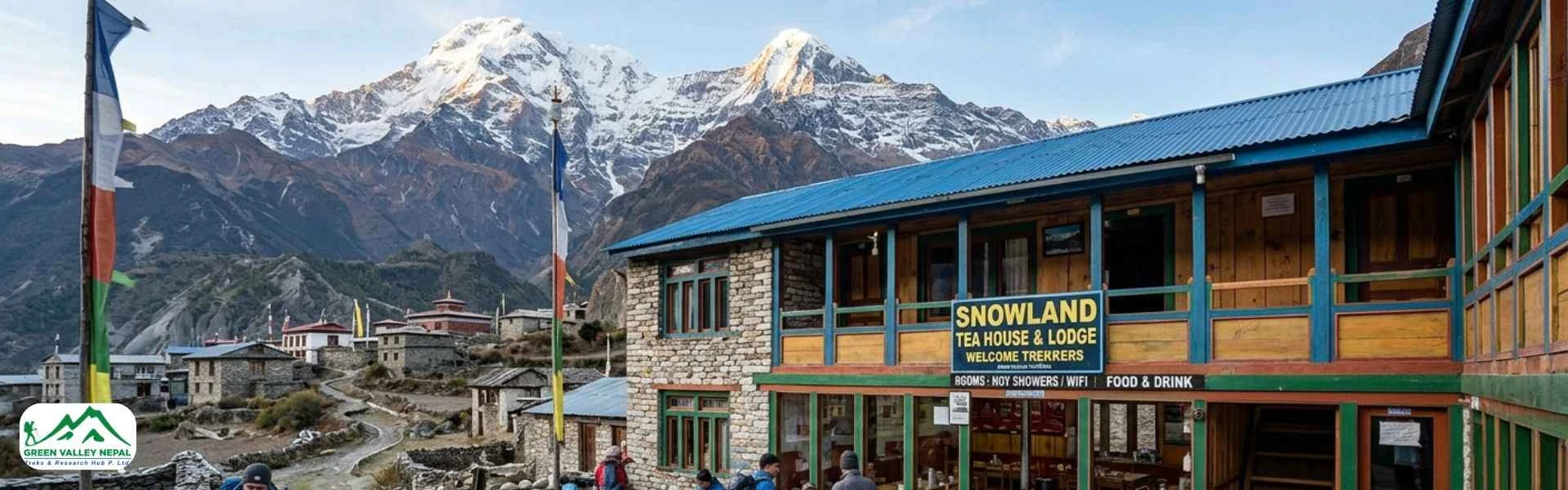
While trekking through the changing landscapes and high altitudes of the Annapurna Circuit, accommodation becomes one of the most important parts of your journey. After a long day on the trail, teahouses are where you rest, eat a hot meal, warm up, and prepare for the next day ahead. They are not just a place to sleep, they are your shelter, your dining room, and your safe space in some of the most remote corners of the Himalayas.
Accommodation on the Annapurna Circuit trek is not the same from start to finish. In the lower villages, you will find comfortable rooms with hot showers and Wi-Fi, but when you go higher, near Manang and Thorong Phedi, things get more basic, smaller rooms, colder nights, and fewer facilities. And as you descend toward Tatopani and Ghorepani, the comfort levels go higher again.
This guide covers everything about Annapurna Circuit accommodation, what teahouses are really like, how comfortable they get, what facilities you can expect at different altitudes, how much things cost, and what you should bring to make your nights more comfortable. Whether you are a first-time trekker or someone who has done a similar route before, this is the information you need before you go.
Before choosing accommodation, it’s also important to understand the best time to trek the Annapurna Circuit, as weather and season affect room availability.
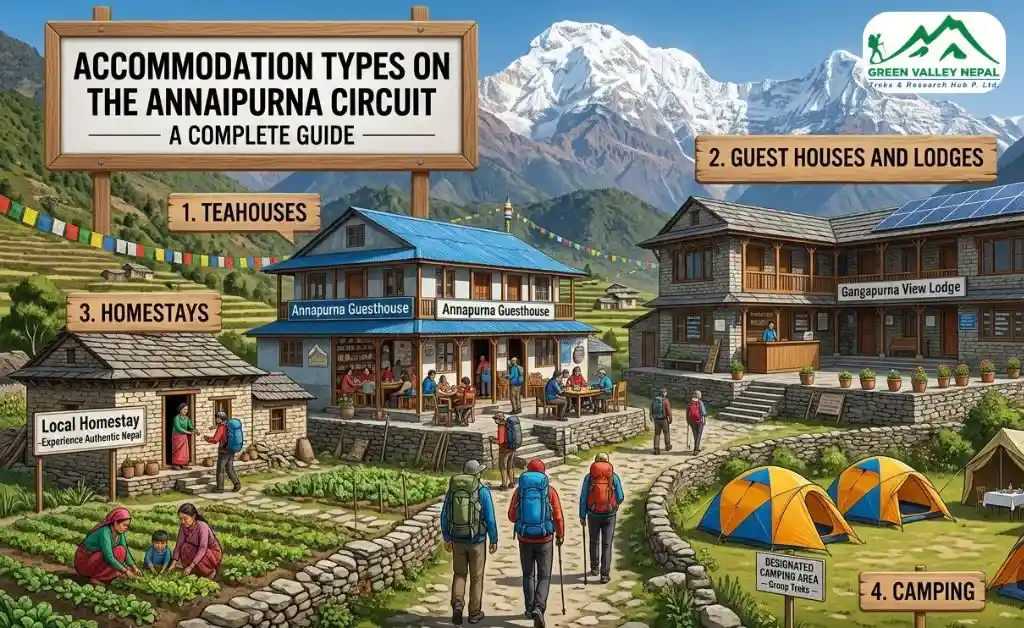
Types of Accommodation on the Annapurna Circuit Trek
Teahouses
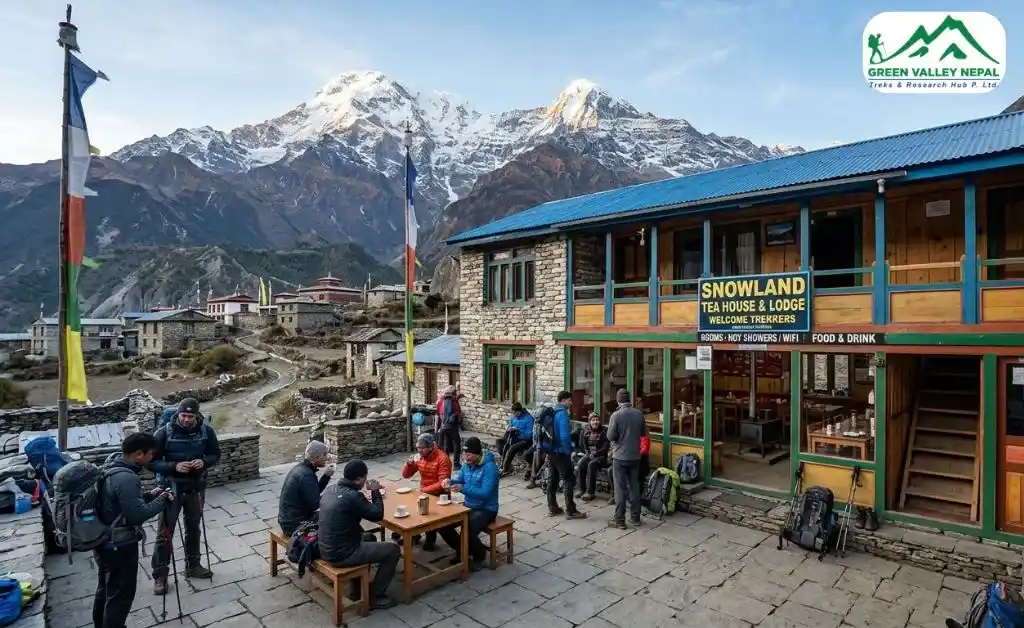
Teahouses are the most popular places to stay along the trail. Run by local families, they offer simple but comfortable dormitory-style rooms along with shared bathrooms and a communal dining area. What makes teahouses special is their warm, homely atmosphere. You can sit down to a freshly prepared home-cooked meal, swap stories with fellow trekkers from around the world, and feel right at home, even in the heart of the mountains.
Guest Houses and Lodges
If you are trekking through lower-altitude villages like Chame, Manang, or Jomsom, you will find a good selection of guesthouses and lodges with more refined amenities. These properties typically offer:
- Private rooms with attached bathrooms
- Hot showers and electrical charging points
- Wi-Fi connectivity
- Heating in rooms and dining areas (in select properties)
Guesthouses are a great fit for trekkers who want to unwind in comfort after a long day on the trail.
Homestays
For a truly immersive experience, consider staying in a homestay. You will live under the same roof as a local family, giving you a rare and personal glimpse into their everyday life, traditions, and culture. Expect a cozy room, wholesome home-cooked meals, and warm hospitality that no hotel can replicate. While the facilities may vary from host to host, the authenticity and warmth of a homestay more than make up for any differences in comfort.
Camping
Camping is the perfect choice for trekkers who want to step off the beaten path and connect deeply with nature. Sleeping under a sky full of stars in the Annapurna wilderness is an experience like no other. If you choose to camp, it is best to book through a trusted trekking agency in Nepal. They will take care of everything like tents, sleeping gear, cooking equipment, and meals, so you can focus entirely on the journey.
Facilities Available At Teahouses on the Annapurna Circuit Trek
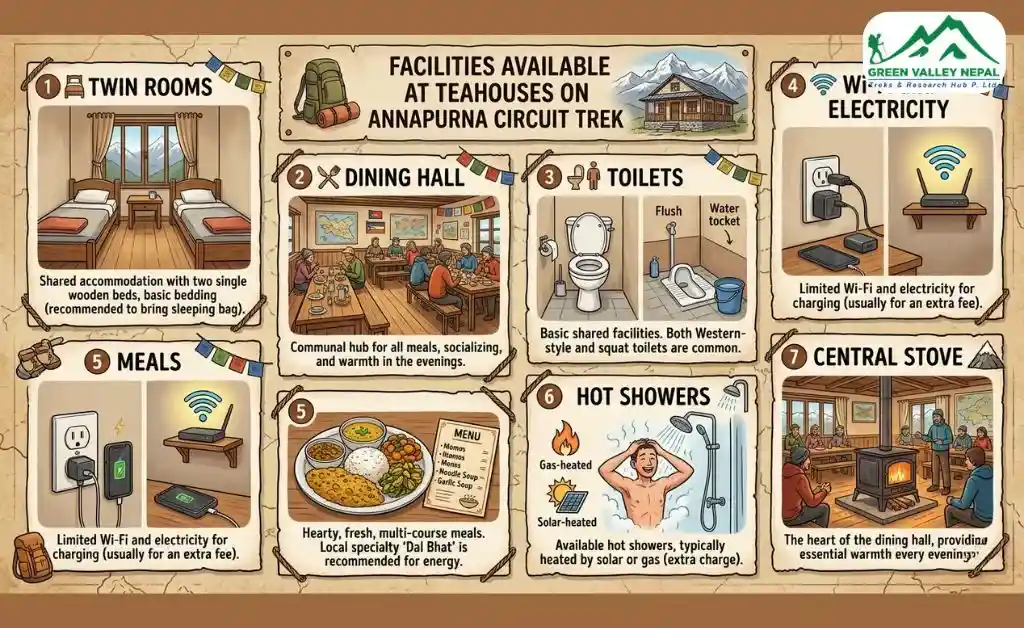
- Rooms Available: Accommodation typically consists of simple twin rooms furnished with two wooden beds, along with pillows and blankets for warmth. It is strongly recommended that you bring your own sleeping bag, as temperatures at higher elevations tend to be significantly colder than anticipated.
- Dining Hall: The communal dining area generally features long shared tables, walls adorned with vibrant posters and trail maps, and a central stove. This space becomes a lively gathering spot for trekkers, particularly in the evenings, where people come together to exchange their experiences on the trail.
- Toilets: At higher elevations, squat-style toilets are the norm, which may be shared among guests or, in some cases, located outdoors. Facilities in lower-altitude areas tend to be more modern, often including Western-style toilets with flush systems. It is advisable to carry your own toilet paper to avoid any inconvenience.
- Wi-Fi and Electricity: Power is generally supplied through solar or hydroelectric sources. Charging electronic devices may incur an additional cost. Keep in mind that internet connectivity in the Annapurna region can be slow and inconsistent, particularly at greater altitudes.
- Meals: The food served at teahouses offers a satisfying blend of local and international flavors. Dal Bhat, a hearty dish of rice and lentils, is a staple on most menus and serves as an excellent source of protein for trekkers. Home-cooked specialties also add a distinctive and memorable touch to the dining experience.
- Hot Showers: Warm showers are available at the majority of teahouses. Since water is heated using gas or solar energy, availability may vary depending on weather and altitude conditions.
- Central Stove: The dining hall, anchored by its central stove, forms the heart of every teahouse. After a long day on the trail, trekkers arrive weary and chilled, gathering around the warmth of the stove as the cold gradually fades from their hands and bodies.
You can visit our blog recommended packing list for trekking in Nepal, to get a better idea of what to carry while participating in the Annapurna Circuit Trek adventure.
How Much Does Accommodation Cost on the Annapurna Circuit Trek?
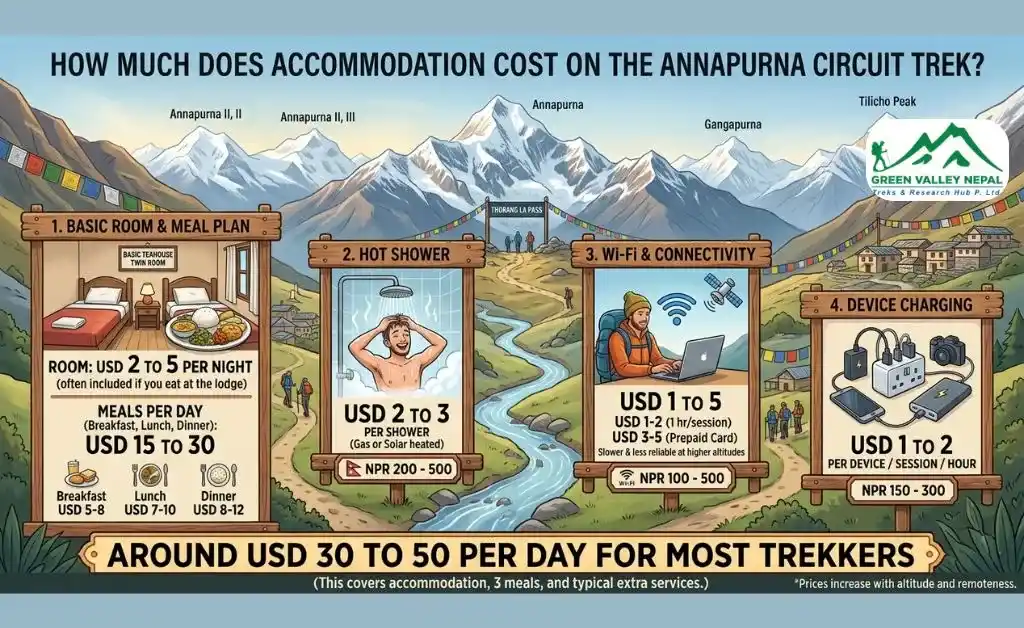
One of the things that surprises most first-time trekkers is how affordable teahouse accommodation is on the Annapurna Circuit. Rooms typically cost around USD 3 to 6 per night.
As you go higher toward Manang and Thorong La, room prices rise to around USD 8 to 17 per night, and some better teahouses offer private rooms with attached bathrooms at a premium.
Beyond the room, here are the extra costs you should budget for:
- Hot shower: USD 2 to 3 in most places. Water is heated by solar or gas, so availability depends on the weather.
- Wi-Fi: USD 1 to 5 depending on location. Data packs of NTC and Ncell work in most villages, but the signal gets weaker as you climb.
- Device charging: USD 1 to 2 per charge. Power comes from solar or hydroelectric systems, not always reliable.
- Meals per day: USD 15 to 30, depending on altitude and what you order
The average daily budget on the Annapurna Circuit Trek, covering accommodation, three meals, and small extras, works out to around USD 30 to 50 per day for most trekkers.
Best Places to Stay during the Annapurna Circuit Trek
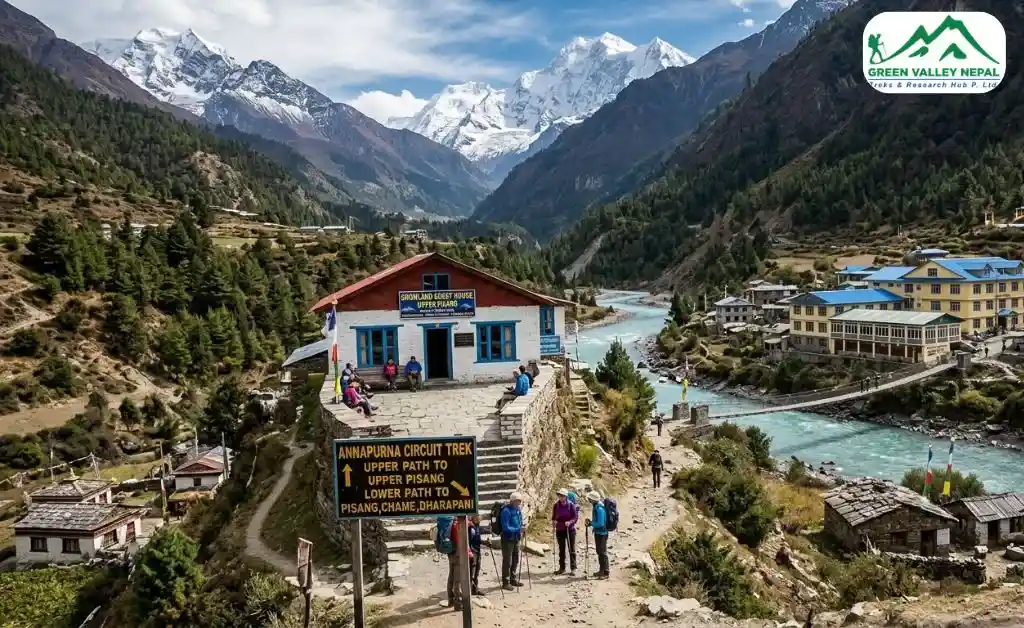
Dharapani
Dharapani offers between 10 and 15 teahouses, ranging from basic to mid-range accommodations, making it a comfortable stop along the circuit.
- Accommodation: Guests stay in twin-sharing rooms equipped with wooden beds, mattresses, and blankets. Select lodges provide heated rooms along with sweeping views of the surrounding peaks.
- Toilets & Showers: Most teahouses feature Western-style toilets, and both hot and cold shower options are generally available.
- Electricity & Charging: Electrical supply is present, though occasional power outages are common, so it is wise to charge devices whenever possible.
- Food & Drinks: The dining menu brings together Nepali staples like dal bhat, Tibetan bread, and familiar international options such as pasta and pizza.
- Wi-Fi & Mobile Network: Paid Wi-Fi is accessible at most lodges, and mobile network coverage is reasonably reliable.
Chame
With 15 to 20 teahouses spanning basic to luxury categories, Chame is one of the well-equipped stops on the trail.
- Accommodation: Rooms are comfortably furnished with standard bedding, while select lodges feature carpeted floors and wider windows framing mountain panoramas.
- Toilets & Showers: Both shared and en-suite bathrooms are available, with bucket or solar-heated hot showers on offer.
- Electricity & Charging: Solar power keeps the lights on, and device charging is complimentary at most lodges.
- Food & Drinks: Trekkers can enjoy local favorites such as dal bhat and momos, alongside a selection of continental dishes.
- Wi-Fi & Mobile Network: Free Wi-Fi at moderate speeds is widely available, and mobile connectivity is generally good.
Upper Pisang
A quieter stop with 5 to 7 teahouses, Upper Pisang is ideal for those seeking simplicity with spectacular scenery.
- Accommodation: Rooms are straightforward, featuring wooden beds and blankets. Several lodges offer attached rooms and awe-inspiring views of the Annapurna range.
- Toilets & Showers: Both shared and private toilet facilities are available, and solar-heated hot showers can be found at most teahouses.
- Electricity & Charging: Electricity is available, and charging your devices comes at no additional cost.
- Food & Drinks: Expect traditional Nepali home-cooked meals and warming beverages like freshly brewed ginger tea.
- Wi-Fi & Mobile Network: Free Wi-Fi is accessible, though the mobile signal tends to be weak at this elevation.
Manang
One of the most popular acclimatization stops, Manang hosts 15 to 20 teahouses, from budget stays to well-appointed lodges.
- Accommodation: Rooms carry a cozy, traditional character, with some lodges offering carpeted floors for extra warmth during cold nights.
- Toilets & Showers: En-suite bathrooms with gas or solar-heated hot showers are a notable comfort here.
- Electricity & Charging: Power is consistently available, and charging is free across most establishments.
- Food & Drinks: Manang stands out for its freshly baked bread, locally produced yak cheese, and hearty specialties like Thukpa and momos.
- Wi-Fi & Mobile Network: Complimentary Wi-Fi runs at moderate speed, and mobile network coverage is reliable.
Yak Kharka
A high-altitude settlement with just 4 to 5 basic teahouses, Yak Kharka serves primarily as a rest point before the demanding push toward Thorong La Pass.
- Accommodation: Rooms are simple, with wooden beds and minimal bedding. Carrying a personal sleeping bag is highly advised given the extreme cold.
- Toilets & Showers: Shared toilet facilities are available, though hot shower access is quite limited.
- Electricity & Charging: Electricity is available, and device charging is possible for a modest additional fee.
- Food & Drinks: The menu is kept simple, centering on energy-sustaining meals like dal bhat and noodle soup.
- Wi-Fi & Mobile Network: Paid Wi-Fi is available at moderate speeds, and the mobile signal is surprisingly decent.
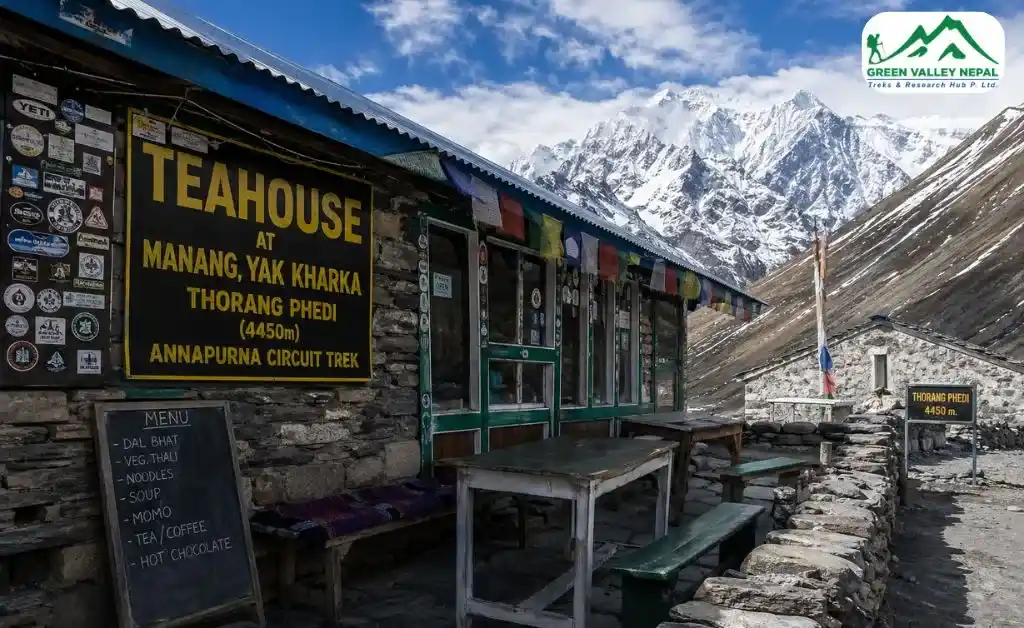
Thorong Phedi
Positioned at the base of Thorong La, this stop has only 3 teahouses, but they serve a critical purpose for trekkers preparing for the high-altitude crossing.
- Accommodation: Rooms are bare-bones with thin bedding, and bringing your own sleeping bag is strongly recommended.
- Toilets & Showers: Shared toilets and basic bucket hot showers are available for guests.
- Electricity & Charging: Power is generated from a local hydropower source, and device charging is available for a small fee.
- Food & Drinks: Simple, high-energy meals including dal bhat, boiled potatoes, and noodle soup are available to fuel the next day's climb.
- Wi-Fi & Mobile Network: Wi-Fi availability is limited to short durations, and the mobile signal is generally weak.
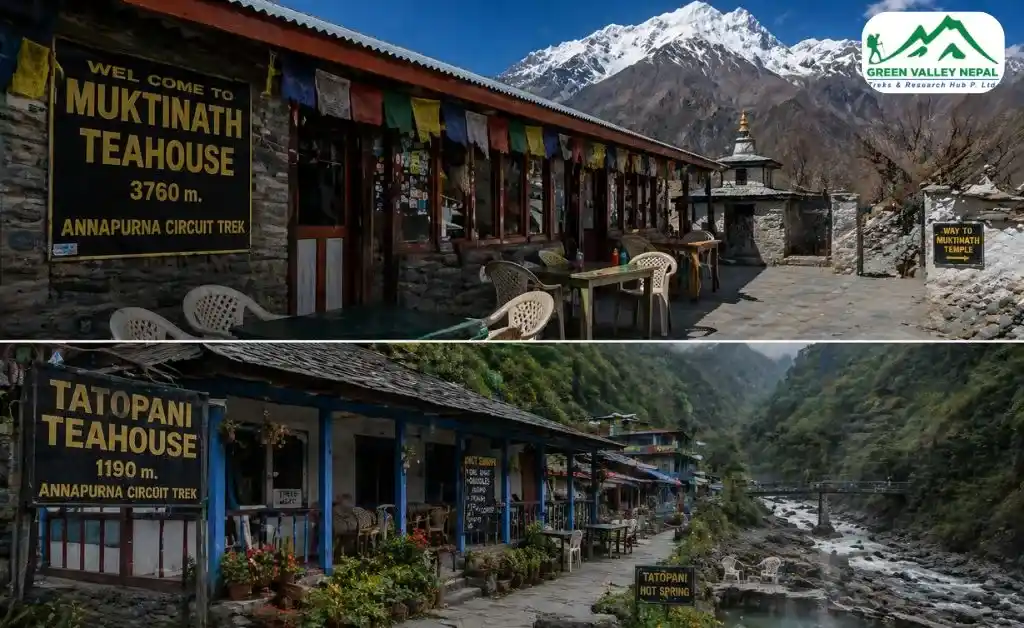
Muktinath
A spiritually significant destination with 20 to 25 teahouses, Muktinath offers some of the widest range of accommodation options on the entire circuit.
- Accommodation: Rooms are comfortably appointed with standard bedding, and luxury lodges provide heated rooms for those seeking extra comfort at altitude.
- Toilets & Showers: Western-style bathrooms, both shared and private, are common, with hot showers readily available.
- Electricity & Charging: Grid electricity ensures reliable power, and charging is free throughout most lodges.
- Food & Drinks: A diverse menu combines local Nepali, Indian, and international cuisines, with highlights including Tibetan bread and freshly made apple pie.
- Wi-Fi & Mobile Network: Free Wi-Fi and a strong mobile network make this one of the most connected spots on the trail.
Tatopani
Famous for its natural hot springs, Tatopani has 6 to 7 teahouses, including one luxury option, offering a well-deserved rest for tired legs.
- Accommodation: Rooms are comfortable with standard bedding, and some lodges provide convenient access to the nearby hot springs, a highlight after days of trekking.
- Toilets & Showers: En-suite bathrooms with hot showers are standard across most teahouses.
- Electricity & Charging: Power supply is dependable, and device charging is available free of charge.
- Food & Drinks: The village serves up an appealing variety of local and international dishes, with fresh river fish being a regional specialty worth trying.
- Wi-Fi & Mobile Network: Good-speed free Wi-Fi and a strong mobile signal make Tatopani one of the most connected villages along the lower circuit.
Essential Tips for Annapurna Circuit Trek Accommodation
- Money & Payments: ATMs are rare beyond Manang and Jomsom, and credit cards are not accepted. Withdraw enough Nepali rupees before the trek and carry small denomination notes for smoother transactions.
- Booking & Arrival: Most teahouses are walk-in only. During peak seasons (October–November and March–April), arrive early in the afternoon to secure a room before other trekkers do.
- Room Comfort & Sleep: Blankets provided are often thin and insufficient. Bring a personal sleeping bag for warmth and hygiene. Light sleepers should also pack earplugs and an eye mask, as teahouse walls are very thin.
- Showers & Hygiene: Hot showers cost extra and can be inconsistent at altitude. Use wet wipes between showers, pack your own toiletries, and bring flip-flops for moving around the teahouse.
- Electricity & Charging: Power outlets are limited and shared. Carry a power bank or spare batteries to stay charged, especially at higher elevations where charging fees apply.
- Safe Drinking Water: Skip bottled water; it's costly and wasteful. Carry a refillable bottle, use boiled water from teahouses, and pack purification tablets as a backup.
- Food & Supporting Locals: Always eat where you sleep. Food sales are the primary income for teahouse owners, so dining in-house directly supports local families. Choose lodges with clean kitchens and friendly staff.
- Choosing the Right Accommodation: For better facilities, stay in larger villages like Manang or Muktinath. For a cultural experience, try a homestay in a smaller settlement.
Final Thoughts
The teahouse system on the Annapurna Circuit Trek is one of the things that makes this journey through the Annapurna region so special. You are not roughing it in a tent, but you are also not staying in a hotel. You are sleeping in family homes, eating home-cooked food, and waking up to mountain views that very few people in the world will ever see.
Yes, the rooms get colder as you climb. Yes, the bathrooms get more basic. But every teahouse on this trail is run by a family that takes genuine pride in looking after trekkers. The warmth of the people more than makes up for the simplicity of the rooms.
Pack your sleeping bag, lower your expectations for the high-altitude section, and raise them for the overall experience. The accommodation on the Annapurna Circuit will not disappoint you.
Frequently Asked Questions (FAQs)
- Where do you stay on the Annapurna Circuit?
You will stay in teahouses, basic family-run guesthouses available in almost every village. No booking or tent needed.
- Are there hot showers on the Annapurna Circuit?
Yes, for an extra USD 2–3. Reliable in the lower villages, limited higher up near Manang. Many trekkers use wet wipes above 4,000m.
- Can you camp on the Annapurna Circuit?
You can, but there's no need to. Teahouses cover the entire route; leave the tent at home.
- Do I need to book accommodation in advance on the Annapurna Circuit?
Generally no. During peak season (Oct–Nov, Mar–Apr), popular stops like Manang can fill up, so arriving early or calling ahead helps.
- How much does accommodation cost on the Annapurna Circuit?
USD 3–6 per night in most villages, USD 8–15 near Manang. Expect a total daily budget of USD 30–50, including meals.
- Is there WiFi on the Annapurna Circuit?
Yes, via Everest Link cards. Works well at lower altitudes, unreliable above 4,000m. Carry a power bank.
- Do I need a sleeping bag for teahouses on the Annapurna Circuit?
Yes. Teahouse blankets aren't enough at altitude. Bring a bag rated to at least −10°C to −15°C.