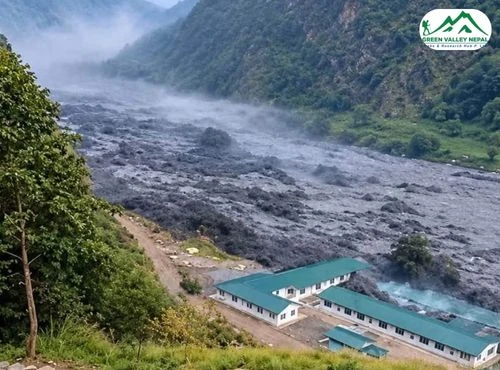
How ABC Trek Teahouse Accommodation Works?
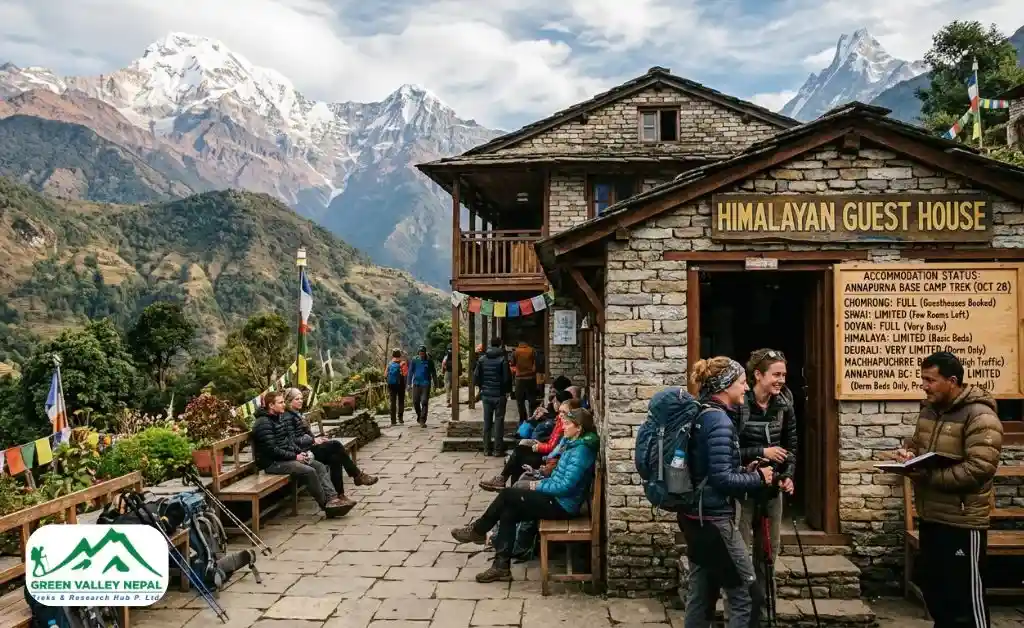
Rooms are cheap because trekkers are expected to eat all meals at the same teahouse. This system supports local families and is respected by trekkers. Teahouses along the ABC trail are mostly family-run operations, many overseen by the NTNC (National Trust for Nature Conservation), which sets loose guidelines on pricing, menu standards, and where new teahouses can be constructed. When you stay at a teahouse and walk next door to eat cheaper food, you are breaking an unwritten contract. Don't do it.
What Teahouses Generally Provide
A standard ABC teahouse room includes a twin or double bed with a foam mattress, a pillow, and blankets. Basic furniture, a chair, a small table, and a clothes hanger, is typical in most lower-altitude stops. At higher elevations, some rooms are literally just two beds and four walls.
- Teahouses offer: beds, pillows, bedding, dining room, hot meal, boiled water (extra cost).
- Teahouses do not reliably provide: clean towels, soap, toilet paper, in-room electricity, room heating, Wi-Fi above Chhomrong, hot showers without extra charge, or privacy.
Types of Accommodation on the ABC Trek
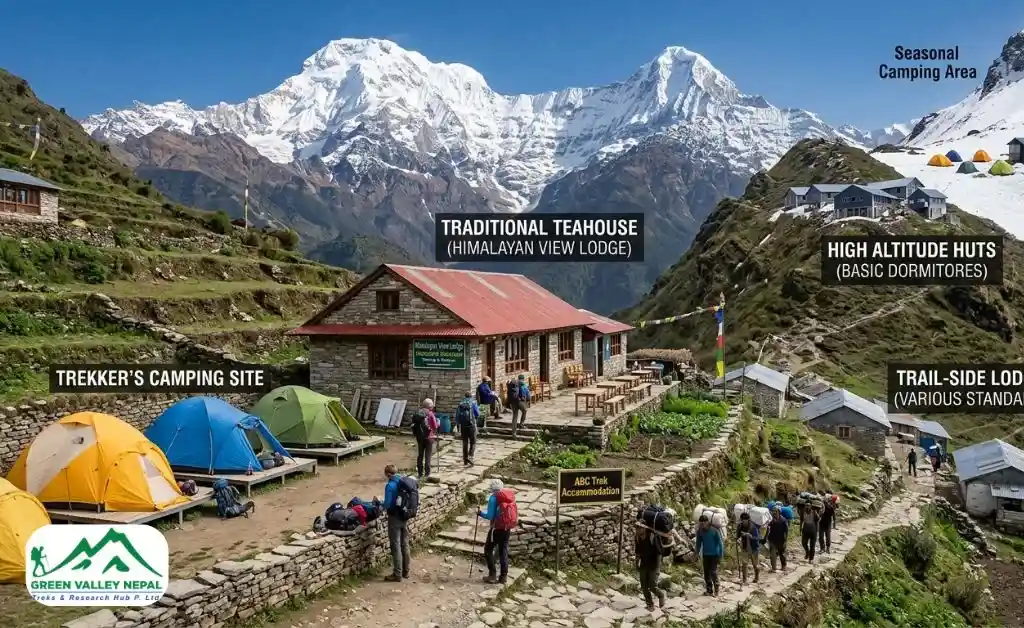
Teahouse or Lodge Accommodation
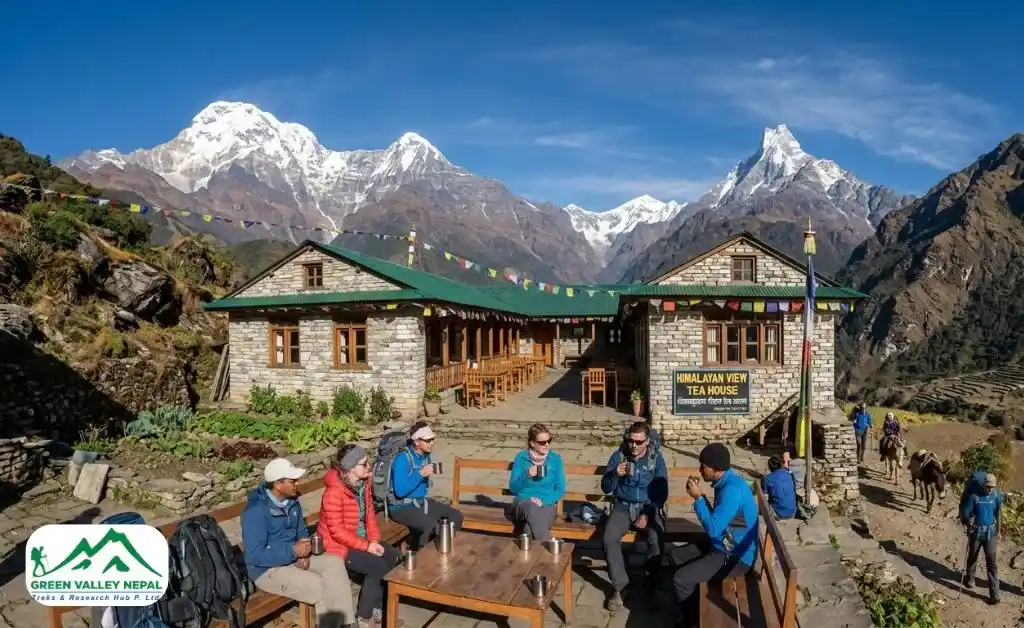
Teahouses are what every trekker uses on the ABC route. They range from surprisingly comfortable family lodges at lower elevations to stripped-down mountain shelters above 3,500m. Most basic teahouses charge NPR 700–1,000 per night and include a bed in a room with paper-thin walls, shared bathrooms, and a communal dining hall that's the social hub of your evening.
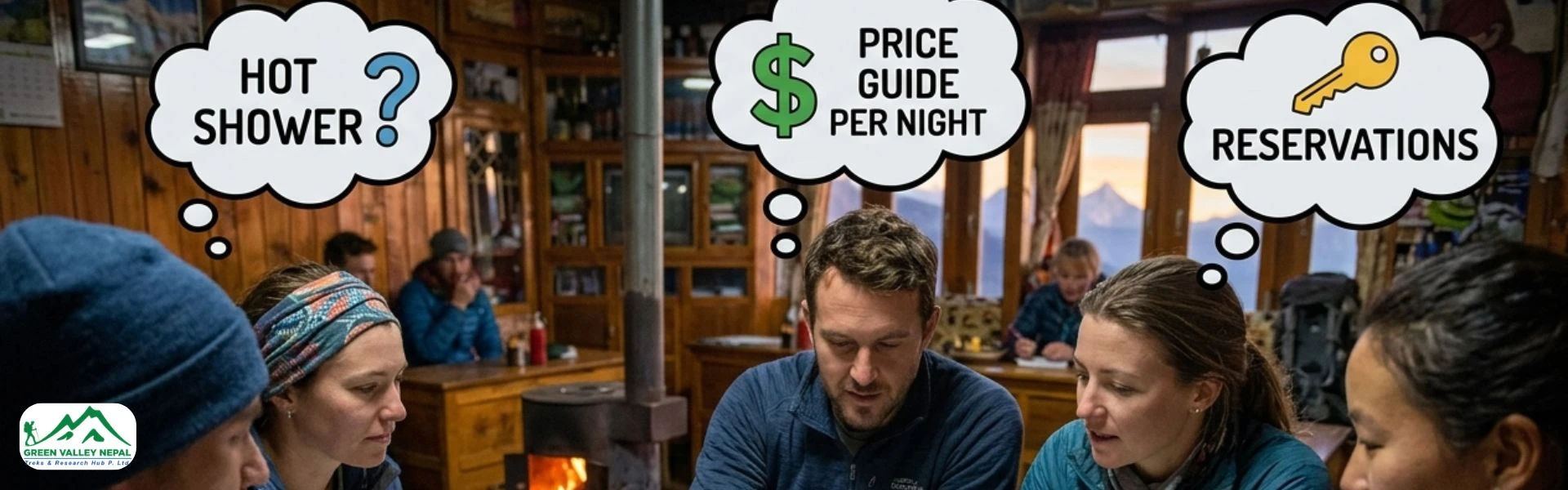
The communal dining hall deserves a special mention. It's where trekkers gather after a long day, where the Bukhari stove keeps everyone warm until around 9 PM, where guides share trail news, and where you will meet the other hikers you will leapfrog with for the next several days. It's genuinely one of the best parts of the ABC experience, even when the room itself is forgettable.
Camping Accommodation
Almost no one camps on ABC. There are enough teahouses, so no need to do camping, and in the peak season, the owner of the teahouse manages the tents and all.
Location-wise ABC Trek Accommodation
Pokhara — Your Starting Point
Pokhara offers every accommodation level from NPR 500 guesthouses to five-star lakeside resorts. Most trekkers choose mid-range Lakeside hotels (NPR 1,500-3,000 / $11-22 USD) offering clean rooms, hot showers, reliable Wi-Fi, and proximity to gear shops for last-minute purchases.
Withdraw ALL the cash you will need for the trek. There are no other options to withdraw on the entire route. Sleep well in Pokhara. Your next genuinely comfortable bed is 4-5 days away. While staying in Pokhara, you can also participate in a lot of adventure activities in Pokhara as well as do one day hike or tour in Pokhara with Green Valley Nepal Treks.
Ulleri (2,073m) — First Night Stop
Ulleri is above the most notorious staircase on the ABC route, approximately 3,000 stone steps from Birethanti. By the time you arrive, your legs will have made the accommodation decision for you. There are more than 20 teahouses and fairly basic lodges.
Rooms here are simple but adequate: small wooden rooms, attached or shared European-style bathrooms at the better lodges, comfortable mattresses, and cozy blankets. Because Ulleri is relatively close to Pokhara, food and lodging costs are lower than almost anywhere else on the route.
Room Type | Cost |
Single room | NPR 250–400 |
Double room | NPR 400–600 |
Double with attached bathroom | NPR 600–1,000 |
Triple Room | NPR 700 - 1500 |
Ghorepani (2,860m) — The Comfort Peak
Ghorepani is the most developed stop before Chhomrong, and accommodation quality here represents the high point of the entire ABC teahouse experience.
Here you will find rooms built from brick and concrete, proper soundproofing (by mountain standards), attached toilets and showers at many lodges, and stunning mountain views from your bed window.
Rooms come with two beds and traditional furnishings. Prices range from around $10 USD at basic lodges up to $250 at the most comfortable options. Most trekkers land comfortably in the NPR 800–1,500 range for a clean, warm room with solid amenities.
You can even do the Ghorepani Trek from Pokhara if you have a short time remaining. It's a beautiful village with a very good mountain view and different cultural aspects.
Tadapani (2,630m) — Forest Simplicity
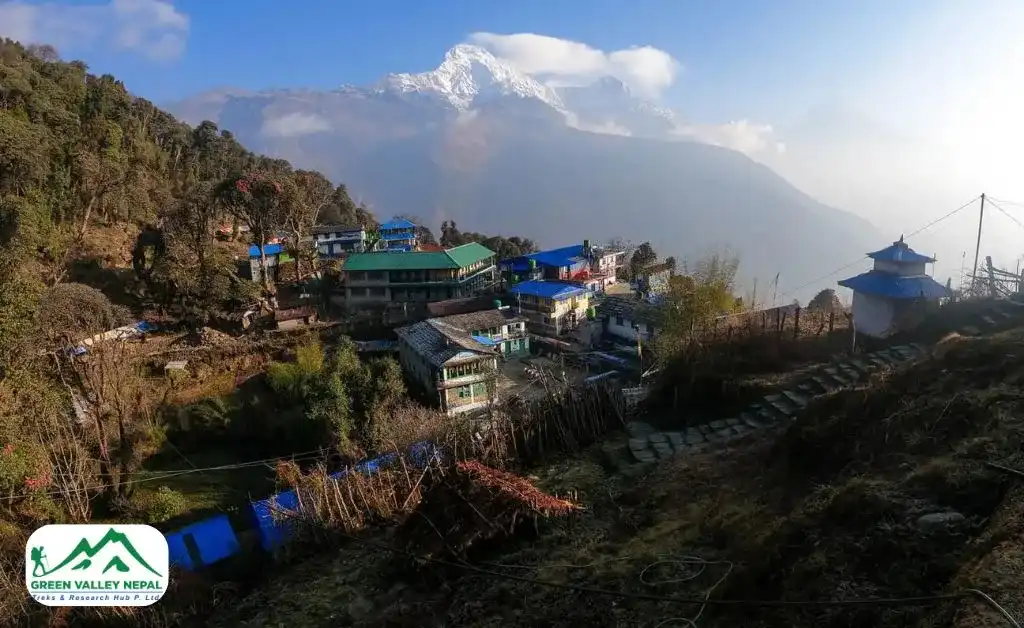
The drop from Ghorepani to Tadapani in teahouse quality is significant. Tadapani has only around six teahouses, all offering basic accommodation with timber plasterboard walls, simple furnishings, and shared facilities.
Costs: Rooms: NPR 500-700, Dal Bhat: NPR 700
Ghandruk (1,940m) — The Cultural Hub
Ghandruk is one of the most popular Gurung villages in Nepal, and its accommodation reflects that attention. Around 50 hotels and homestays serve trekkers here. Hotels run around $20 USD while homestays average closer to $5.
Dal Bhat, pizza, and burgers are all on the menu. A notable detail: many teahouses here offer hot showers, WiFi, and electricity for free. Several homestays charge extra for guests to wear traditional Gurung attire for photos. A fun optional extra, not a scam.
Costs: Rooms: NPR 500-1,500, Dal Bhat: NPR 450, Hot Showers, Electricity, Wi-Fi: FREE
Chhomrong (2,170m) — Your Last Major Comfort Stop
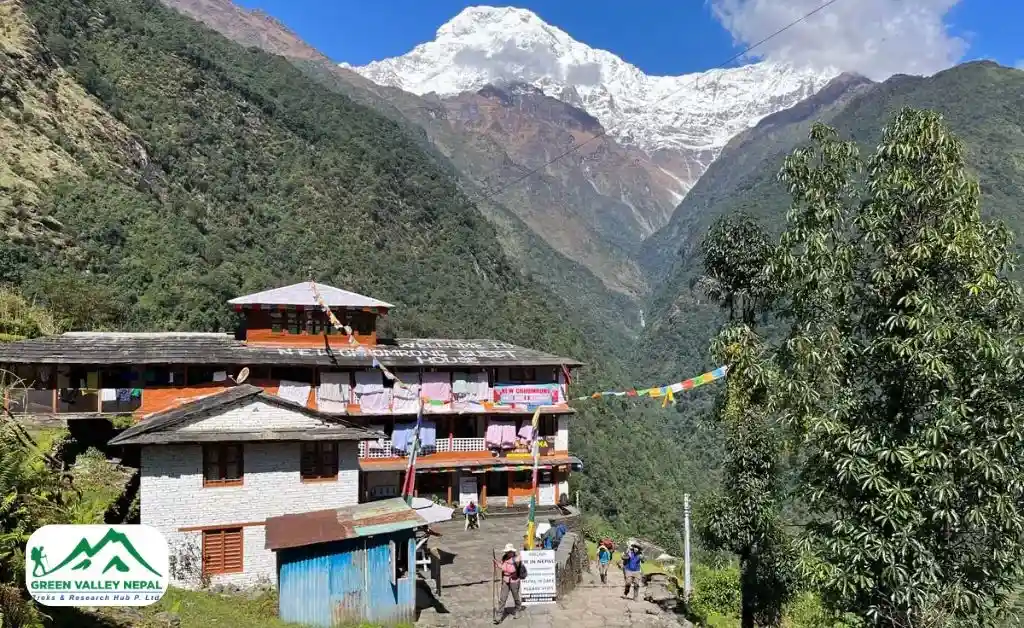
Chhomrong is the largest and most important village before you enter the Annapurna Sanctuary proper. Its significance goes beyond comfort; a wider food menu, reliable hot showers, and room upgrades before the upper mountain strips amenities down to the essentials.
The teahouses here are genuinely welcoming, often family-run operations with decades of experience hosting trekkers. Rooms come with comfortable beds, decent cushions, and electric blankets in some lodges, a luxury that won't exist above this point.
The views of the Annapurna massif and Machhapuchhre from the teahouse windows are extraordinary. Take a proper shower. Charge every device. Buy snacks in the village shops, they're 30–50% cheaper than anything above.
Costs: Rooms: NPR 500, Dal Bhat: NPR 520-650, Hot Shower: NPR 100, Wi-Fi: NPR 200, Charging: NPR 100 per Device
Sinuwa (2,340m) — The Quick Stop
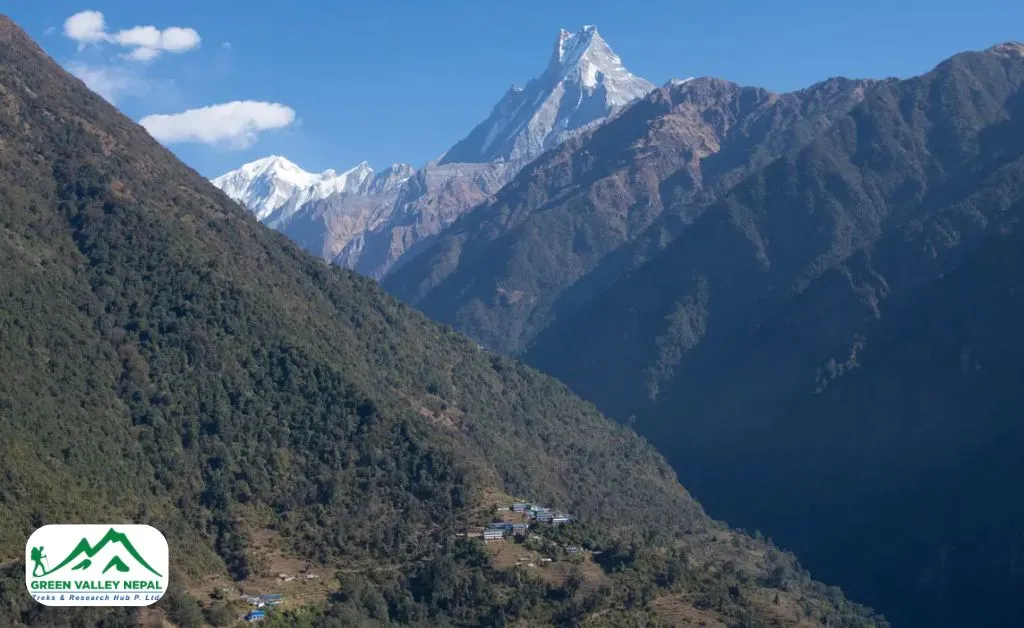
Sinuwa functions primarily as a lunch stop, though 2-3 basic teahouses accommodate trekkers overnighting here. Rooms are simple, facilities shared, atmosphere quiet.
Costs: Rooms: NPR 500-600, Dal Bhat: NPR 600-700
Bamboo (2,310m) — Named Accurately
Bamboo village gets its name from the surrounding bamboo forest that creates dense, atmospheric trekking. The 4-5 teahouses here offer basic accommodation in a remote setting that feels genuinely removed from lower-elevation bustle.
Rooms are simple wooden structures, facilities are shared, and the temperature starts dropping noticeably at night. Bring your sleeping bag.
Costs: Rooms: NPR 500-600, Dal Bhat NPR 650-750, hot shower NPR 150, WiFi NPR 300, charging NPR 200
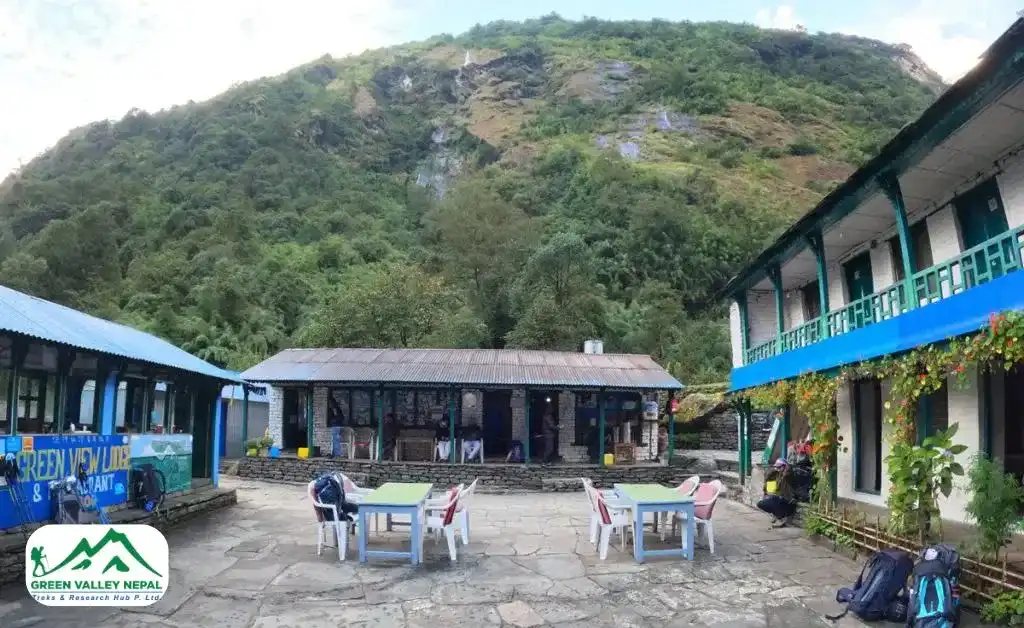
Himalayan Hotel (2,920m)
Don't let the name fool you, Himalaya Hotel is a cluster of 3-4 good teahouses, not a singular "hotel" with any amenities that word suggests. It's a small and beautiful village surrounded by high mountains. It's a key acclimatization stop with basic rooms, shared facilities, and increasingly thin walls.
The location offers good Annapurna South and Hiunchuli views on clear days, making it popular for overnight stays despite basic conditions.
Costs: Rooms NPR 500-700, Dal Bhat NPR 700-800, hot shower NPR 200, WiFi NPR 300, charging NPR 200
Dovan (2,600m) — Upper vs. Lower Choice
Dovan splits into Upper and Lower sections with five teahouses total. Choose Lower Dovan if possible; rooms are brighter, slightly warmer, and better maintained than Upper Dovan's older structures.
Rooms here are large by upper-trail standards, Western-style bathrooms remain standard (though hot water costs NPR 150), and the busy atmosphere during peak season creates good energy.
Costs: Rooms NPR 500, Dal Bhat NPR 650-750, hot shower NPR 150, WiFi NPR 300, charging NPR 200
Deurali (3,230m) — Where Comfort Dies
Deurali marks the psychological turning point where accommodation transitions from "basic but okay" to "survival shelter that happens to charge money."
Expect to possibly share rooms with 3-4 other trekkers during peak season. Walls become thinner (sometimes just plywood sheets), beds simplify to wooden frames with foam pads, blankets multiply but can't overcome the cold, and the temperature drops dramatically, to 0°C or below at night.
Costs: Rooms NPR 500, Dal Bhat NPR 750-800, hot shower NPR 250 (often unavailable), WiFi NPR 300, charging NPR 200
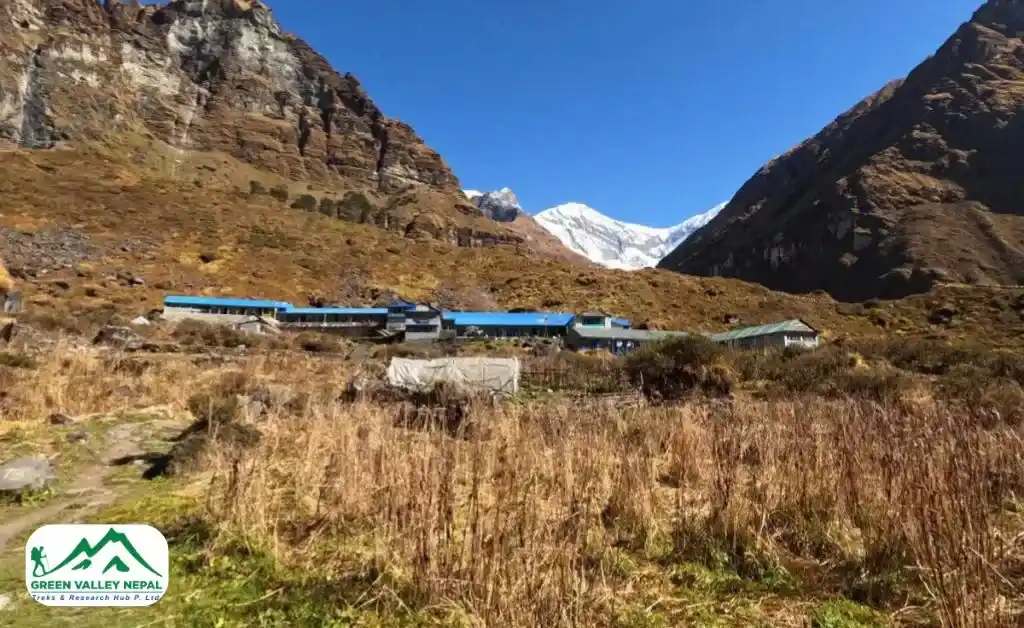
Machhapuchhre Base Camp / MBC (3,700m) — The Final Staging Post
MBC sits beneath the iconic fishtail silhouette of Machhapuchhre (6,993m), and the teahouses here are a study in high-altitude minimalism. Rooms are small metal-sheeted or wooden structures that provide shelter but nothing resembling comfort. Pipes freeze at night, making running water unreliable.
Costs: Rooms NPR 500-700, Dal Bhat NPR 750-850, hot shower NPR 350 (rarely available), WiFi NPR 300 (rarely works), charging NPR 200-250
The dining hall is where everyone congregates from mid-afternoon onward. It's warm, social, and the best part of the MBC experience.
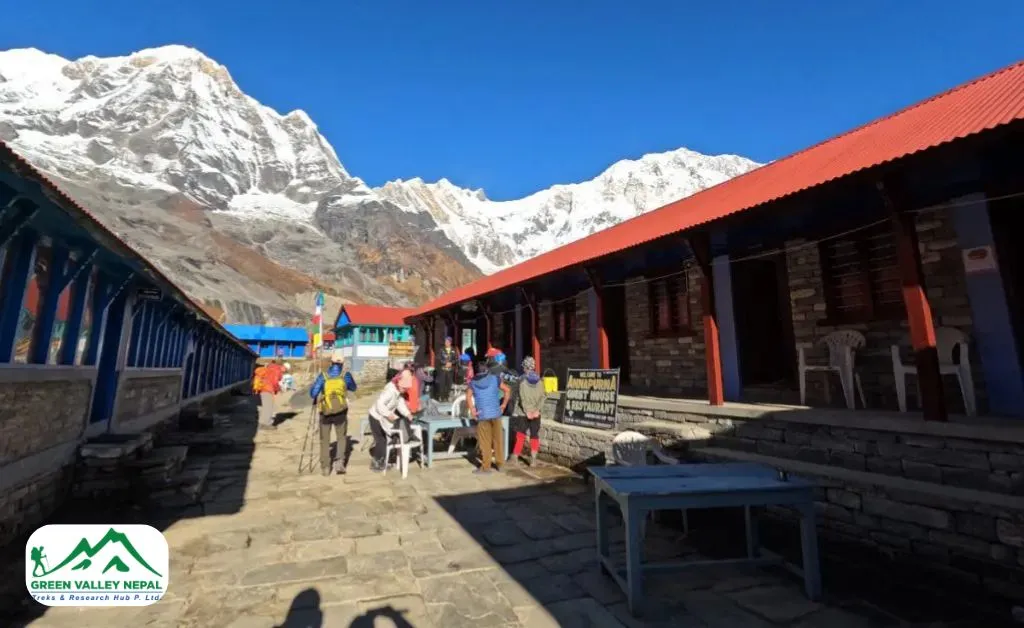
Annapurna Base Camp (4,130m) — The Top
The accommodation reality is stark and non-negotiable: small rooms, thin mattresses, heavy wool blankets, outdoor squat toilets, and temperatures that drop well below freezing at night. Electricity comes from solar panels that underperform on cloudy days. Prices are the highest on the trek because every single item here was porter-carried for 50+ kilometers uphill.
Don't bargain over room rates at ABC. You are at 4,130 meters, surrounded by Annapurna I (8,091m), Annapurna South (7,219m), Hiunchuli (6,441m), and Machhapuchhre. The room is not the point.
Costs: Rooms NPR 500-700, Dal Bhat NPR 800-950, hot shower NPR 350 (rarely available), WiFi NPR 300 (don't expect it to work), charging NPR 200-250
Set your alarm for 5:15 AM. The sunrise over the Annapurna massif from this exact spot is what every hard mattress and cold morning was working toward.
Hidden Accommodation Costs Nobody Budgets
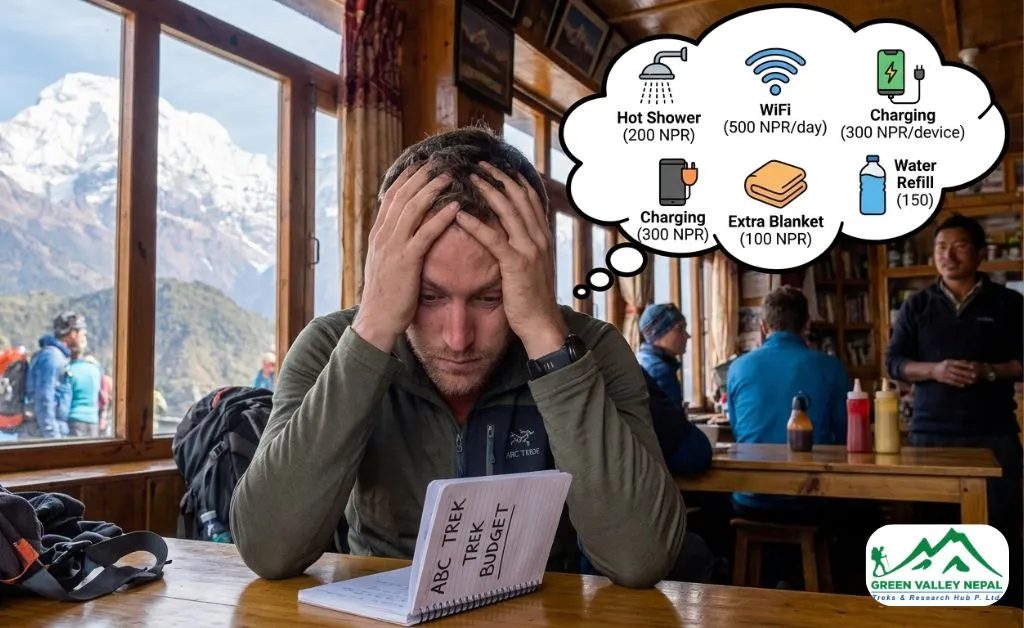
The room charge is the smallest line item. Here's what actually adds up:
- Hot Showers: NPR 100–350 depending on elevation. Budget NPR 100 in lower villages, NPR 250–350 at Deurali and above (when available). Most trekkers take 3–5 showers below Chhomrong, then give up entirely.
- WiFi: NPR 200–300 per session at lower stops; unreliable above Chhomrong and essentially unavailable at MBC and ABC. A Namaste SIM card with 4G data works better at mid-elevations than any teahouse WiFi.
- Device Charging: NPR 100–200 per phone at lower elevations, NPR 200–300 at higher stops. A fully charged 20,000mAh power bank eliminates this cost and pays for itself on day one.
- Extra Blankets: NPR 100–200 per blanket per night above 3,000m. A sleeping bag rated to -10°C is the correct solution.
Estimated total extra accommodation costs over 10 days: NPR 3,000–6,000 ($22–45 USD)
Tips for Better Accommodation on the ABC Trek
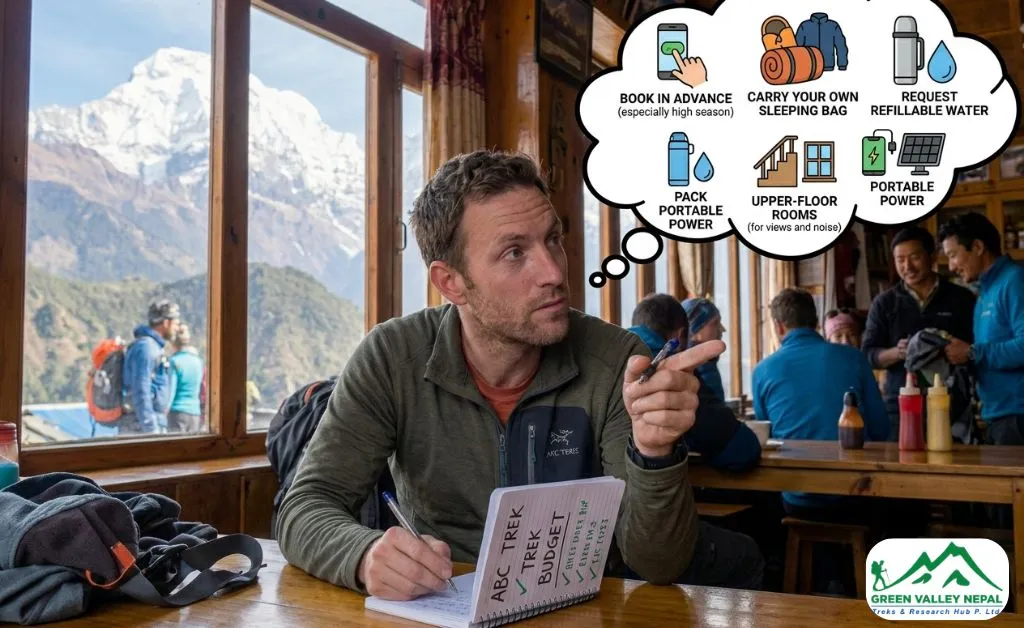
- Arrive early: Reach each night's stop by 3:00–4:00 PM. The best rooms go first, and arriving early gives you time to rest before the evening cold sets in.
- Book ahead in peak season: Your guide should contact the next teahouse by phone each morning. In October and April, this is not optional—it's the difference between a bed and a dining room floor.
- Trek in shoulder season: March, May, September, and November offer standard pricing, better room availability, and good weather. Worth considering if flexibility permits.
- Skip off-season without research: Many high-altitude teahouses at MBC and ABC close in winter (December–February) and monsoon (June–August). Confirm with your agency which stops will be open before committing to dates.
- Eat at your teahouse: Beyond cultural expectation, the communal dining hall is genuinely where the ABC experience happens. Shared tables, shared stories, and trail conditions shared over dal bhat. It's better than eating alone next door.
Conclusion
The Annapurna Base Camp trek does not offer luxury accommodation. It offers something more valuable: authentic shelter inside one of the most spectacular mountain environments on Earth, served by families who have built their lives around welcoming trekkers like you.
The accommodation on this trek will challenge you at the top and surprise you with warmth at the bottom. Either way, the morning you wake up at 4,130 meters surrounded by Annapurna giants, none of the mattress quality or toilet modernity will register as relevant.
Ready to plan your trek? Explore our Annapurna Base Camp Trek packages with full accommodation details at every stop, or contact our team for a custom quote.
Frequently Asked Questions
- Where can I stay on the Annapurna Base Camp trek?
Accommodation on the ABC trek is almost entirely in teahouses, small family-run mountain lodges. Options range from comfortable rooms with attached bathrooms at lower villages like Ghorepani and Ghandruk, to very basic shared rooms at higher stops like MBC and ABC.
- Can you sleep at Annapurna Base Camp?
Yes. Annapurna Base Camp has accommodation where trekkers can spend the night, and although the lodging is basic, it is comfortable.
- Do I need to book teahouses in advance on the ABC trek?
During peak seasons (October and April), yes, especially at MBC and ABC, where space is very limited. Your guide should call ahead each morning to reserve rooms for that night. In shoulder seasons (March, May, November), a walk-in is usually fine, but booking ahead is still recommended above Chhomrong.
- Do I need a sleeping bag for the ABC trek?
Yes, not compulsorily, but it's great if you have. Teahouse blankets are available but insufficient above 3,000m, where nighttime temperatures drop well below freezing. A sleeping bag rated to at least -10°C is essential from Deurali upwards. Renting one in Pokhara costs around $1.50–3 per day, far cheaper than being cold at 4,130 meters.
- Is WiFi available on the Annapurna Base Camp trek?
WiFi is available in most lower villages and works reasonably well up to Chhomrong. Above that, WiFi facilities are only available at teahouses on the trek to ABC, but their reliability and speed can vary, so trekkers should be prepared for limited and unreliable connectivity at higher elevations. A local SIM card with data works better than the teahouse WiFi at mid-elevations.
- Are rooms heated at Annapurna Base Camp teahouses?
No. The guesthouse does not have a heater; however, as it gets colder above 3,500m, they do have the facility of heating the dining area using a kerosene or metal heater. Bedrooms are never heated. Your sleeping bag and thermal layers are your only warmth above MBC.