Packing for the Annapurna Base Camp trek is straightforward once you know what the trail demands. The route climbs to 4,130 meters inside the Annapurna Sanctuary, where warm valley temperatures give way to freezing mornings and cold nights higher up. Pack the right gear, and the trek is enjoyable.
Pack the wrong gear, or too much of it, and every uphill section feels harder than it needs to, so think about the challenges on the ABC trek, then carry only those items that are necessary. Also, keep in mind the safety precautions needed at the ABC trek to have amazing memories for a lifetime.
This guide gives you a complete, practical packing list for the ABC trek for 2026 and 2027. It covers clothing layers, footwear, backpacks, sleeping gear, trekking equipment, first aid, electronics, and permits. It also tells you what to bring from home and what you can easily buy or rent in Kathmandu or Pokhara before you start.
While discussing the packing list, one question might hit your mind: how much will this equipment cost you? For that, you can contact us or simply visit our blog: Annapurna Base Camp Trek cost breakdown.
Quick Overview of Annapurna Base Camp Packing List
Category | Essential Items |
Clothing | Base layers, fleece jacket, down jacket, waterproof shell |
Footwear | Waterproof trekking boots, camp shoes |
Gear | Trekking poles, headlamp, daypack |
Sleeping | -10°C sleeping bag, liner |
Health | First aid kit, Diamox, sunscreen |
Documents | Passport, ACAP permit, TIMS card |
Clothing for ABC Trek
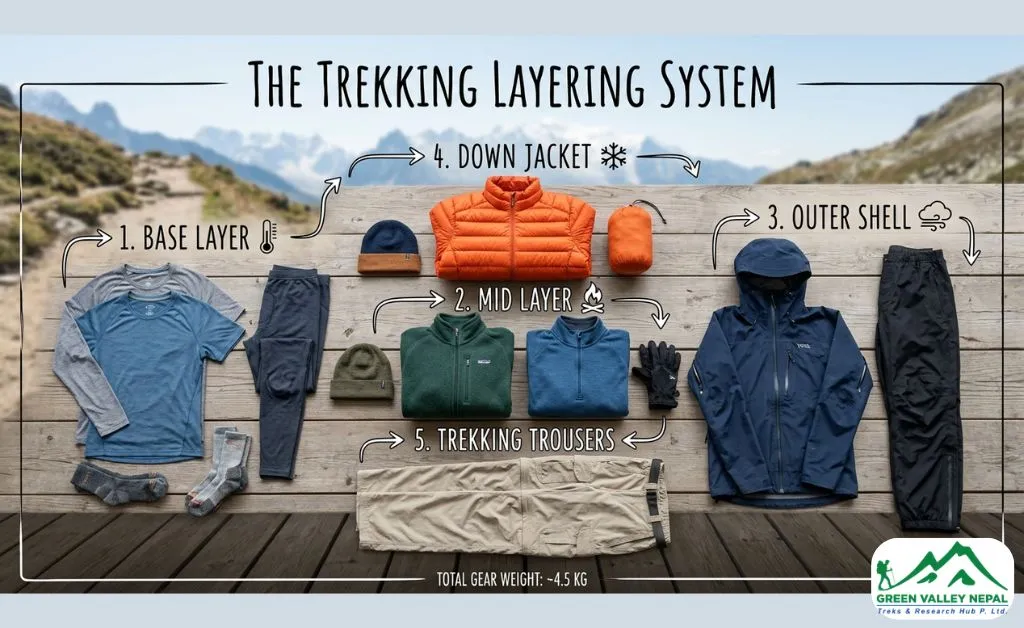
The layering approach is non-negotiable on a high-altitude trek. Temperatures at Annapurna Base Camp can swing from warm sunshine in the afternoon to well below freezing at night. The standard three-layer system handles this range better than any single heavy jacket.
- Base Layer: Moisture-wicking thermal tops and bottoms in merino wool or synthetic fabric. Bring two sets to rotate. Avoid cotton entirely; it holds moisture and becomes dangerously cold when wet.
- Mid Layer: A 200-weight fleece or 600-fill down sweater for warmth. This layer goes on and off frequently as the trail gains and loses elevation.
- Outer Shell: A waterproof, windproof jacket with a hood, Gore-Tex or equivalent, rated at least 10,000mm. Also pack a lightweight pair of waterproof over-trousers. Your jacket won't keep your legs dry in sustained rain.
- Down Jacket: A separate puffy jacket for camp and cold mornings. At Machhapuchhre Base Camp and Annapurna Base Camp, evenings drop to genuinely cold temperatures. Choose one that packs into its own pocket.
- Trekking Trousers: Two to three pairs of quick-dry trousers. Convertible zip-off styles give flexibility between warm lower sections and colder upper elevations. No denim.\
Accessories for ABC Trek
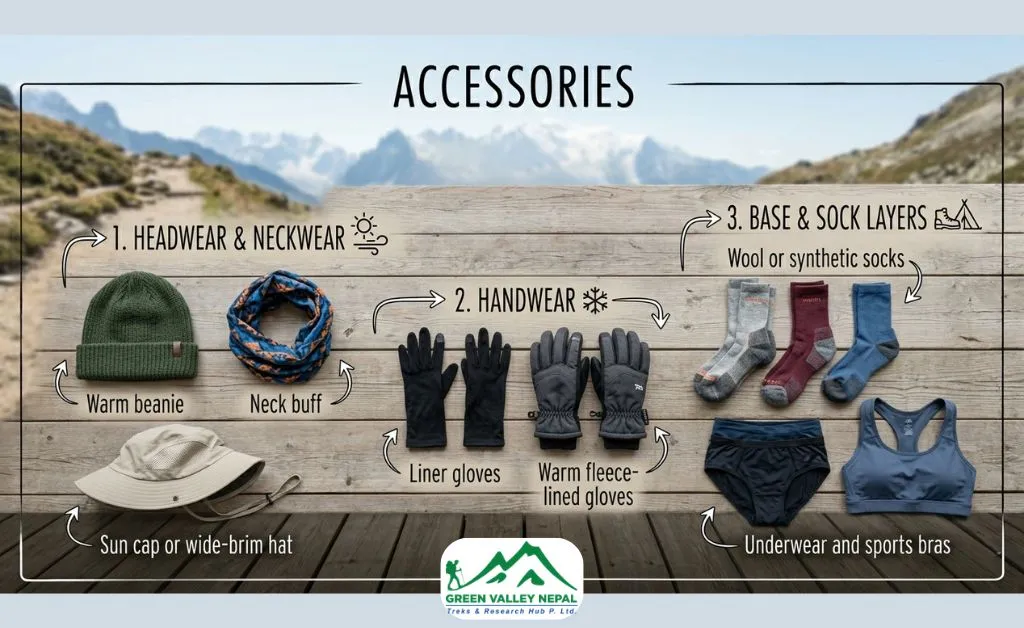
- Warm beanie or wool hat: Essential at higher elevations and for sleeping at Annapurna Base Camp.
- Neck buff: Doubles as an ear warmer, face cover, or balaclava. More versatile than a scarf.
- Sun cap or wide-brim hat: Protects against intense UV at altitude on sunny days.
- Liner gloves: Thin enough to use while trekking.
- Warm fleece-lined gloves: For mornings and evenings above 3,000 meters.
- Wool or synthetic socks (4–5 pairs): Merino wool is the most comfortable option. A thin liner sock worn under your main trekking sock reduces friction and helps prevent blisters.
- Underwear and sports bras: Bring enough for the full trek. Laundry options on the trail are limited.
Footwear, Backpacks, and Sleeping Gears for ABC Trek
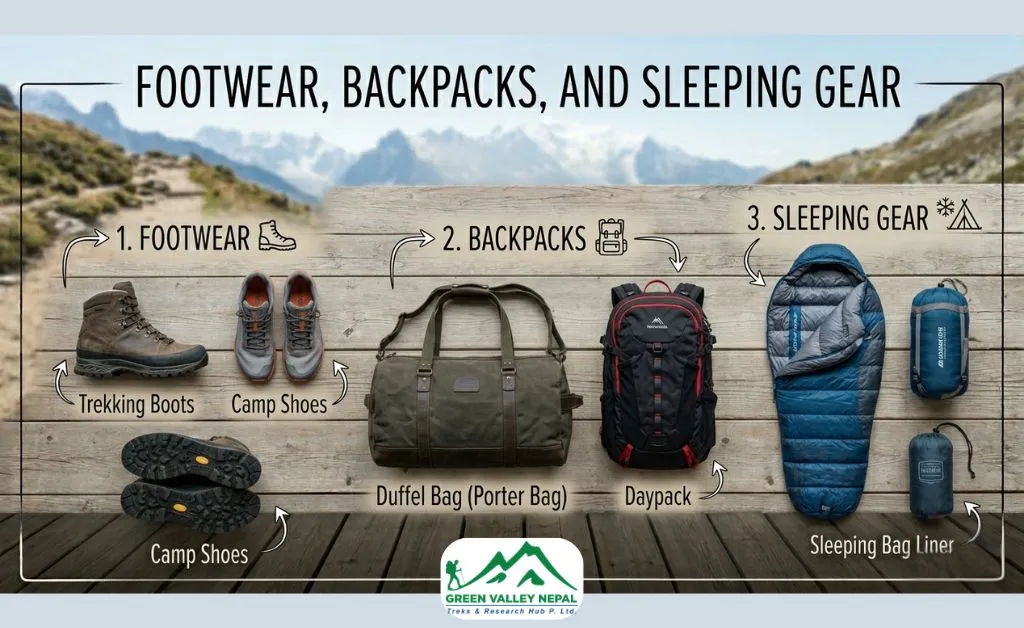
The trail includes steep stone staircases, uneven rocky paths, river crossings on narrow bridges, and muddy sections after rain. The right footwear makes all of this manageable; the wrong footwear makes it miserable or dangerous.
- Trekking Boots: Waterproof hiking boots with good ankle support are the core requirement. The ankle support matters because the trail is consistently uneven, and a turned ankle on a remote section of the route is a serious problem. Soles should have a good grip for a wet stone.
- Camp Shoes: After six to eight hours of trekking, your feet need a break. A light pair of sandals or trainers for the teahouse gives your feet relief and allows your boots to dry overnight. This is a small weight addition with real comfort value.
- Duffel Bag (Porter Bag): Most operators provide this bag. The porter weight limit is 15 kilograms, firm, not flexible, which also matches the baggage allowance on Kathmandu–Pokhara flights. Pack your sleeping bag, down jacket, and anything you don't need during the walking day in here.
- Daypack: A 20 to 35 litre pack carries your rain jacket, water, snacks, camera, phone, a spare layer, sunscreen, and documents. Hip-belt pockets are a useful bonus for quick snack access. Always use a rain cover, even a water-resistant pack won't protect electronics and documents in heavy downpours.
- Sleeping Bag: Teahouse blankets vary in warmth and cleanliness, so a personal sleeping bag is worth carrying. A three-season bag rated to -10°C works for most of the year; winter trekking (December–February) needs -15°C. If you don't trek regularly, rental bags in Kathmandu and Pokhara are adequate at around 30 USD for the full trek.
- Sleeping Bag Liner: A silk or cotton liner adds warmth and keeps your bag cleaner. It packs tiny and is worth bringing even with a rental.
Trekking Equipment for Annapurna Base Camp
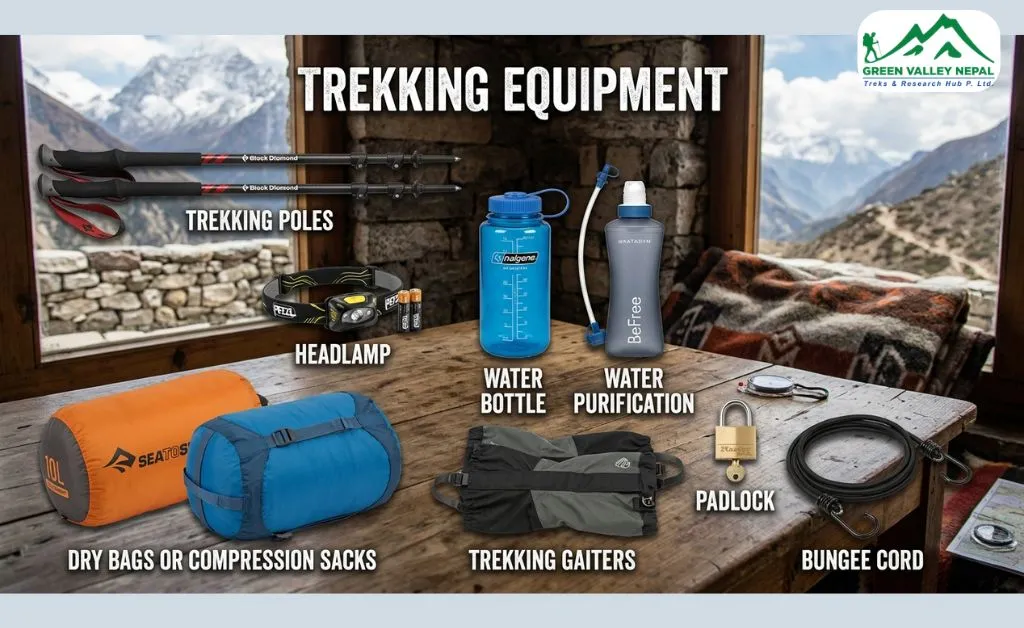
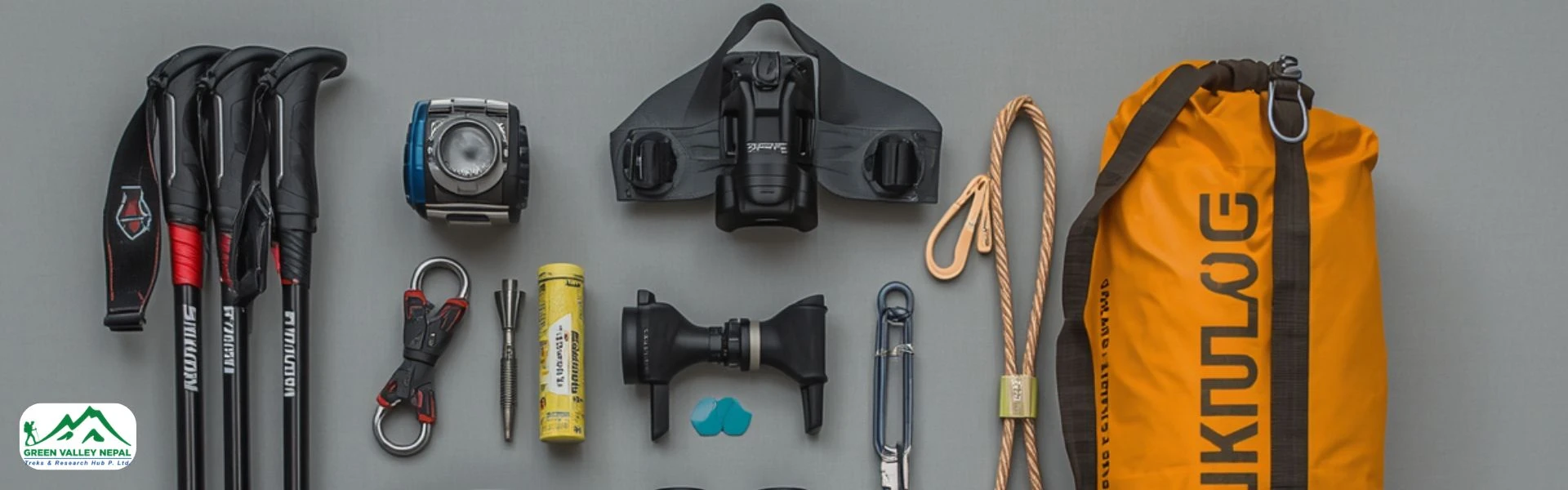
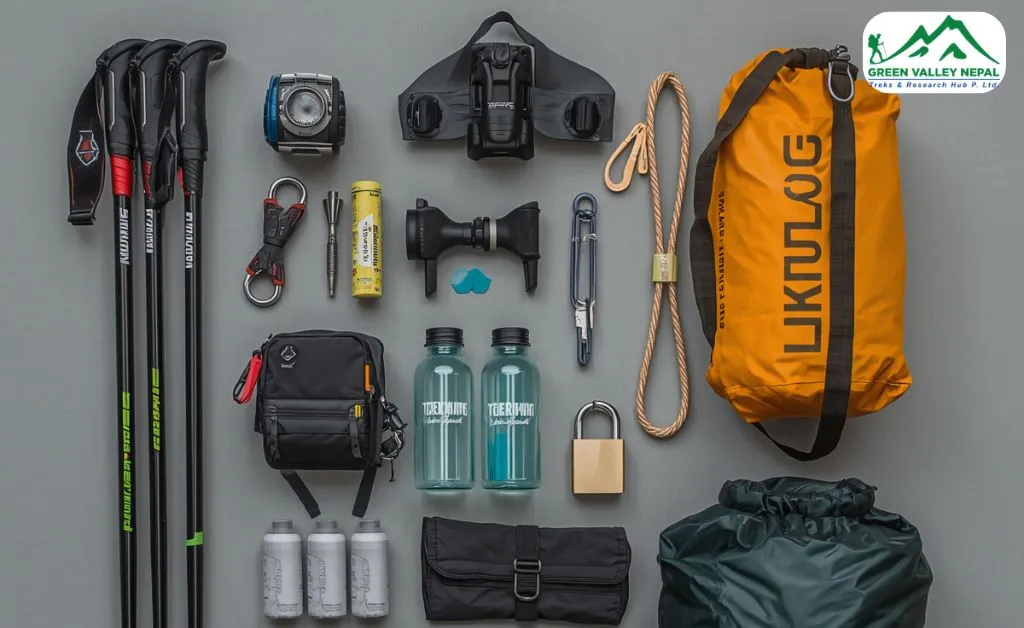
- Trekking Poles: Trekking Poles are more useful than most trekkers expect. The descent from ABC involves thousands of stone steps, and poles absorb significant knee impact cumulatively over multiple days. Rent them in Pokhara if you don't own a pair.
- Headlamp: Essential for pre-dawn sunrise starts, teahouse power outages, and night trips to shared toilets. Bring spare batteries or a rechargeable model.
- Water Bottles and Purification: Carry at least 2 liters. A hydration bladder works well on the move; an insulated bottle doubles as a sleeping bag warmer overnight. Tap water in Nepal is unsafe without treatment. Bring purification tablets or a filter straw like a LifeStraw to reduce both plastic use and costs.
- Trekking gaiters: Optional but useful in wet or muddy conditions and for winter trekking in snow.
- Dry bags or compression sacks: Keep electronics and clothing dry inside your duffel.
- Padlock: Useful for securing your duffel bag.
- Bungee cord: Handy for drying clothes on teahouse railings.
First Aid and Medications for ABC Trek
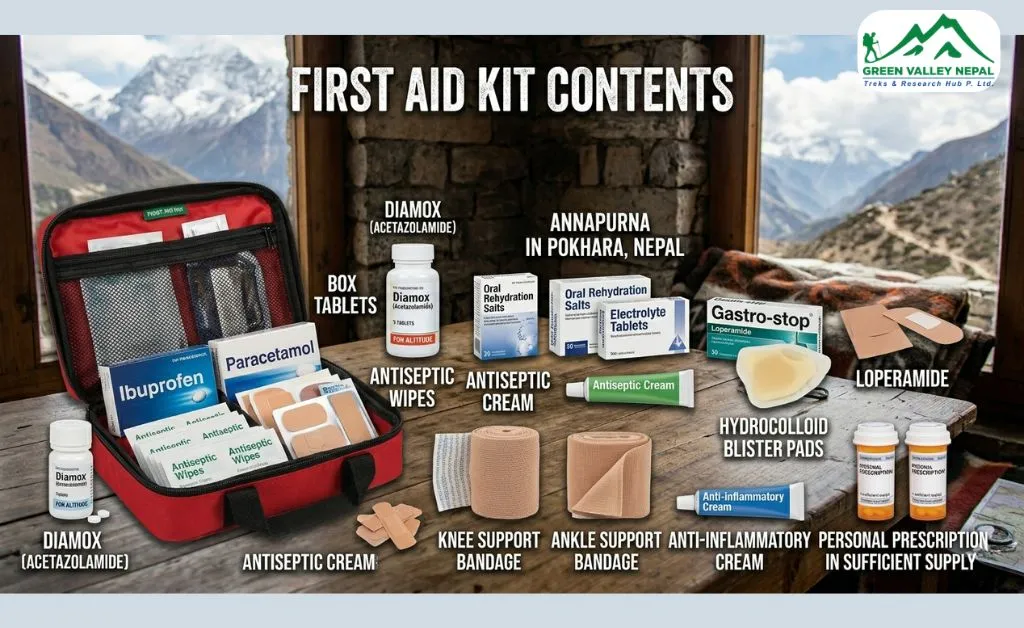
Your guide will carry a group first aid kit, but carrying a personal kit for minor issues is good practice. More importantly, understanding altitude sickness and carrying the right medications is a safety requirement on a trek that reaches over 4,000 meters.
- Ibuprofen and paracetamol for pain and fever
- Diamox (acetazolamide) is prescribed for altitude
- Oral rehydration salts and electrolyte tablets
- Gastro-stop or loperamide for stomach issues
- Antiseptic wipes and cream
- Plasters and blister treatment (moleskin or hydrocolloid pads)
- Knee and ankle support bandage
- Anti-inflammatory cream for muscle soreness
- Any personal prescription medication is in sufficient supply
Personal Hygiene and Toiletries for ABC Trek
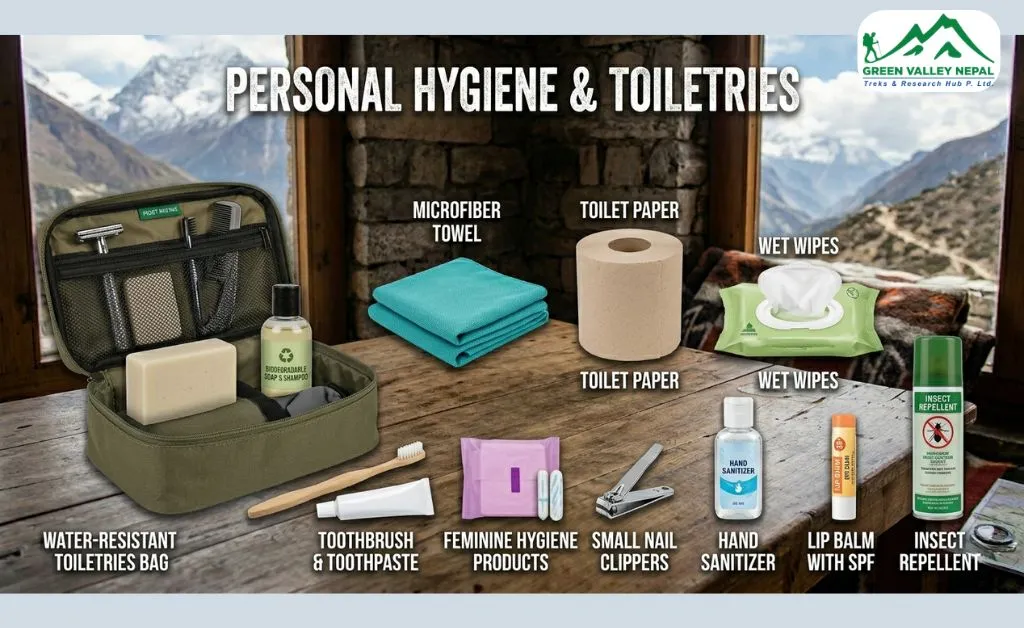
Hot showers are available at teahouses in lower elevations for a small fee. At higher altitudes, hot water is usually provided in a bucket. Pack a compact microfiber towel, which dries fast and takes up minimal space.
- Biodegradable soap and shampoo
- Toothbrush and toothpaste
- Microfiber towel
- Toilet paper: Always carry your own. Not all teahouses stock it reliably.
- Wet wipes: Invaluable for freshening up when shower access is limited.
- Hand sanitizer: Use before meals and after shared facilities throughout the trek.
- Sunscreen SPF 50+: UV intensity at altitude is significantly higher than at sea level. Apply even on overcast days.
- Lip balm with SPF: Dry mountain air causes cracked lips quickly.
- Insect repellent: Useful at lower elevations, particularly in warmer months.
- Feminine hygiene products: Not reliably available on the trail.
- Small nail clippers
Electronics and Power for ABC Trek
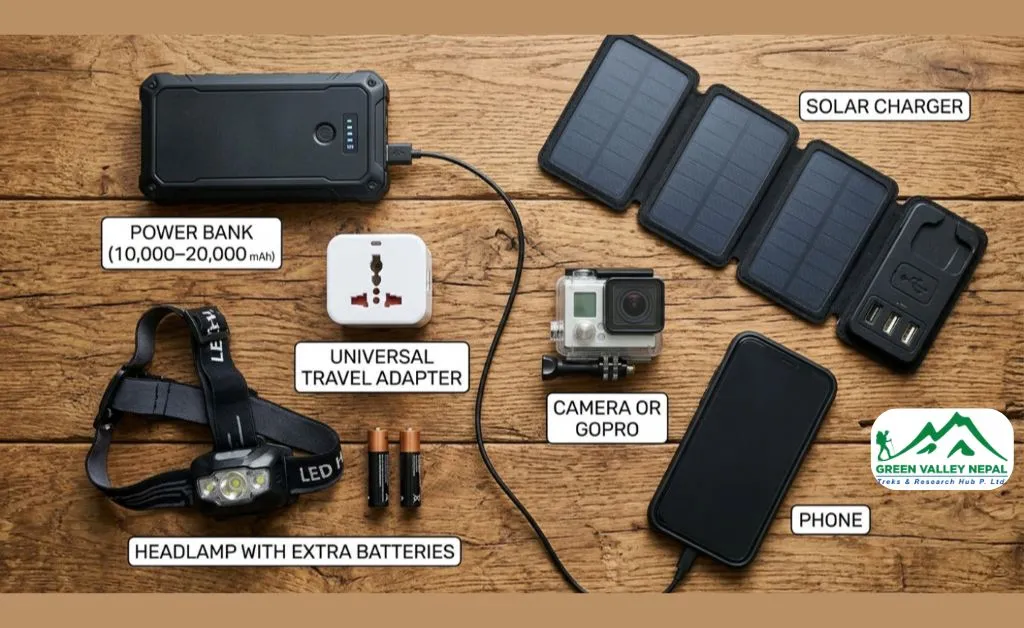
Charging at teahouses is possible but usually costs a small fee and is sometimes limited to shared sockets. A power bank is one of the most consistently useful items on the trek.
- Power bank (10,000–20,000 mAh): Enough to recharge a phone two or three times.
- Universal travel adapter: Nepal uses Type C, D, and M sockets.
- Headlamp with extra batteries
- Camera or GoPro with spare batteries and memory cards
- Phone: Download offline maps on Maps.me or Gaia GPS before you leave. Most of the trail has Ncell or NTC coverage.
- Solar charger: Optional but useful for extended days on the trail.
Documents and Permits for ABC Trek
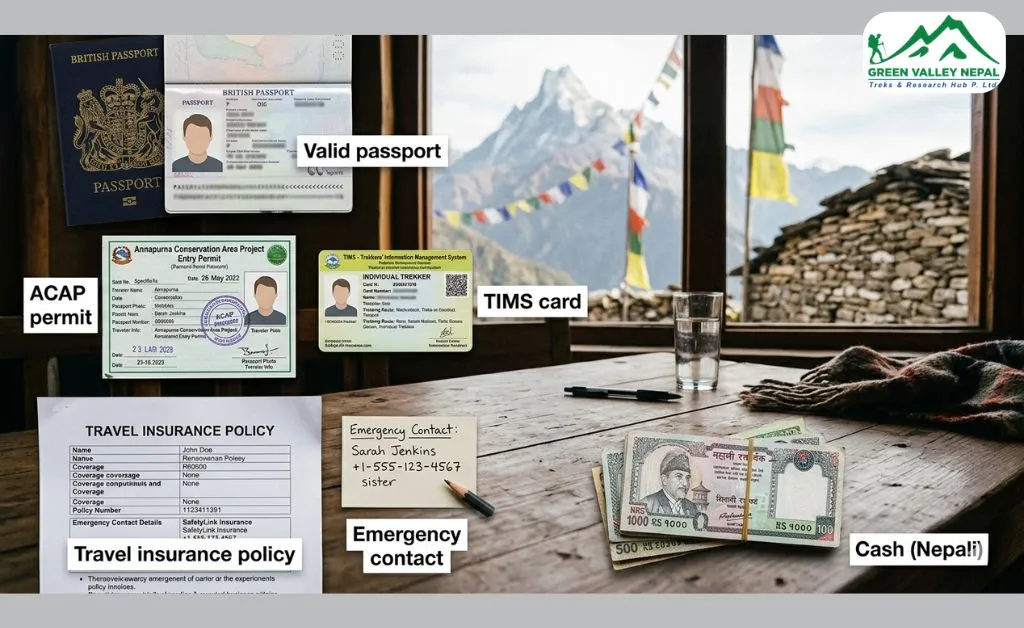
You need two permits for the Annapurna Base Camp trek: the Annapurna Conservation Area Permit (ACAP) and the Trekkers Information Management System (TIMS) card. If you are trekking with an operator, they will usually handle both. If you are going independently, obtain them in Kathmandu or Pokhara before starting.
Bring four passport-sized photographs for permit processing. Keep all documents in a sealed zip-lock bag inside your daypack.
- Valid passport (at least six months remaining)
- ACAP permit
- TIMS card
- Travel insurance: Your policy must cover high-altitude trekking above 4,000 meters and helicopter evacuation. This is not optional.
- Emergency contact details
- Sufficient Nepali rupees in cash: There are no ATMs on the trail. Budget for meals, accommodation, charging fees, hot showers, tips, and a buffer.
What to Buy or Rent in Nepal?
You do not need to bring all your gear from home. Kathmandu's Thamel neighborhood and Pokhara's Lakeside area both have extensive gear markets.
- Buy or rent in Nepal: Trekking poles, sleeping bag, down jacket, fleece, trekking trousers, gloves, buffs, and most accessories.
- Bring from home: Boots (already broken in), personal medications, any gear where fit is critical.
- Rental costs: Sleeping bags typically cost around 30 USD for the trek. Down jackets are similar. Trekking poles can be hired for a few USD per day.
Frequently Asked Questions (FAQs)
- Do you need a sleeping bag for Annapurna Base Camp?
Yes, you do. Teahouses at higher elevations, like Machhapuchhre Base Camp and Annapurna Base Camp, get very cold at night. The blankets provided are not always warm enough. A sleeping bag rated to -10°C is the minimum recommended. You can rent one in Kathmandu or Pokhara for around 30 USD if you do not want to buy.
- Is Annapurna Base Camp cold?
Yes, especially above 3,000 meters. At Annapurna Base Camp (4,130m), night temperatures regularly drop below -10°C, even in the peak seasons of autumn and spring. Days can be warm and sunny, but mornings and evenings are cold. Proper layering, a good sleeping bag, and a down jacket are non-negotiable.
- What should I wear to Annapurna Base Camp?
Wear a moisture-wicking base layer, a fleece or down mid-layer, and a waterproof outer shell. At the base camp itself, add your down jacket, warm hat, and gloves. Avoid cotton completely. Quick-dry synthetic or merino wool fabrics work best across the varying temperatures on the trail.
- What are the big 3 items for backpacking the ABC trek?
On the Annapurna Base Camp trek, the big 3 are your trekking boots, your sleeping bag, and your waterproof jacket. These three items directly affect your safety and comfort more than anything else you pack. Get these right first, then build the rest of your kit around them.
- Is there Wi-Fi at Annapurna Base Camp
Wi-Fi is available throughout the ABC route, but the connection becomes slower and less reliable the higher you go. At Annapurna Base Camp itself, do not count on a stable connection. Download offline maps on Maps.me or Gaia GPS before you start. Most of the trail has basic Ncell or NTC mobile signal as a backup.