What ABC Trek Actually Demands?
Before anything else, ground truth with numbers that matter:
Metric | Data |
Total distance (round trip) | 110–130 km depending on the start point |
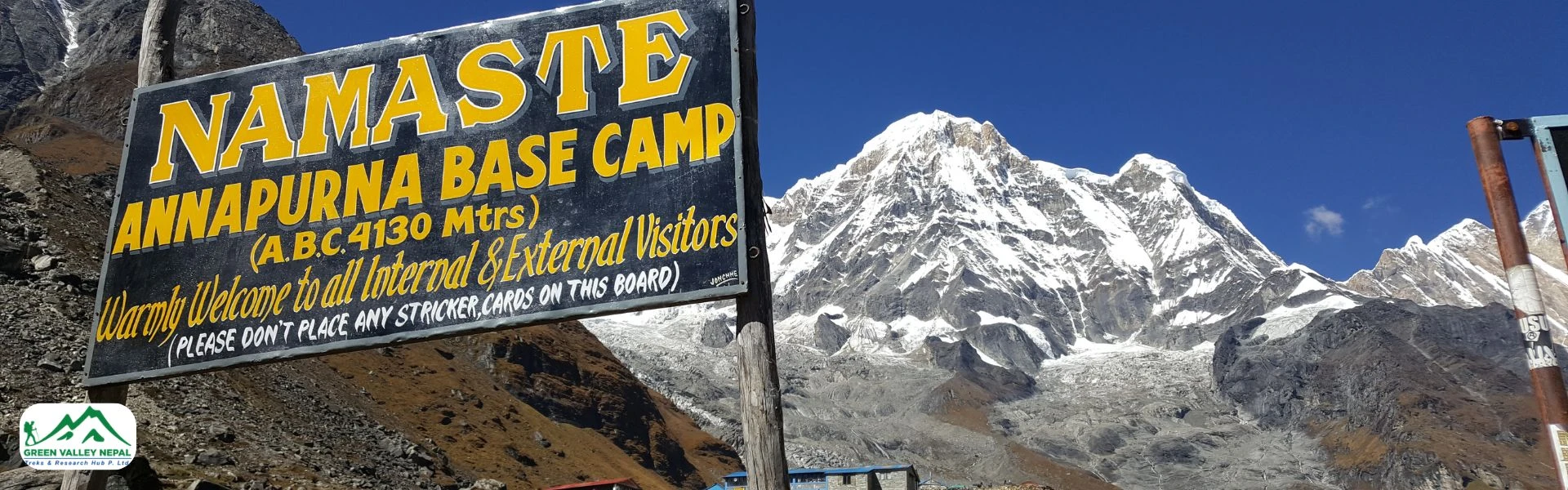
Maximum altitude | 4,130 m (13,549 ft) at Annapurna Base Camp |
Total elevation gain (Nayapul to ABC) | Approx. 3,300 meters |
Daily walking time | Average: 5–7 hours |
Trek duration | 7–14 days (10 days recommended for first-timers) |
Stone steps (Ulleri section alone) | 3,200–3,500 continuous steps |
Oxygen at ABC vs sea level | Approx. 40% less oxygen per breath |
The top reason for turning back | Altitude sickness (approx. 40% of failures) |
Factors that Contribute to Annapurna Base Camp Trek Difficulty
Terrain: It's Not Just Walking Uphill
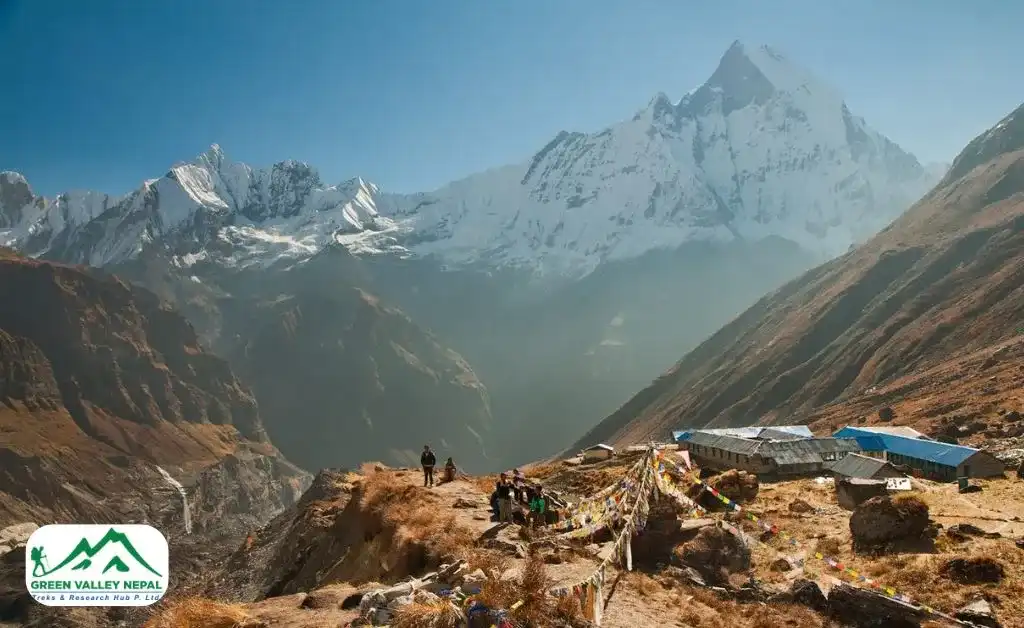
The terrain is genuinely diverse and demands different muscle groups and mental focus throughout. Here's what you will actually face:
- Stone Staircases (Approx. 30% of the Route)
Irregular, sometimes crumbling steps that require full attention on every footfall. The Ulleri section alone, tackled on Day 3 has 3,200+ uninterrupted steps climbing 900+ meters over just 1.8 km. Guides report trekkers spending 2–4 hours on this single section. The irregular step height, varying between 15 cm and 40 cm, prevents any rhythm and forces your legs to constantly recalibrate.
- Chhomrong to Sinuwa Double Punch
This is the section most trekkers cite as more demoralizing than Ulleri: descend 220 steep meters down stone steps, cross a river, then immediately climb 170 meters back up. Your knees take the structural load on descents, and many trekkers experience their first serious knee pain here. Trekking poles are not optional for this section; they are essential.
- Forest Trails (Approx. 25% of the Route)
Bamboo and rhododendron forests create root-laden, often muddy paths. After rain, common even in October, these sections become genuinely slippery. During monsoon season (June to August), leeches are a real and persistent problem below 2,500 meters.
- Rocky and Moraine Terrain (Approx. 20% above 3,000 meters)
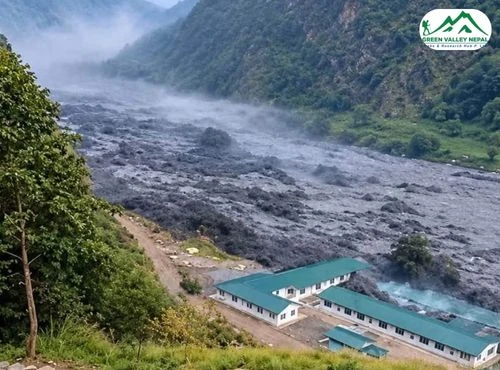
Above Deurali, the maintained trail gives way to rock scrambles. This isn't technical climbing, but it demands focus. In winter (December to February), snow cover on this section makes micro spikes non-negotiable. The section between Bamboo and Deurali carries high avalanche and landslide risk during pre-spring (February–March) and monsoon seasons. Always check local trail advisories with your guide before this section, not after.
Several crossings span 80–120 meters, swaying with every step and wind gust. Structurally sound, but psychologically challenging for anyone with a height sensitivity. You cannot prepare for this in a gym.
Altitude: Factor That Overrides Fitness
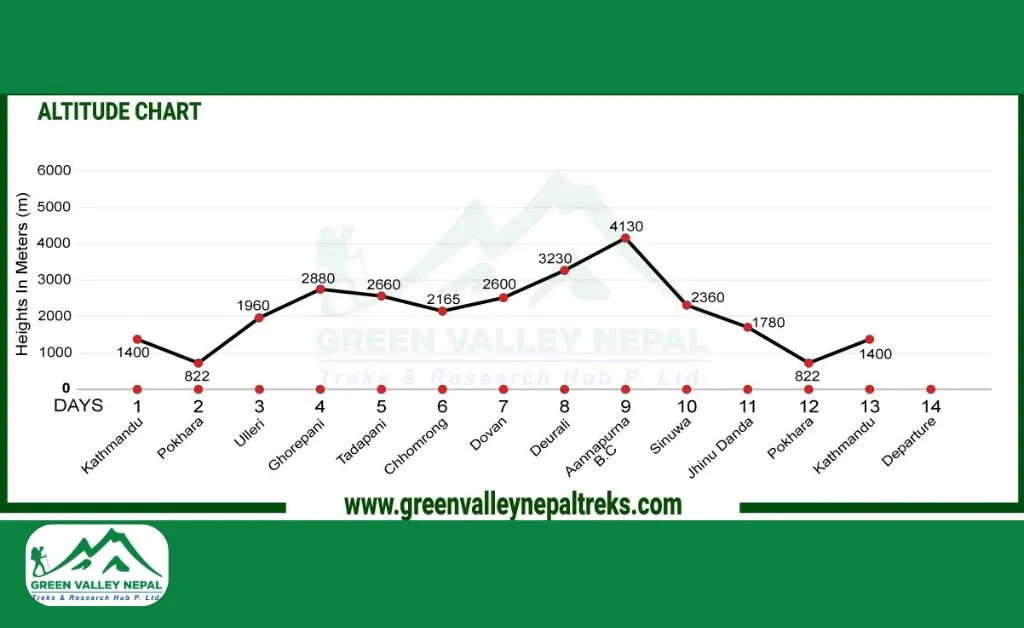
Altitude sickness doesn't care about your VO2 max. A marathon runner and a casual hiker face statistically similar risks above 3,000 meters. Here's why, and what the physiology actually means for you:
Altitude Checkpoint | Elevation | What Happens to Your Body |
Ghorepani | 2,860 m | Approx. 30% less oxygen. Most trekkers feel fine. Sleep may be slightly disrupted. |
Deurali | 3,230 m | Approx. 37% less oxygen. Headaches begin for 20–30% of trekkers. Appetite drops. |
Machhapuchhre Base Camp | 3,700 m | Sleep quality deteriorates significantly. Heart rate elevated 20–40% doing the same tasks. |
Annapurna Base Camp | 4,130 m | Every breath feels earned. Simple tasks like tying boots leave you winded. AMS risk peaks. |
Approximately 20–30% of trekkers experience mild Acute Mountain Sickness (AMS) symptoms, headache, nausea, dizziness, above 3,000 meters. Around 5–10% experience symptoms severe enough to require descent. The critical rule: a persistent headache that doesn't respond to ibuprofen and rest is a medical warning, not a nuisance. Descend immediately.
Acclimatization Protocol That Actually Works
- Never gain more than 500–600 meters of sleeping altitude per day above 3,000 meters
- Drink 3–4 liters of water daily, even when you don't feel thirsty
- Eat carbohydrate-rich meals; digestion slows at altitude, so avoid heavy fats
- Walk slowly ("bistari bistari" in Nepali), slower than feels necessary
- Never ignore a headache. Treat with ibuprofen, rest, then reassess
- The Golden Rule: Descend if symptoms worsen after 24 hours of rest
Fitness Requirements for ABC Trek: Concrete Benchmarks
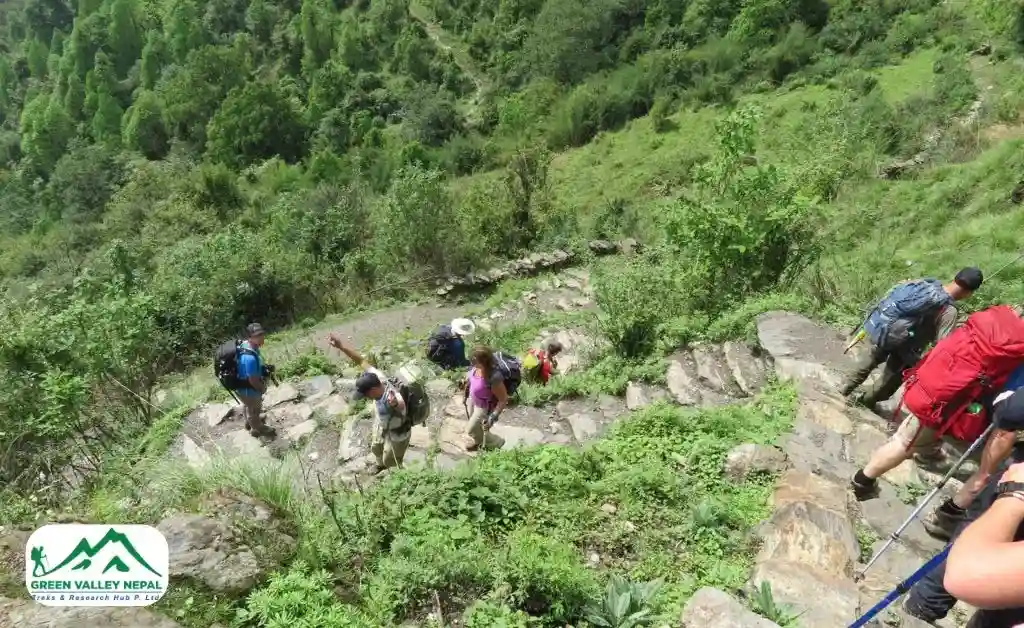
Most trekkers with regular exercise routines can complete the ABC trek successfully. The journey involves walking 5 to 7 hours daily for 7 to 12 days, depending on your itinerary, covering approximately 110 kilometers round-trip.
Minimum Fitness Benchmarks to Attempt ABC:
- Walk continuously for 5 hours carrying a 5–6 kg daypack without exhaustion.
- Hike 10 km with 500 meters of elevation gain without requiring a very long recovery.
- Climb 15 consecutive flights of stairs carrying 8–10 kg without stopping to catch your breath
- Perform 50 bodyweight squats in a single set.
- Descend stairs for 30 minutes without knee pain (descent is harder than ascent for most people).
If you cannot hit these benchmarks before departure, the 8-week training plan below will help, but only if you start immediately.
8-Week Training Program (Verified by Nepal Guides)
Phase | Cardio | Strength | Weekend Hike |
Weeks 1–3 (Foundation) | 3x weekly, 30–45 min run/cycle/swim | 2x weekly squats, lunges, calf raises (3×15) | 2–3 hrs with a light pack |
Weeks 4–6 (Build) | 4x weekly, 45–60 min with incline | 2x weekly weighted squats, step-ups, core | 4–5 hrs with 8 kg pack, seek hills |
Weeks 7–8 (Peak) | 3x weekly, maintain intensity | Maintain strength work | Back-to-back: Sat 4–5 hrs, Sun 3–4 hrs |
Critical addition: Stair training 2–3x weekly. Start at 10 floors, build to 30+ floors by week 8. This specifically builds the quad and calf endurance needed for Ulleri and Chhomrong.
Age and Experience: Who Actually Completes the ABC Trek
The ABC trail has been trekked successfully by people from age 12 to age 74+. Demographics from major trekking operators show:
Age Group | % of Trekkers | Notes |
Under 20 | ~5% | Minimum recommended age is 12 to 14 with adult supervision |
20s to 30s | ~55% | Largest group; high completion rate |
40s to 50s | ~30% | Completion rate similar to younger groups with proper prep |
60+ | ~10% | Strongly benefit from 12–14 day itineraries |
Data from major trekking companies shows that 65 to 70% of first-time Himalayan trekkers reach ABC when they have trained for 8–12 weeks beforehand. That rate drops below 50% for those who arrive untrained.
Medical clearance is essential for anyone over 60, those with pre-existing cardiovascular or respiratory conditions, anyone with a history of altitude sickness, and anyone with a BMI outside the 18.5–28 range (consult a doctor before booking).
Season-by-Season Difficulty Guide
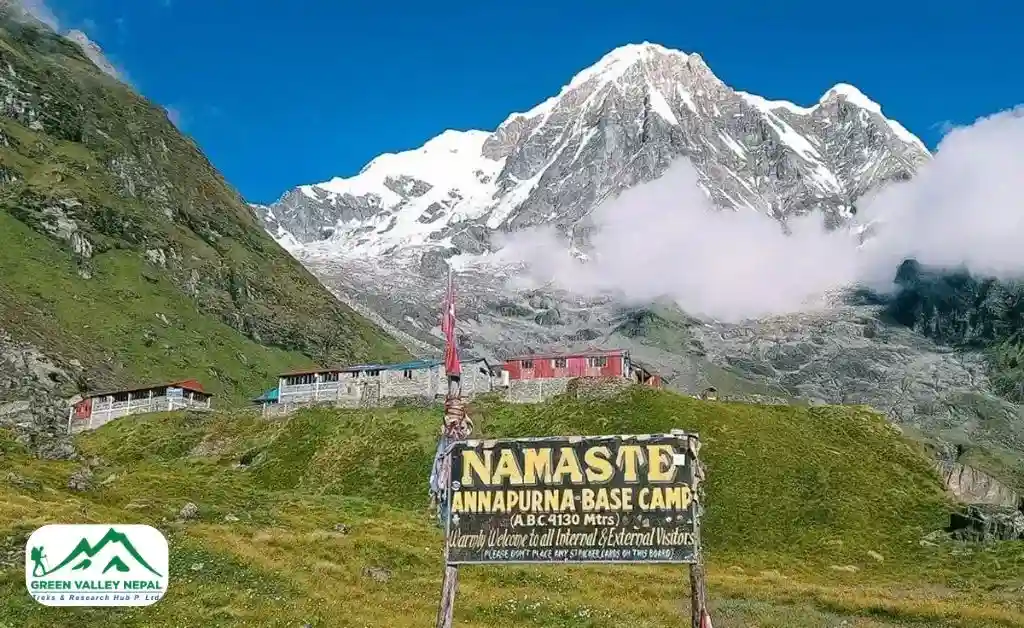
Season | Months | Difficulty | Success Rate | Key Challenge |
Autumn | Sep–Nov | 6/10 | 90–95% | Crowds; book the teahouses in advance |
Spring | Mar–May | 6.5/10 | 85–90% | Afternoon clouds; pre-spring avalanche risk |
Winter | Dec–Feb | 8/10 | 70–75% | Extreme cold (-15 to -20°C at ABC); many teahouses closed |
Monsoon | Jun–Aug | 8.5/10 | 60–65% | Rain, mud, leeches, zero views, landslide risk |
First-time trekker recommendation: Always choose autumn (October–November) for the highest success rate, clearest skies, and best mountain views. Spring (late March to May) is the second choice. Never attempt winter or monsoon on your first Himalayan trek. You can go through our blog annapurna base camp trek best time to know which time best fits your requirements.
Permits, Logistics & Costs: What You Need to Know
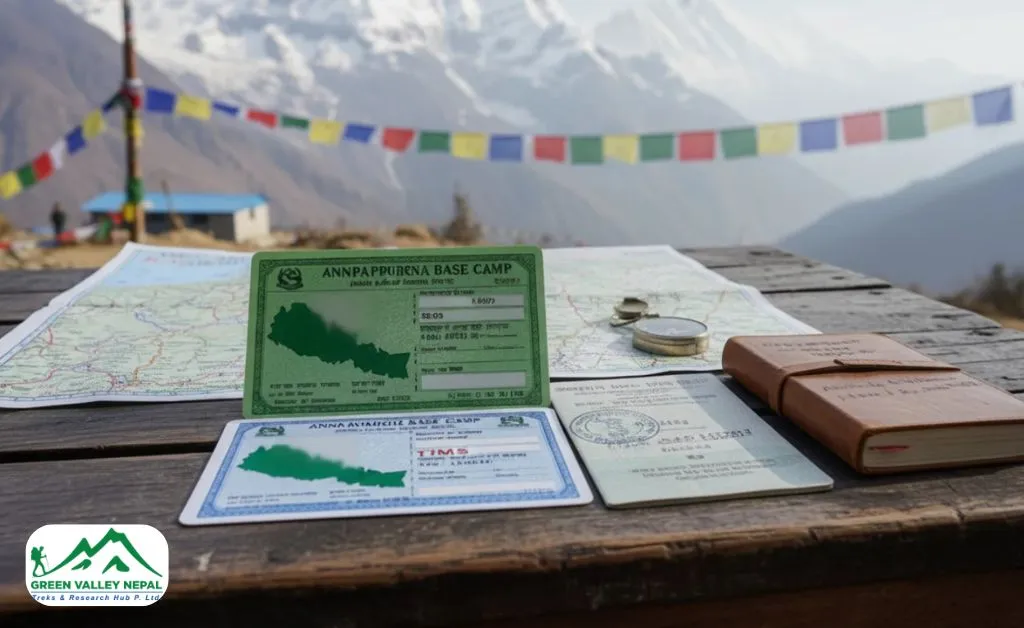
Two mandatory permits are required:
Permit | Foreign Cost | SAARC Cost | Where to Get |
ACAP (Annapurna Conservation Area Permit) | NPR 3,000 (~USD 22) | NPR 1,000 | Kathmandu or Pokhara |
TIMS Card (Trekkers' Information Management System) | NPR 2,000 (~USD 15) | NPR 600 | Nepal Tourism Board or TAAN |
Children under 10 do not require permits. Most reputable trekking agencies include permit costs in their packages. Total typical cost for a 10-day guided trek — including permits, guide, porter, teahouse accommodation, and meals — runs approximately USD 800–1,500 depending on agency and season.
For a full cost breakdown, including hidden expenses, read the complete ABC Trek cost guide
Mental Fitness: The Piece Nobody Talks About Enough
Physical fitness alone doesn't guarantee success. Mental resilience plays an equally important role. You'll face moments of fatigue, cold, altitude discomfort, and perhaps doubt about continuing. The ability to maintain a positive attitude, accept discomfort as temporary, and focus on gradual progress separates those who enjoy the trek from those who merely endure it.
Mental Strategies That Experienced Trekkers Use:
- Segment thinking: your only goal is the next teahouse, not base camp
- Celebrate each completed day as a genuine achievement
- Connect with other trekkers — shared difficulty creates real bonds fast
- Carry a physical object from home that grounds you when motivation fails
- Accept discomfort as data, not disaster: "I'm uncomfortable" is not "I'm failing."
What Does a Day on the ABC Trail Actually Feel Like?
Here is an honest hour-by-hour account that Instagram posts don't show you:
- 6:00 AM: You wake in a cold teahouse room, often at 5–10 °C. The shared toilet block is outside and freezing. Breakfast (usually dal bhat, porridge, or eggs) takes 45 minutes because one cook is serving 20+ trekkers.
- 7:30 to 8:00 AM: On the trail. First hour: manageable. Fresh legs, Crisp Mountain air, motivation high.
- Hours 2 to 3: Backpack straps dig in. The "gentle" ascent your guide described feels steeper than expected. You begin the counting method: 10 steps, breathe. 10 steps, breathe.
- Lunch (11:30 AM to 1:00 PM): 45 to 90 minutes of relief. Your teahouse menu options are the same ones you have seen for three days. Garlic soup is everywhere, and you will start to love it because it is allegedly beneficial for acclimatization.
- Afternoon (1:00 to 4:00 PM): This is where minds quit. The destination teahouse sits "just around the next ridge" for what feels like eternity. Altitude fatigue compounds physical tiredness. Many trekkers experience emotional lows on Days 4 to 6.
- Arrival: Relief, exhaustion, and a bed that feels like luxury regardless of its actual quality. Dinner early. Sleep by 8:00 PM. Then you wake up and repeat it.
How ABC Trek Compares to Other Popular Treks?
If you are debating between ABC and EBC, start with ABC. It's the ideal first Himalayan trek, serious enough to feel like a genuine achievement, accessible enough that well-prepared average hikers complete it every single day of trekking season.
Final Thought: Is Annapurna Base Camp Trek Hard?
The Annapurna Base Camp trek is moderately difficult but achievable for most healthy individuals. It requires:
- Consistent walking
- Basic fitness
- Proper preparation
- Awareness of altitude
With proper training and the right mindset, it is a rewarding adventure rather than a painful challenge. The stunning views of Annapurna I, Machapuchare, Hiunchuli, and the surrounding Himalayan range make every step worthwhile.
Frequently Asked Questions
- Can a complete beginner do the ABC trek?
Yes, with 8–12 weeks of dedicated preparation. Data shows 65–70% of first-time Himalayan trekkers successfully reach base camp when properly trained. That number drops below 50% without preparation. A 10-day itinerary (not 5–6 days) is essential for first-timers.
- How many hours do you walk per day?
Normally, people walk 5–7 hours daily. And even less when the altitude becomes higher.
- Do I need a guide, or can I trek independently?
Solo trekking in the Annapurna Conservation Area is technically permitted, but guides are strongly recommended for first-timers for three reasons: route navigation (some sections are poorly marked), altitude sickness recognition and response, and emergency logistics.
- Is there Wi-Fi and phone signal on the trail?
Yes, but inconsistently. NTC and Ncell networks provide coverage in most major teahouses up to and including ABC, though signal strength varies. Wi-Fi is available in most teahouses at an additional charge (NPR 200–500 per day). Don't rely on connectivity for navigation; it will be better to download offline maps before departure.
- What about hot showers during the ABC Trek?
Hot showers are available in most teahouses below 3,000 m for an additional NPR 200–500. Above Chhomrong (2,170 m), hot water becomes limited and more expensive. At ABC itself, expect cold water or bucket-heated water. This is not a luxury trek above mid-altitude.
- Can I charge my devices on the trail?
Yes. Charging facilities are available in dining halls in virtually all teahouses, at an additional charge of NPR 100–300 per device. Power banks are highly recommended for the gaps between teahouses and the final section up to ABC.
- What if I get altitude sickness?
If you experience a headache, nausea, or fatigue, rest for 24 hours at the same altitude. Do not ascend until symptoms improve. Drink plenty of water and take medication such as Ibuprofen if needed. If symptoms are severe, then descend immediately and seek medical help. Helicopter evacuation is available from most trekking routes and is usually covered by travel insurance. To tackle the challenges of altitude, you can go through our blog: Annapurna Base Camp Trek Map.
- What's the best month for clear mountain views?
October and November are the gold standard, post-monsoon clear skies, stable weather, and the best mountain visibility of the year. April and early May offer the famous rhododendron blooms with nearly as good visibility. Avoid December–February unless you're an experienced trekker prepared for genuine cold and possible route closures.