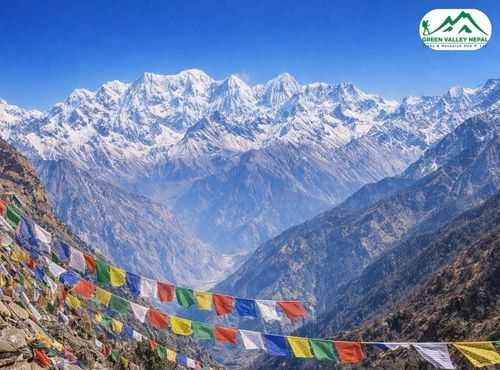
When to Start: A Realistic Timeline
How long you need depends on your current activity level, not your age. Be honest with yourself here; this is the single biggest factor in how much you will enjoy the trek.
Your starting point | Recommended lead time | What that looks like |
Already hike or run regularly, exercise 3+ times/week | 8–10 weeks | Sharpen and add load; you are building on an existing base |
Moderately active, exercise 1–2 times/week | 12–14 weeks | Build a real base before adding intensity |
Mostly sedentary or new to hiking | 16–20 weeks | Start with walking and basic strength; progress gradually to avoid injury |
Over 55, or returning after injury/inactivity | 20+ weeks, with medical clearance | Same plan, longer ramp; prioritize joint-friendly strength work first |
If you are reading this and your trek is 6 weeks away, don't panic and don't skip this guide; see the “Short on Time” note near the end. But start today; every week of prep compounds.
The Four Pillars of Annapurna Circuit Trek Training
Effective training for the Annapurna Circuit Trek rests on four pillars. Skipping any one of them is exactly how trekkers end up injured, exhausted by day six, or turning back at Manang.
Pillar 1: Cardiovascular Endurance

You need your heart and lungs to sustain moderate effort for 5 to 8 hours, not go all-out for 30 minutes. That means most of your cardio training should sit at a conversational pace; you should be able to talk in full sentences, just slightly breathless. This is often called Zone 2 training, and it's what builds the aerobic base that gets you through long trekking days without blowing up.
- 4–5 sessions per week, 30–60 minutes each, at a steady, conversational pace (brisk walking, jogging, cycling, swimming, or the StairMaster all work)
- 1 long session per week, building from 90 minutes up to 3–4 hours by the final month; this is what teaches your body to run on stored fat and stay efficient over time
- 1 interval or hill-repeat session per week from week 5 onward: 8–12 rounds of 2 minutes hard uphill effort, 2 minutes easy; this trains the surges you'll feel on steep switchbacks
- Stair climbing (real stairs or a StairMaster) is the closest gym substitute for repeated Himalayan ascents; use it if you don't live near hills
Pillar 2: Strength (Legs, Glutes, and Core)
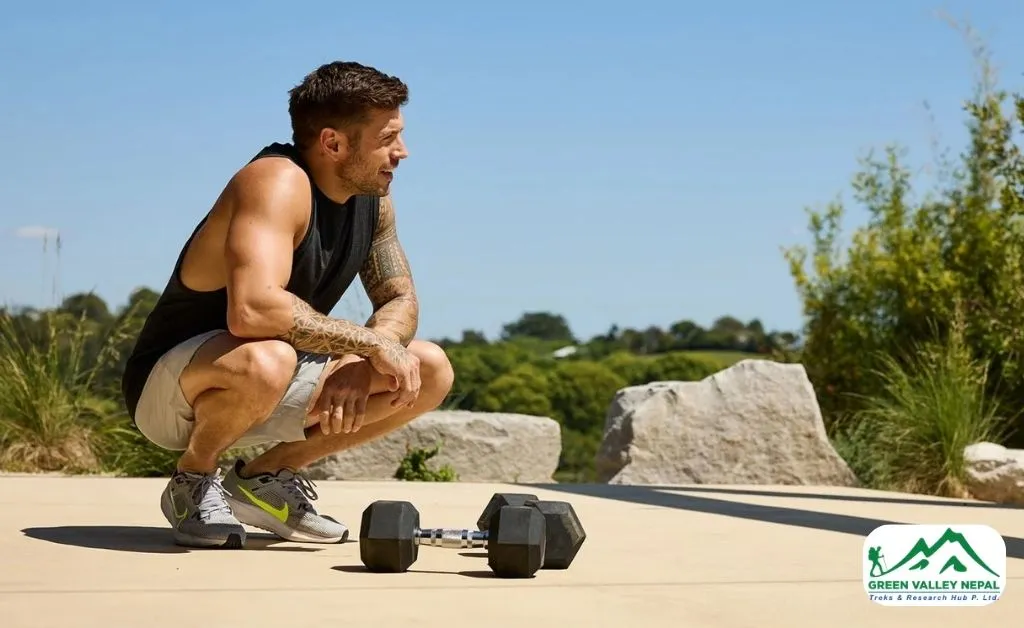
Leg strength is what saves your knees on the long descents, which is where most trekking injuries actually happen, not on the climbs. Core strength is what keeps you stable under a loaded pack on uneven ground. Train both, and train them together.
Exercise | Sets x Reps | Why it matters |
Goblet squats | 3 x 12–15 | Builds the quad strength that controls your descent |
Walking lunges | 3 x 12 per leg | Single-leg stability for uneven trail steps |
Step-ups (bench or box) | 3 x 12 per leg | Directly mimics stone-step climbing |
Calf raises | 3 x 15–20 | Ankle and lower-leg endurance on inclines |
Romanian deadlifts (or good mornings) | 3 x 10–12 | Posterior chain strength; protects your lower back under pack weight |
Plank/side plank | 3 x 30–60 sec | Core stability under a loaded daypack |
Single-leg balance (eyes closed for a challenge) | 3 x 30 sec per leg | Ankle stability on scree and loose rock |
Train legs and core 2–3 times a week, never on consecutive days; your muscles need 48 hours to recover and rebuild. From week 6 onward, do at least one of these sessions wearing your loaded daypack.
Pillar 3: Loaded Hiking Practice
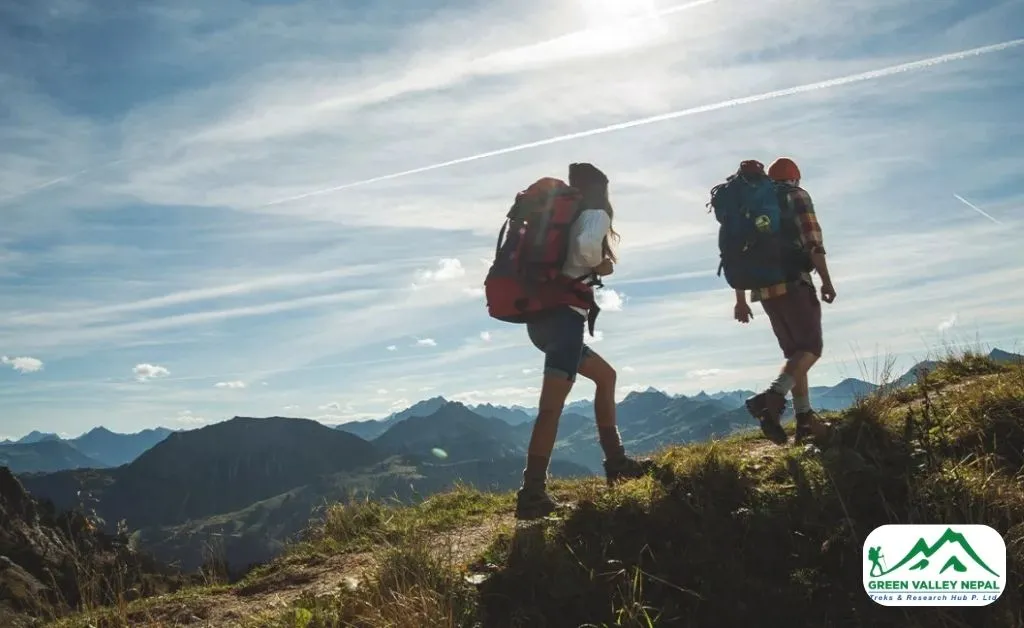
This is the pillar every gym-only training plan misses, and it's the one that matters most. No treadmill replicates uneven ground, a pack shifting on your back, or six hours on your feet. In the final 6–8 weeks, real hikes with real weight are non-negotiable.
Weeks out | Hike length | Pack weight | Focus |
8–7 | 2–3 hours | 3–4 kg | Break in boots; get used to carrying a pack |
6–5 | 4–5 hours | 4–5 kg | Add elevation gain; practice trekking poles |
4–3 | Full day (6–7 hrs) | 5–6 kg | Simulate an actual trekking day, including lunch stops |
2 | Back-to-back days | 5–6 kg | Two consecutive hiking days to test recovery, exactly like the trail |
1 (taper week) | Short, easy walks only | Light | Let your legs recover fully before you fly |
If you have no hills nearby, a weighted pack on a treadmill at maximum incline, or repeated flights of stairs, is a workable substitute; just make sure you also get outdoors on uneven ground at least a few times before departure.
Pillar 4: Mobility and Recovery
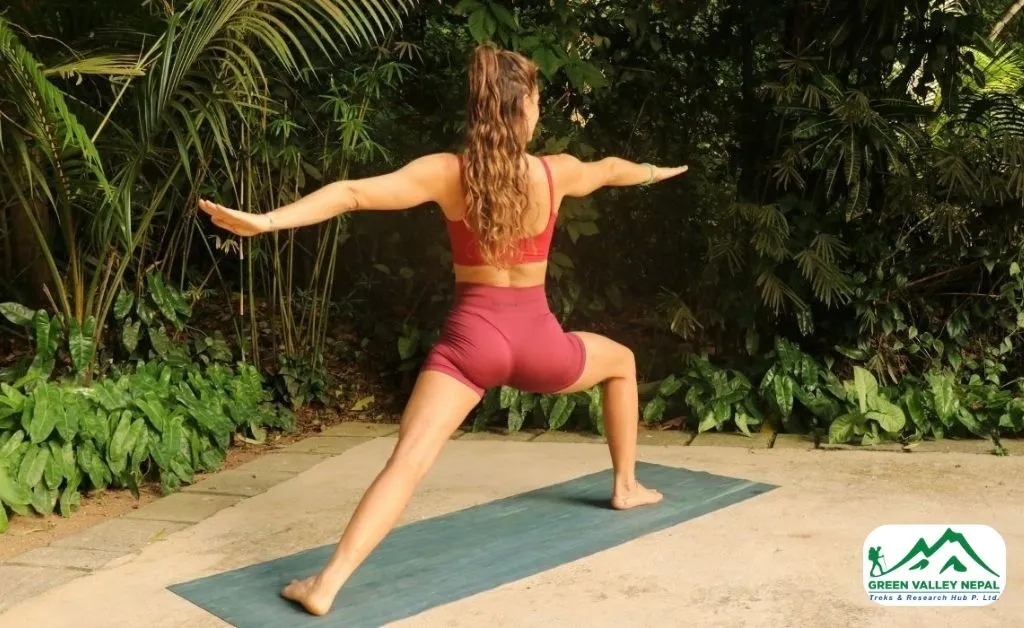
Flexibility doesn't get you up the pass, but it's what keeps you walking pain-free by day ten. Tight hips and hamstrings translate directly into knee and lower-back strain on long descents.
- Stretch for 10 minutes after every session: hamstrings, calves, hip flexors, and lower back
- Add 1–2 short yoga sessions a week if you can; the balance and hip-opening work translates directly to trail stability
- Foam roll quads, calves, and IT bands 2–3 times a week, especially after loaded hikes
- Treat rest days as part of training, not a skipped workout; this is when the adaptation actually happens
Training for the Altitude Itself
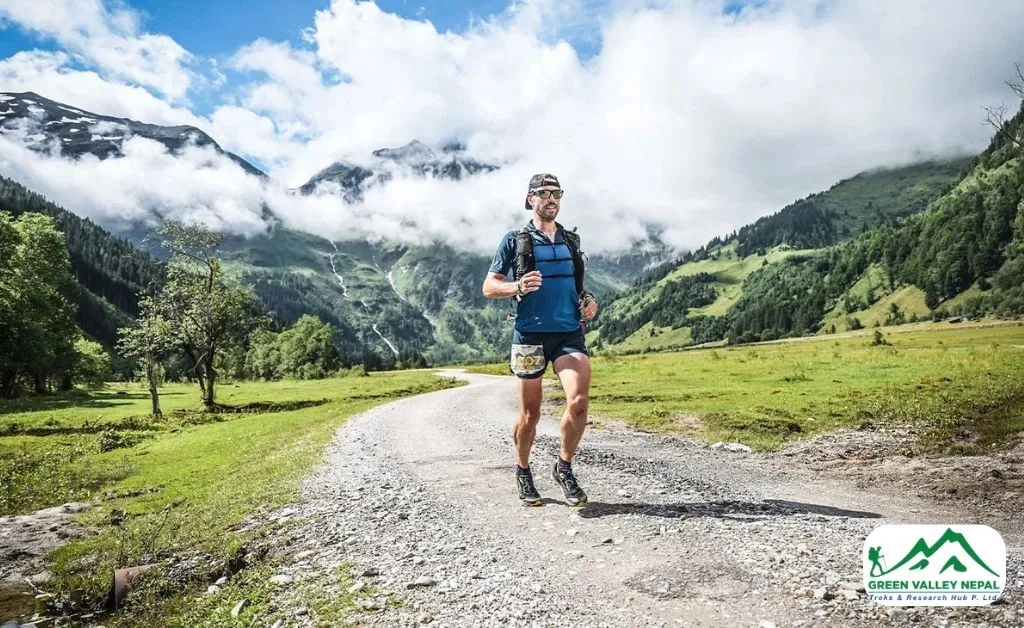
You cannot fully train your body to handle 5,416 m from sea level; that adaptation only happens on the mountain, through a properly paced itinerary and acclimatization days. But you can prepare in ways that make the altitude noticeably easier to cope with.
- Build your aerobic base (Pillar 1) as large as possible; a bigger cardiovascular engine copes better with reduced oxygen, even though it doesn't prevent altitude sickness itself
- Practice nasal and diaphragmatic breathing during cardio sessions; controlled breathing reduces the sense of breathlessness at altitude
- If you live near genuine elevation (1,500 m or higher), do some training hikes there; it's the closest real-world substitute available
- If you have access to an altitude tent or altitude gym session, a handful of sessions in the final month can help you recognize how your body responds to lower oxygen, though the evidence for major performance gains from short-term use is mixed
- Most importantly: understand that altitude sickness is not primarily a fitness problem; it affects trained athletes as often as beginners. Training builds the stamina to enjoy the trek; a slow, well-paced itinerary is what actually prevents AMS
Manang, the main acclimatization stop on the circuit, is also the jumping-off point for the Annapurna Tilicho Lake Trek side trip, worth planning for if your training has you arriving fitter than the standard itinerary assumes.
16-Week Annapurna Circuit Training Plan
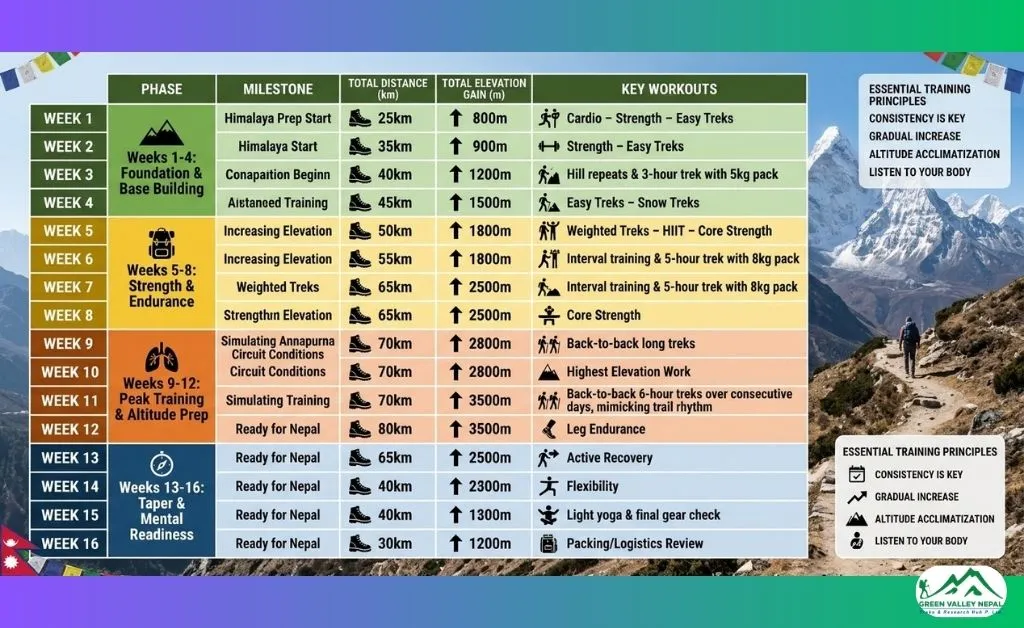
Here is a complete, phase-based plan for someone starting from a moderate fitness level. If you are already active, compress it to 10–12 weeks by starting at Week 5. If you're a beginner, repeat Weeks 1–4 once before moving on.
Phase 1: Foundation (Weeks 1–4)
Goal: build a consistent habit and a base level of aerobic fitness without injury.
Day | Session |
Mon | Rest or gentle stretching |
Tue | Cardio: 30–40 min steady pace |
Wed | Strength: legs & core (bodyweight) |
Thu | Cardio: 30–40 min steady pace |
| Fri | Rest or mobility/yoga |
Sat | Hike: 2 hours, no load |
Sun | Easy walk or full rest |
Phase 2: Build (Weeks 5–9)
Goal: add load and elevation; introduce interval training.
Day | Session |
Mon | Rest |
Tue | Cardio: 40–50 min steady + strength (legs & core) |
Wed | Hill repeats or stair intervals: 8–10 rounds |
Thu | Strength: legs & core, loaded pack (5–7 kg) |
Fri | Mobility/yoga + light cardio |
Sat | Loaded hike: 4–5 hours, 4–5 kg pack |
Sun | Easy recovery walk |
Phase 3: Peak (Weeks 10–14)
Goal: simulate real trekking days, including back-to-back hiking.
Day | Session |
Mon | Rest |
Tue | Cardio: 45–60 min + strength |
Wed | Hill repeats or stair intervals: 10–12 rounds |
Thu | Strength: legs & core, loaded pack (5–6 kg) |
Fri | Rest or light mobility |
Sat | Full-day loaded hike: 6–7 hours, 5–6 kg pack |
Sun | Second consecutive hike: 3–4 hours (2–3 times during this phase) |
Phase 4: Taper (Weeks 15–16)
Goal: arrive rested, not exhausted. This is where trekkers most often sabotage themselves by cramming.
Week | Focus |
Week 15 | Cut volume by 40%; one shorter loaded hike, light strength work, plenty of sleep |
Week 16 (departure week) | Short easy walks only, stretching, hydration, packing, no new or intense exercise |
Resist the urge to squeeze in one last hard workout the week before you fly. Tired, achy legs on day one of the trek are a self-inflicted problem, and they're entirely avoidable.
Mental Preparation for Annapurna Circuit Trek
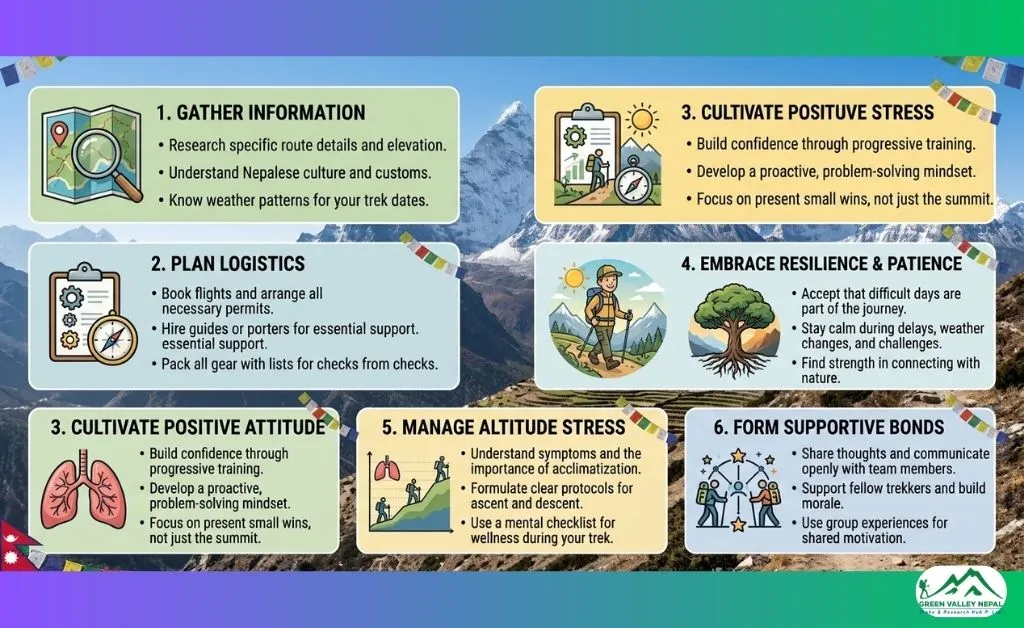
Ask experienced guides why trekkers turn back, and fatigue rarely tops the list. It's usually the accumulated weight of cold mornings, basic teahouse rooms, days of grey cloud, and sheer monotony that wears people down. You can train for this too.
- Shift your sleep schedule in the final weeks; practice getting up at 4–5 AM a few times, since most Thorong La summit attempts start between 3 and 4 AM
- Deliberately choose the harder route on a few training hikes; practice continuing when you'd rather stop
- Build a simple breathing or mindfulness habit (even 5 minutes a day), it genuinely helps on long, monotonous climbing stretches
- Train with the people you're trekking with when possible; shared accountability keeps a 16-week plan on track far better than willpower alone
- Go into it accepting that some days will just be hard; that expectation alone removes a lot of the psychological friction when it happens
Train Your Gut, Not Just Your Legs

Nutrition and hydration habits matter more on this trek than most people expect, and they are worth rehearsing before you leave.
- Practice eating and drinking while moving during your longer training hikes; your appetite drops at altitude, so get used to fueling on a schedule rather than waiting until you're hungry
- Train your daily water intake up toward 3–4 liters so it feels normal, not forced, once you're on the trail
- Test any energy bars, electrolyte mixes, or snacks you plan to bring during training, not for the first time in Nepal; find out what your stomach tolerates during exertion
- If you plan to use Diamox (acetazolamide) as a preventive measure, discuss it with your doctor well before departure, not the week you fly
Common Training Mistakes That Derail Trekkers
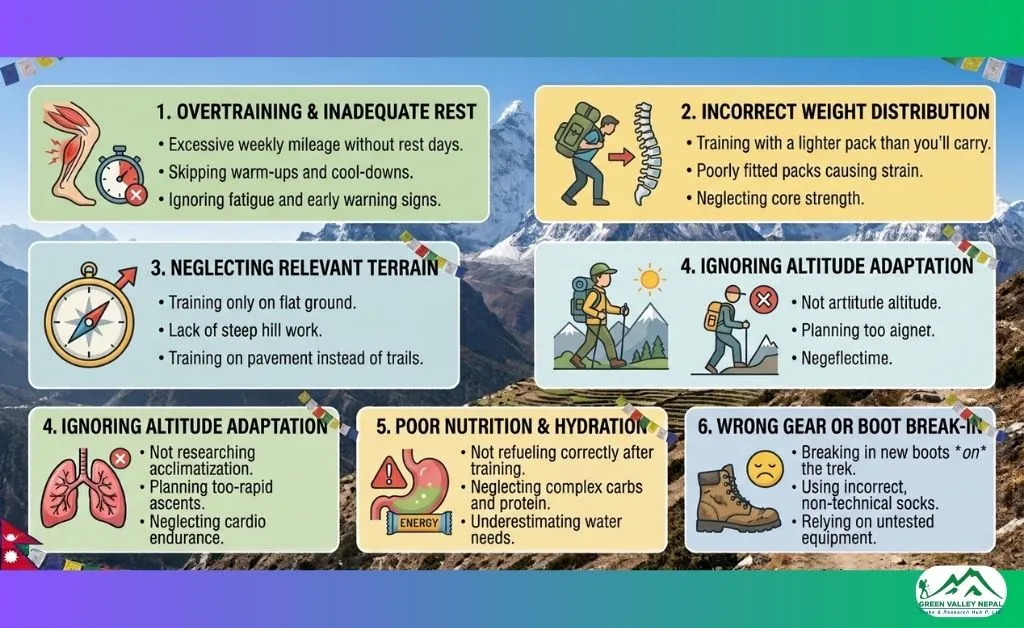
- Starting too late and cramming: a rushed 4-week plan builds fatigue, not fitness, and raises injury risk right before departure
- Only doing cardio and skipping strength work: this is exactly how trekkers end up with wrecked knees on the descent from Thorong La
- Training in brand-new boots: blisters that start on day two of a hike become genuinely dangerous on the approach to a 5,400 m pass
- Never training with a loaded pack, 5 kg feels very different at hour six than it does at hour one, and the only way to know is to test it beforehand
- Treating training as all-or-nothing, four consistent 40-minute sessions a week beat one brutal 3-hour session followed by two weeks off
- Ignoring rest days, overtraining in the final month leaves you arriving in Nepal already fatigued, before the trek has even begun
Training Gear: What to Use before You Participate in Annapurna Circuit Trek
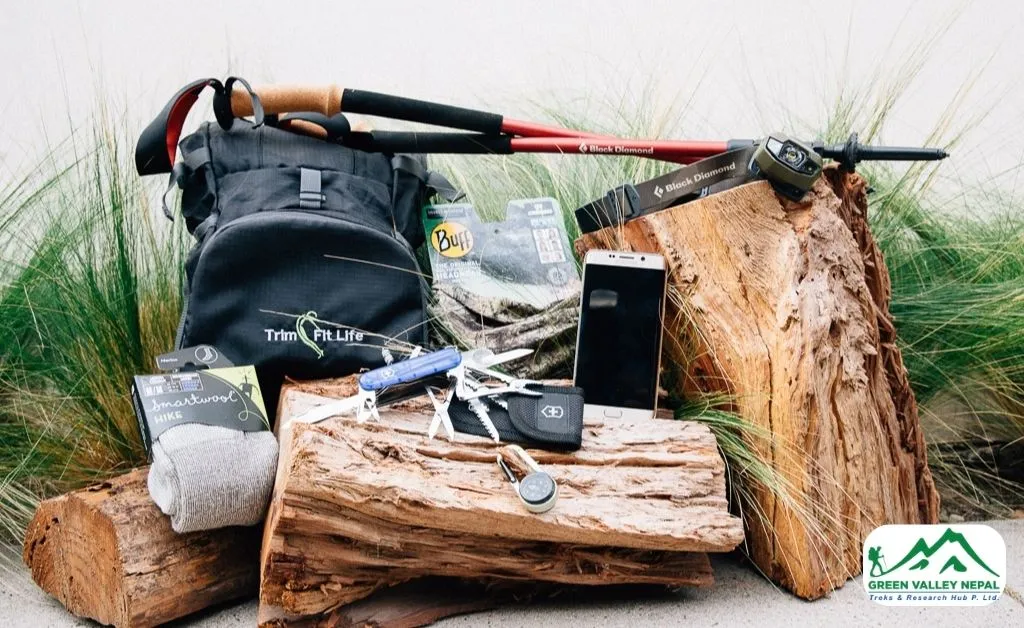
We cover the full trek packing list: clothing layers, teahouse essentials, and more, in complete detail in our Annapurna Circuit Trek Packing List. For training specifically, here's what you actually need in the gym and on the trail beforehand:
- The exact boots you will wear on the trek, with a minimum of 40 hours on varied terrain before departure; never break in boots on the mountain
- The daypack you will actually carry (20–25L), loaded to your target training weight, not a different bag
- Moisture-wicking socks and base layers, tested on long hikes to rule out chafing or hot spots
- Trekking poles, if you plan to use them, practice the rhythm and adjustment on hills, not for the first time at Thorong La
- A hydration bladder or bottles you'll actually use, so carrying 2–3 liters feels routine
Short on Time? A 6-Week Compressed Plan
If your departure is closer than 12 weeks out, don't try to force the full 16-week plan into a shorter window; that's how people get hurt. Instead, prioritize in this order: loaded hiking (Pillar 3) first, strength (Pillar 2) second, cardio volume (Pillar 1) third, since your existing daily activity likely already gives you some base.
Aim for at least 3 loaded hikes and 4 strength sessions across the 6 weeks, and accept that you'll be arriving less conditioned than you would with a full run-up; pace yourself accordingly on the trail and lean more heavily on your guide's judgement about rest days.
On the other end of the spectrum, if you complete the full 16-week plan and finish it feeling strong, the Nar Phu Valley Trek with Kang La and Thorong La Pass is worth considering; it extends the classic circuit into more remote, less-trekked terrain for those who want an extra challenge out of their training.
Final Thought
The Annapurna Circuit is one of the most rewarding long treks in the world, and it rewards preparation more than almost any other. Trekkers who train consistently, build load-bearing endurance rather than just cardio fitness, and pace their expectations honestly complete it at high rates and come back with an experience that's genuinely hard to put into words.
Start earlier than you think you need to. Train consistently rather than intensely. And when you are ready to turn that training into a trek, we are here to help you plan it properly.
Ready to put your training to the test? The experienced team at Green Valley Nepal Treks can help you plan a safe, well-paced Annapurna Circuit Trek itinerary built around your fitness level and timeline. Contact us to begin planning your trek.
Frequently Asked Questions (FAQs)
- How many months should I train for the Annapurna Circuit?
Most trekkers do best with 12–16 weeks of structured training. If you're already active, 8–10 weeks is workable. Complete beginners are better served by 16–20 weeks, building gradually to avoid injury.
- Which month should I schedule my trek for once I've trained?
Autumn (October–November) and spring (March–May) give the clearest skies and most stable trail conditions. See our Best Trekking Seasons in Nepal guide for a month-by-month breakdown so you can time your training plan to finish right as your departure window opens.
- Is running enough to prepare for this trek?
No. Running builds cardiovascular fitness, but it doesn't train the specific demands of a loaded daypack, uneven descents, or hours of sustained walking at altitude. Pair running with strength training and, critically, loaded hikes on real terrain.
- Do I need to do altitude training before I go?
It helps but isn't essential. A large aerobic base and controlled breathing habits make the altitude more manageable, but the real protection against altitude sickness is a properly paced itinerary with acclimatization days, not gym-based altitude simulation.
- Can a beginner realistically train for the Annapurna Circuit?
Yes. With 16–20 weeks of consistent, gradually progressive training, beginners complete this trek every season. The key is starting early enough that you're not cramming, and prioritizing loaded hikes over gym intensity.
- What's the single most important thing to train?
Loaded hiking on real, uneven terrain. It's the one thing no gym machine replicates, and it's what most closely mirrors the actual demand of the trek: hours on your feet, carrying weight, on ground that isn't flat.
- Should I train differently if I'm over 50?
The same four pillars apply, but give yourself a longer runway (20+ weeks), get medical clearance first if you have any cardiovascular or joint concerns, and prioritize joint-friendly strength work, step-ups, and controlled squats over high-impact plyometrics.
- How do I know if I'm fit enough to book the trek?
If you can comfortably hike 4–5 hours with a loaded daypack on hilly terrain and recover well enough to do it again the next day, you have a solid baseline. If that sounds hard right now, it's not a reason not to book; it's a reason to start your training plan today.
- Does the same training plan work for Everest Base Camp too?
Largely, yes, the four pillars are the same. The main difference is duration and remoteness rather than terrain difficulty. If you're deciding between the two, our Everest Base Camp Trek page has the itinerary details, and most trekkers who've done both call the Annapurna Circuit the physically harder of the two overall.