What Makes the Annapurna Base Camp Trek a Safe Choice for Most Trekkers?
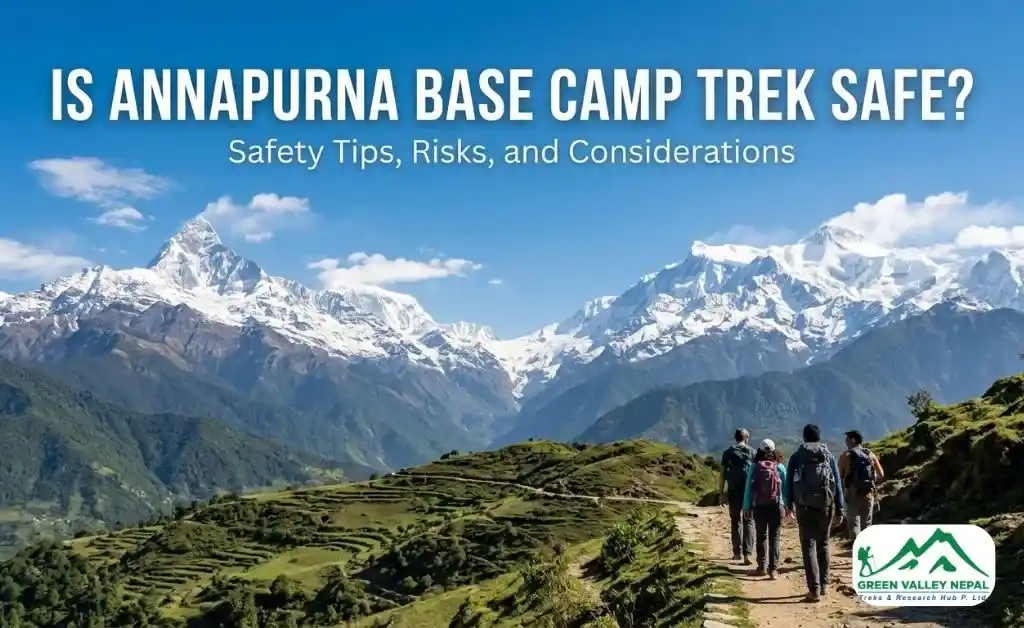
The ABC trek is consistently ranked among the most accessible Himalayan treks in the world, and there are good reasons for that reputation.
The trail is well-established and well-marked, passing through villages every few hours. You are rarely alone on the route. Teahouses are available throughout, which means you have shelter, food, and people around you at almost every stage. The entire trail operates within the Annapurna Conservation Area (ACAP), which has active management, permit checkpoints, and rescue coordination.
The maximum altitude you reach is 4,130 meters at Annapurna Base Camp itself. That is significantly lower than Everest Base Camp at 5,364 meters. For most physically healthy adults, 4,130 meters is manageable with proper acclimatization. It is not a technical climb. No ropes, no ice axes, no technical skills required.
That said, the ABC trek is still a Himalayan trek. The mountains do not care about your fitness level, your experience, or your deadline. What keeps trekkers safe here is preparation, awareness, and knowing when to turn back.
What Are the Real Risks on the Annapurna Base Camp Trek?
Let's talk about what can actually go wrong, because understanding the risks is what helps you avoid them.
Altitude Sickness (AMS)
Acute Mountain Sickness is the most common health risk on the ABC trek. Even at 4,130 meters, AMS can hit if you push too hard, too fast. Symptoms range from headache and nausea to dizziness and fatigue. Mild cases often resolve with a rest day. Severe cases require immediate descent without any exceptions.
The standard ABC itinerary has acclimatization built in. Stops at Chhomrong (2,170m) and Deurali (3,230m) give your body time to adjust, and the Poon Hill hike doubles as an effective altitude prep day. To keep risk low: ascend gradually, drink 3–4 litres of water daily, avoid alcohol, carry Diamox after consulting your doctor, and never ignore early symptoms. Most emergencies on this trail come down to trekkers who rushed or pushed through warning signs. Respect the pace, and AMS stays manageable.
Looking for a shorter route with lower altitude exposure? The Mardi Himal Trek is a great alternative that still takes you deep into the Annapurna region with less altitude stress.
Landslides and Avalanches
The Annapurna region is geologically active. Landslides during and after the monsoon season (June to September) are a real concern, particularly on sections between Bamboo and Deurali. Snow avalanches during winter (December to February) have caused fatalities near Hinku Cave and Deurali, which sit in a narrow valley exposed to sliding snow.
This is not mentioned to scare you; it is mentioned so you know which seasons and sections carry extra risk. The October 2014 snowstorm disaster, which caused deaths in the Annapurna region, was a direct result of trekkers being on the trail during an unusually severe early snowfall. Many were caught off-guard because weather conditions changed faster than expected.
The practical lesson: always check weather forecasts before heading into higher elevations, monitor conditions at the checkpoint in Chhomrong, and pay attention to what local guides and teahouse owners tell you. They often know well before any app does.
Slippery and Steep Trail Sections
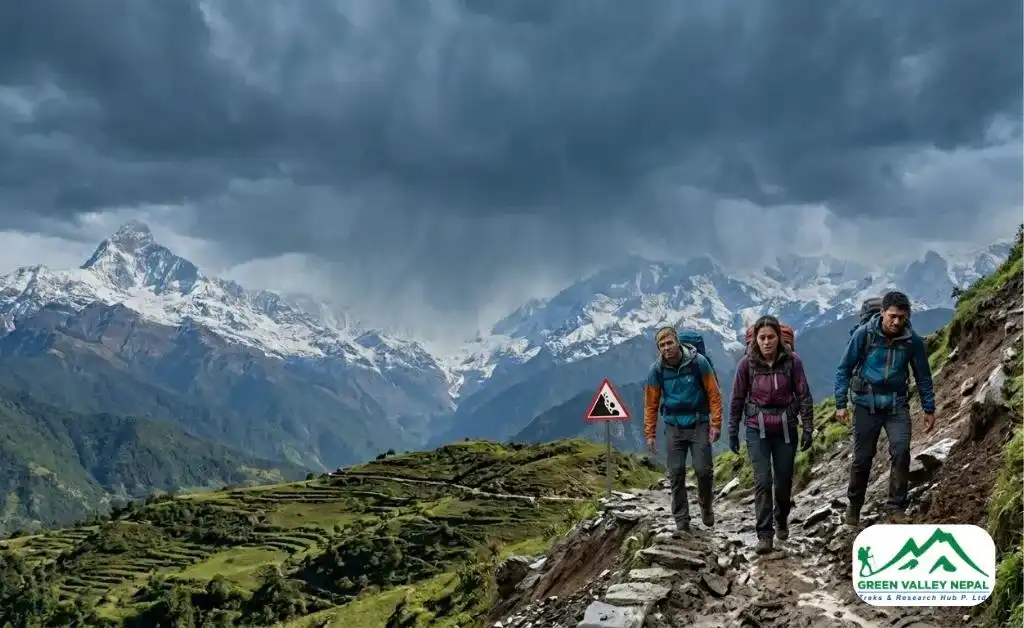
The ABC trail is mostly stone steps and mountain paths. Some sections are steep. After rain, or in early morning frost, many stretches become genuinely slippery. Ankle sprains, slips, and falls are the most common trekking injuries on this route, not altitude sickness.
Trekking poles are not optional accessories on this trail. They take significant stress off your knees on descents and give you a lot more stability on wet stone steps. Good ankle-support trekking boots with a solid grip are equally important.
Sections to be particularly careful on:
- The long descent from Ghorepani to Tadapani
- Stone steps approaching and leaving Chhomrong
- The trail through Bamboo and Sinuwa after rain
- Any section above Deurali if there is morning ice
River Crossings and Modi Khola Flooding
During the monsoon season, the Modi River rises significantly, and crossings can become dangerous. Even in shoulder season, flash flooding can occur after heavy rain. Most standard itineraries run outside peak monsoon, but if you are trekking in late September, keep this in mind.
Limited Medical Facilities
There are basic health posts at Chhomrong and Jhinu Danda. Beyond that, medical care is very limited on the trail. If something serious happens above Chhomrong, a bad fall, severe AMS, or a heart issue, you are looking at a helicopter evacuation to Pokhara.
Helicopter rescue is effective, and the response time in the Annapurna region is generally good, but a rescue flight costs between $3,000 and $6,000 USD. Without proper travel insurance that covers high-altitude helicopter evacuation to at least 4,200m, you are carrying a significant financial risk alongside the physical one.
How Dangerous Is the Annapurna Base Camp Trek Compared to Other Treks in Nepal?
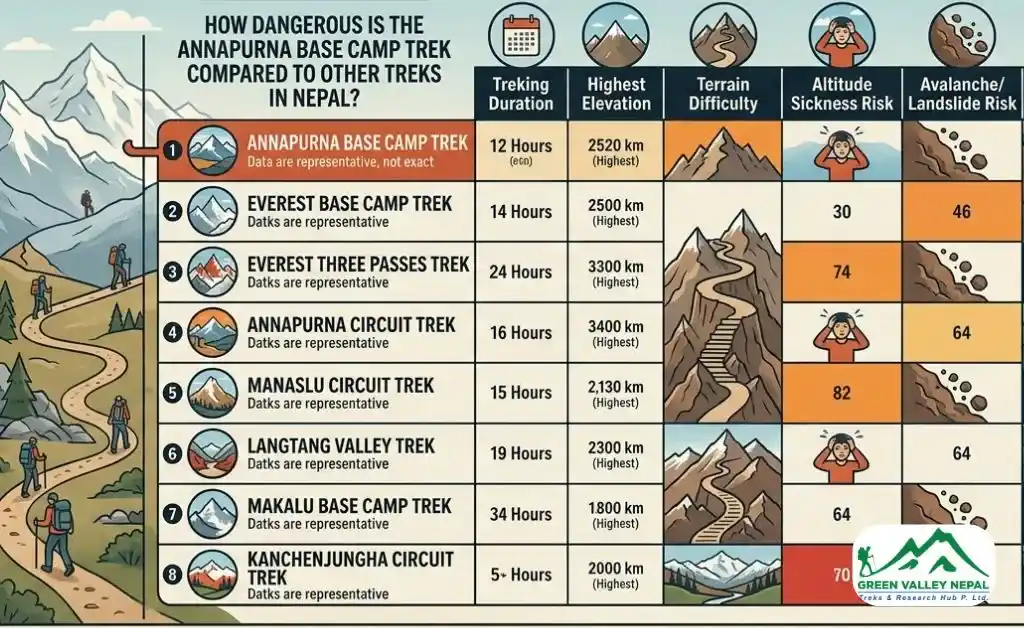
Compared to other popular Himalayan treks in Nepal, the ABC trek has a strong safety record. The trail does not take you above 5,000 meters, so extreme altitude-related conditions like HAPE (High Altitude Pulmonary Edema).
Trek | Max Altitude | Difficulty Level | Altitude Sickness Risk | Terrain Risk | Remoteness | Overall Danger Level |
Everest Base Camp (EBC) Trek | ~5,364 m (5,545 m Kala Patthar) | Moderate–Hard | High | Moderate (rocky, glacier areas) | Medium | Moderate–High |
Everest Three Passes Trek | ~5,400–5,545 m | Very Hard | Very High | High (snow passes, exposure) | High | Very High |
Annapurna Circuit Trek | ~5,416 m (Thorong La Pass) | Hard | High | High (long pass crossing) | Medium | High |
Manaslu Circuit Trek | ~5,106 m (Larkya La Pass) | Hard | High | High (remote trails, landslides) | High | High–Very High |
Langtang Valley Trek | ~3,870 m | Moderate | Low | Moderate (landslides possible) | Medium | Low–Moderate |
Makalu Base Camp Trek | ~4,870 m | Very Hard | High | High (rugged, isolated) | Very High | Very High |
Kanchenjunga Circuit Trek | ~5,143 m | Very Hard | High | High (remote wilderness) | Extreme | Extreme |
In terms of incident data, the majority of serious accidents and fatalities on the ABC route involve trekkers who ignored AMS symptoms, trekked during off-season weather events, or ventured off the main trail. Trekkers who follow a sensible itinerary, hire a guide, and carry proper insurance have an extremely high success and safety rate.
The ABC trek is genuinely appropriate for fit beginners. That is not a marketing line; it is a practical observation. The moderate altitude, regular accommodation, and well-managed trail infrastructure make it one of the few Himalayan treks where a first-time trekker with good fitness and solid preparation can complete it safely.
Is the Annapurna Base Camp Trek Safe for Solo Trekkers?
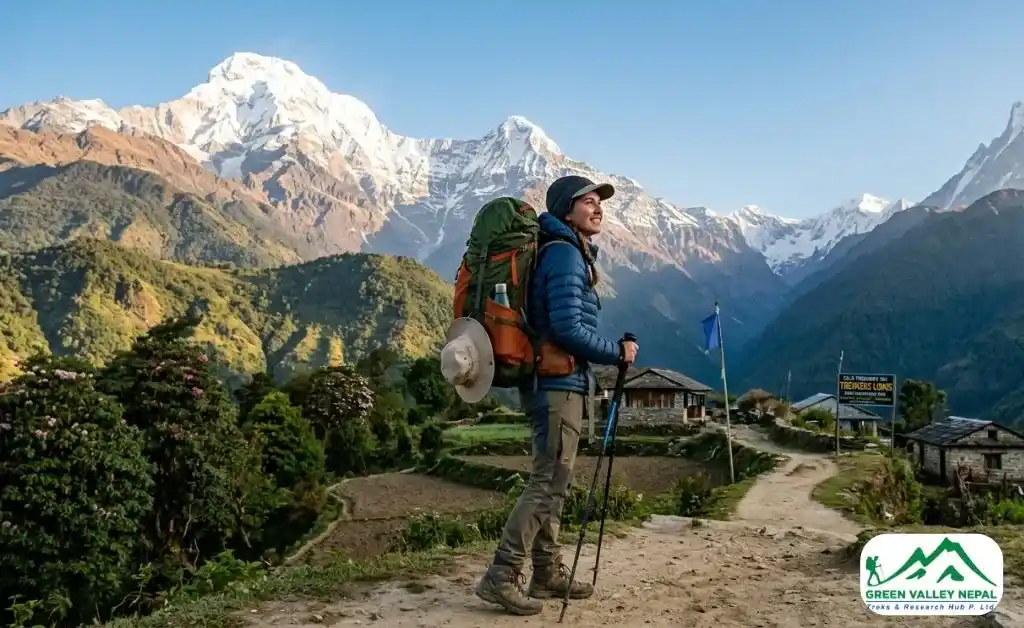
Solo trekking on the ABC route is more common than on many other Himalayan treks, largely because the trail is busy, well-signposted, and teahouses are plentiful. Many solo trekkers complete it without issue each year.
However, as of 2026, Nepal's trekking regulations require foreign solo trekkers to hire a licensed guide in most Himalayan regions, including the Annapurna Conservation Area. This rule was introduced for good reason; it significantly improves safety outcomes, especially in emergencies.
Even before the regulation, experienced trekkers strongly recommended guides for solo hikers because:
- A guide can recognize early AMS symptoms that you might dismiss as normal tiredness
- They know weather patterns, route variations, and which teahouses are reliable
For solo female trekkers specifically, the ABC trail is considered one of the safer trekking environments in Asia. Villages are inhabited and welcoming, fellow trekkers are almost always present, and teahouse owners are used to solo women guests.
What Is the Safest Time to Do the Annapurna Base Camp Trek?
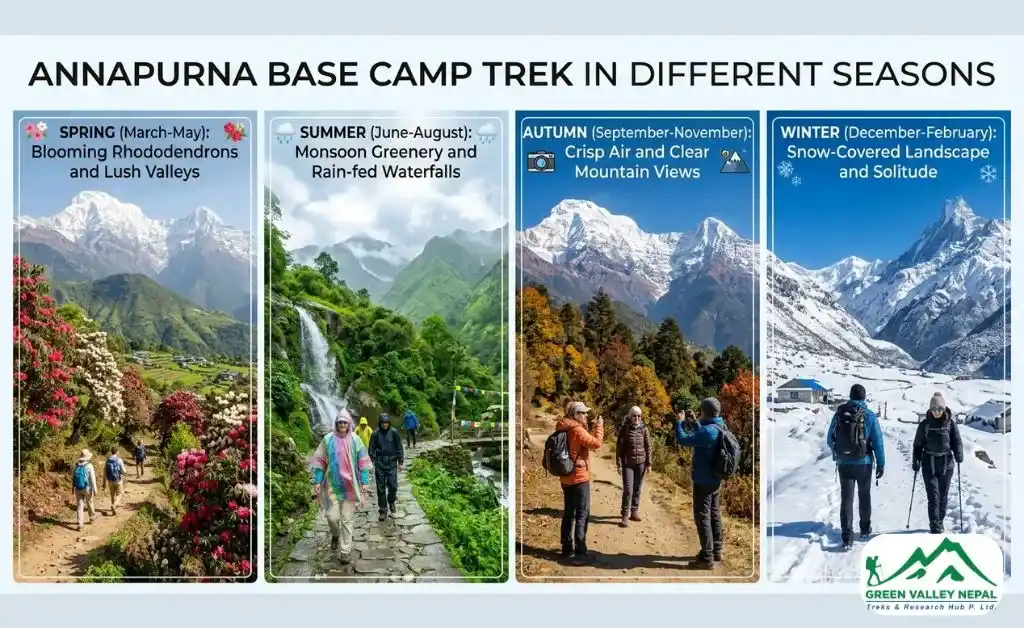
Picking the right ABC trek season is one of the most straightforward safety decisions you can make.
Season | Months | Safety Level | Trail Condition | Recommended For |
Spring | Mar – May | High | Dry, clear | All trekkers, especially beginners |
Autumn | Sep – Nov | High | Dry, stable | All trekkers, best visibility |
Winter | Dec – Feb | Moderate | Icy, snow above 3,500m | Experienced trekkers only |
Monsoon | Jun – Aug | Low | Muddy, landslide risk | Not recommended |
Essential Safety Tips for the ABC Trek
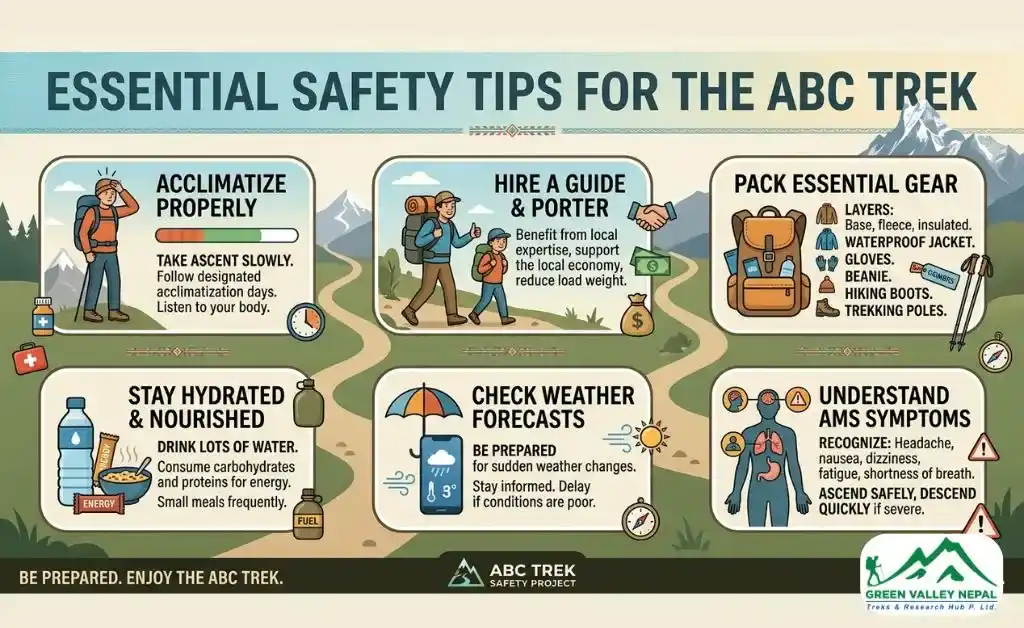
Here is what experienced trekkers consistently say makes the difference between a safe, enjoyable ABC trek and a difficult one.
- Get proper travel insurance. This cannot be overstated. Make sure your policy covers high-altitude trekking to at least 4,200m, emergency helicopter evacuation, and medical treatment costs. Read the small print carefully; many standard travel policies explicitly exclude trekking above 3,000m or 4,000m.
- Hire a licensed guide. Beyond the 2026 legal requirement, a good guide genuinely improves your safety. They serve as a first responder for medical issues, a navigator in poor visibility, a translator in emergencies, and a knowledgeable advisor throughout the trek. Expect to pay $25–$35 per day for a guide, plus their food and accommodation.
- Do not rush your itinerary. The standard 7-day ABC itinerary is often too compressed for trekkers who are not already acclimatized. A 10–12 day itinerary gives your body more time to adjust and allows buffer days for bad weather. The extra days are not a luxury; they are a safety margin.
- Pack a proper first aid kit. Your kit should include paracetamol, ibuprofen, oral rehydration salts, Diamox (with a doctor's prescription), bandages and blister plasters, antiseptic cream, antihistamines, and a digital thermometer. A pulse oximeter to monitor your blood oxygen saturation is one of the most useful items you can carry above 3,000m.
- Wear and carry the right gear. Good gear does not guarantee safety, but bad gear can create problems fast. Essential items: waterproof and windproof outer layer, warm mid-layer, base layer, trekking poles, ankle-support boots with good grip, micro spikes for winter sections, a warm hat and gloves, and a headlamp with spare batteries.
- Register at all checkpoints. Permit checkpoints at Birethanti, Chhomrong, and other locations serve as a real safety net. If something goes wrong, rescue teams use this registration data to locate trekkers. Always sign in when asked.
- Know when to turn back. This one is genuinely hard for many trekkers; you have trained, flown to Nepal, and put real money into this. But no view from Annapurna Base Camp is worth your life. If your symptoms are worsening above 3,000m, or if a guide or teahouse owner is advising you to descend, take that advice seriously. The mountain will still be there next time.
ABC Trek Permits and Why They Matter for Your Safety
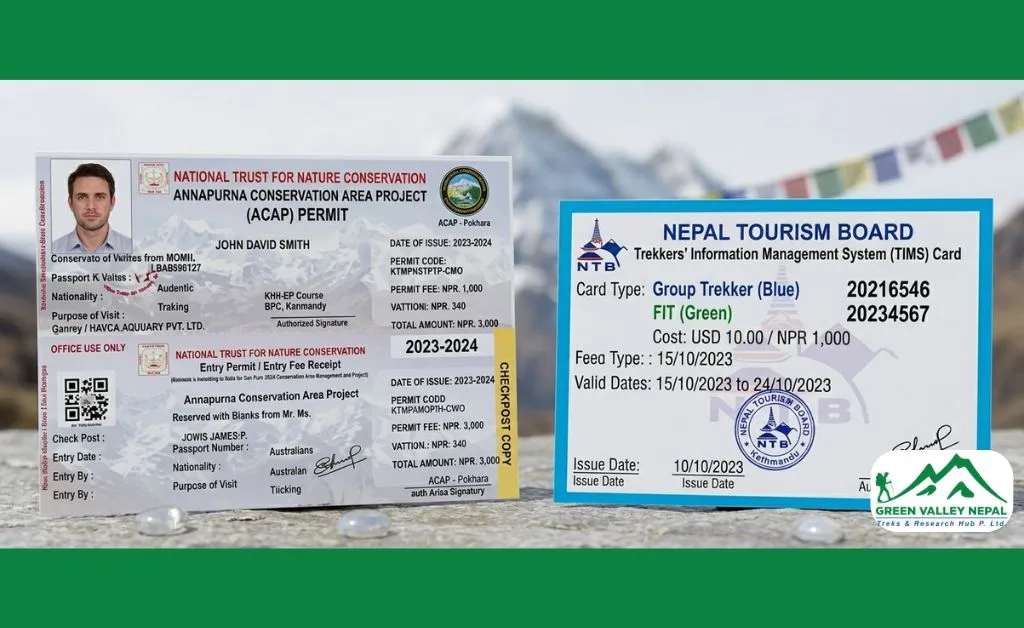
Two permits are required for the ABC trek in 2026:
- ACAP (Annapurna Conservation Area Permit): Costs approximately NPR 3,000 (around $25 USD) for foreign nationals. This is your legal entry permit for the conservation area and is checked at multiple points along the route.
- TIMS Card (Trekkers' Information Management System): Costs approximately NPR 2,000 (around $15 USD). The TIMS card logs your identity, emergency contacts, itinerary, and trekking schedule. In a rescue situation, this data is used to locate and assist trekkers. Always carry physical copies.
Both permits can be obtained in Kathmandu or Pokhara and take only a few minutes to process. The permit system is part of the safety infrastructure; it is not just bureaucracy. For more details, you can read our blog: Annapurna Base Camp Trek Permits Cost.
Final Verdict: Is the Annapurna Base Camp Trek Safe?
Yes, the ABC trek is safe for most healthy adults who prepare properly. The trail is well-managed, the infrastructure is reliable, and the route is accessible to both first-timers and experienced trekkers.
The risks are real but manageable. Altitude sickness, bad weather, and slippery terrain are the three things most likely to cause problems, and all three can be addressed through acclimatization, timing, good gear, and sensible decision-making on the trail.
What makes trekkers unsafe on the ABC route is almost always avoidable: rushing the itinerary, ignoring early symptoms, going without a guide, skipping insurance, or trekking in the wrong season. Remove those factors, and the ABC trek becomes one of the most rewarding and safe high-altitude experiences available anywhere in the world.
Prepare well, listen to your body, respect the mountain, and the Annapurna Sanctuary will give you something you will not forget.
Solo trekkers who want a well-supported, group-friendly environment may also enjoy the Annapurna Circuit Trek, which covers more ground and passes through even more diverse terrain across the Annapurna region.
Frequently Asked Questions (FAQs)
- Is the Annapurna Base Camp trek safe?
Yes, the Annapurna Base Camp trek is safe for most healthy adults who prepare properly. The trail is well-marked, well-managed, and completed successfully by thousands of trekkers every year. The key is proper acclimatization, good gear, and a sensible itinerary.
- How safe is Annapurna Base Camp?
Annapurna Base Camp sits at 4,130 meters and carries a moderate risk, primarily from altitude sickness, unpredictable weather, and slippery terrain. With a licensed guide, travel insurance, and the right preparation, the vast majority of trekkers complete it without any serious incident.
- Can beginners do the Annapurna Base Camp trek?
Yes, the ABC trek is suitable for fit beginners. It requires no technical climbing skills, follows a well-established trail, and stays below 4,200 meters. Beginners should allow a 10–12-day itinerary, train in advance, and trek with an experienced guide.
- What are the biggest risks at Annapurna Base Camp?
The three biggest risks are acute mountain sickness (AMS), unpredictable weather, including sudden snowfall and avalanches; and trail hazards like slippery stone steps and landslides during the monsoon. All three are manageable with the right preparation and timing.
- Do you need a guide for the Annapurna Base Camp trek?
Yes. As of 2026, Nepal requires foreign trekkers to hire a licensed guide in the Annapurna region. Beyond the regulation, a guide significantly improves your safety; they can recognize AMS symptoms early, navigate in poor conditions, and coordinate emergency rescue if needed.
- Is Nepal safe for solo female trekkers on the ABC route?
The ABC trail is widely regarded as one of the safer trekking environments in Asia for solo women. Villages are inhabited, fellow trekkers are almost always present, and teahouses are well accustomed to solo female guests. Hiring a guide adds an extra layer of safety and is now required under 2026 regulations.