Annapurna Base Camp Trek Best Time: Two "Golden Windows" Everyone Talks About
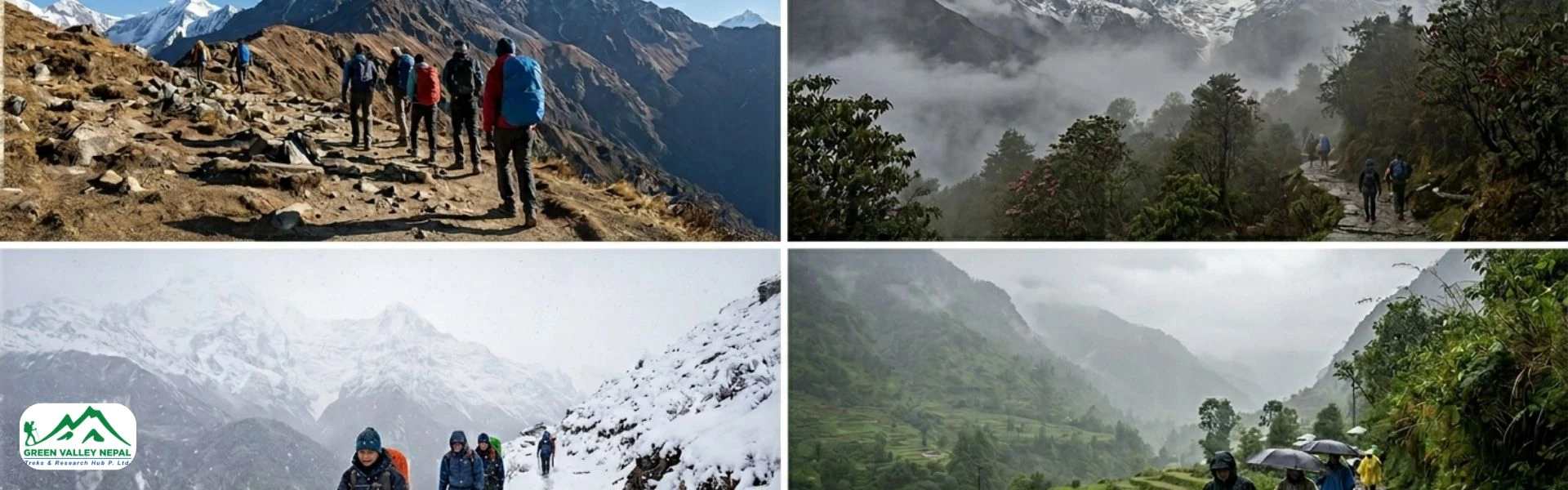
Ask any trekking company, and they will give you the same answer: spring (March-May) and autumn (September-November) are best. They are not wrong, but that's like saying "eat healthy food", technically true, but uselessly vague.
Raw Statistics:
- 85% of all ABC trekkers choose these two seasons
- October alone accounts for 35% of annual trekker traffic
- April comes in second at 25% of yearly visitors
- Peak week in October: Teahouses at Annapurna Base Camp host 200+ trekkers simultaneously
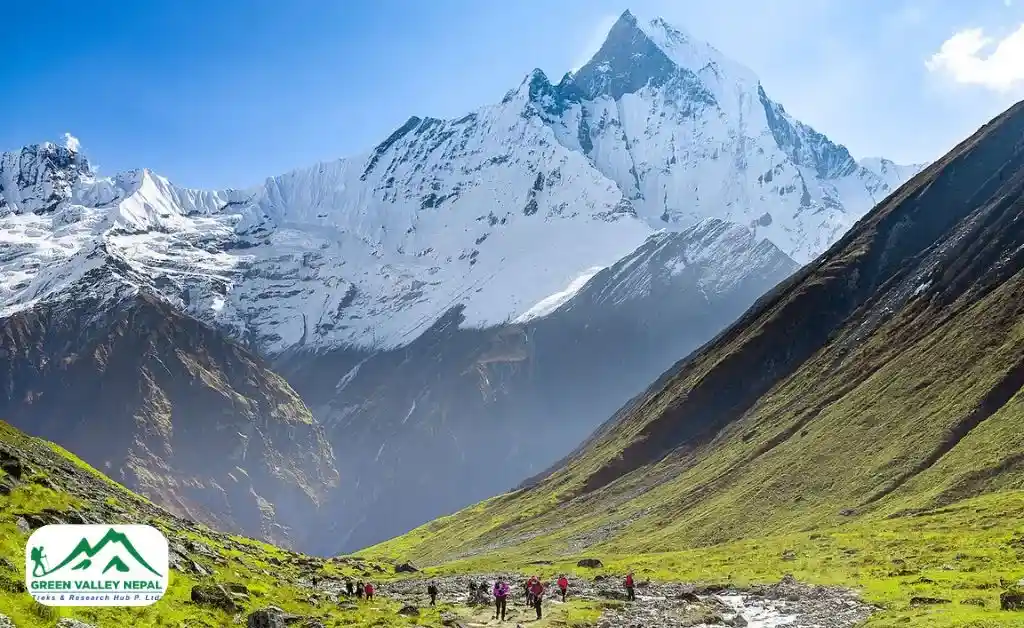
Annapurna Base Camp Trek Month-by-Month Temperature Guide
Month | Lower Altitude Day | Lower Altitude Night | Higher Altitude Day | Higher Altitude Night |
January | 12°C | 2°C | 7°C | -19°C |
February | 13°C | 3°C | 6°C | -20°C |
March | 18°C | 6°C | 14°C | -8°C |
April | 20°C | 8°C | 18°C | -4°C |
May | 22°C | 10°C | 14°C | 0°C |
June | 24°C | 14°C | 16°C | 3°C |
July | 25°C | 16°C | 18°C | 6°C |
August | 26°C | 17°C | 19°C | 7°C |
September | 24°C | 12°C | 20°C | 0°C |
October | 22°C | 10°C | 16°C | -6°C |
November | 18°C | 6°C | 11°C | -10°C |
December | 14°C | 3°C | 9°C | -14°C |
Important Insights for ABC Trek Planning
- The temperature gap is huge: There is often a 10–20°C difference between the lower villages and ABC. Many trekkers underestimate this.
- Nights are the real challenge: Even in peak seasons like April and October, higher altitude nights drop below freezing.
- Lower altitude ≠ warm nights: Places like Chhomrong still get cold at night, especially from October to March.
- Warmest trekking months (temperature-wise): June to September, but these come with monsoon trade-offs.
- Most comfortable balance: April and October offer the best mix of manageable nights and pleasant daytime trekking.
What Nobody Tells You About ABC Trek: The Hidden Trade-Offs
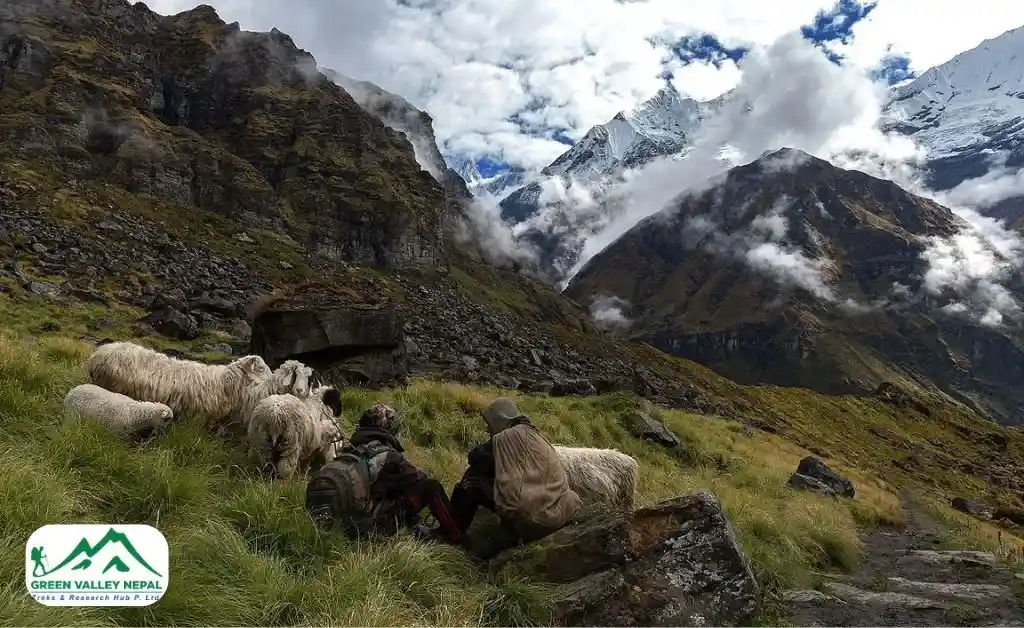
Crowds vs. Conditions: Perfect weather attracts crowds. If solitude matters, you must sacrifice some comfort.
Cost Fluctuations: Peak season (October, April) sees 15-20% higher prices for guides, porters, and premium teahouses. Off-season offers genuine savings but reduced services.
Booking Windows:
- October: Book 2-3 months ahead
- April: Book 1-2 months ahead
- Other months: 2-3 weeks is usually sufficient
Before booking the ABC Trek, travelers must know two important things: the ABC Trek Cost and ABC Trek Difficulty to be on the safe side of the amazing journey.
Rhododendron Reality: Everyone wants the bloom. Peak typically hits mid-April now (shifted from late March due to climate change). But here's the secret: even 50% bloom is spectacular. Don't obsess over "perfect timing." The stretch through Green Valley Nepal Treks offers some of the best rhododendron scenery on the entire ABC route, even at partial bloom.
Annapurna Base Camp Trek in Spring (March-May)
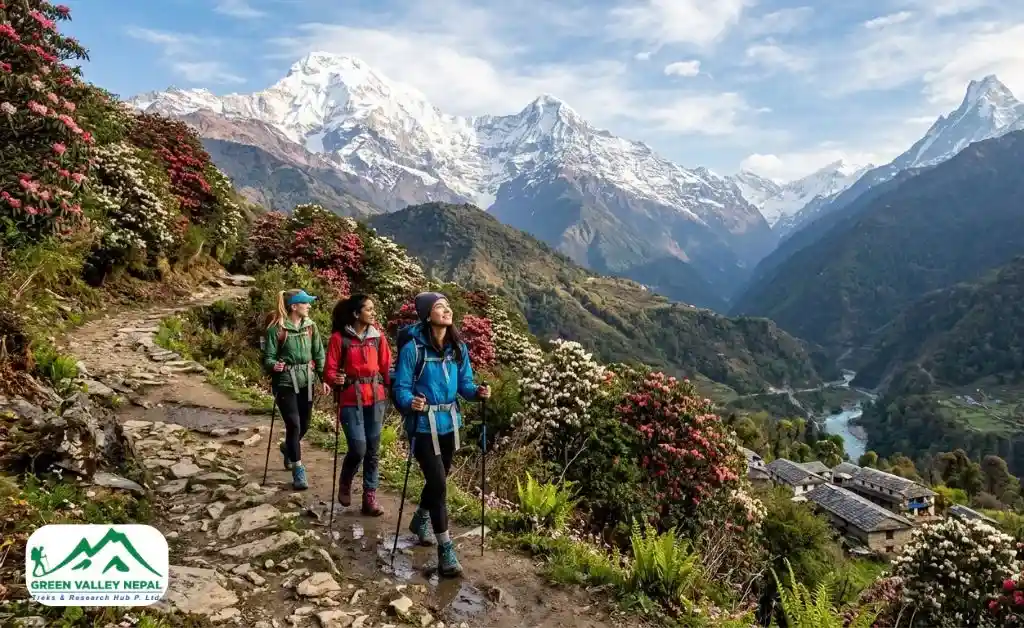
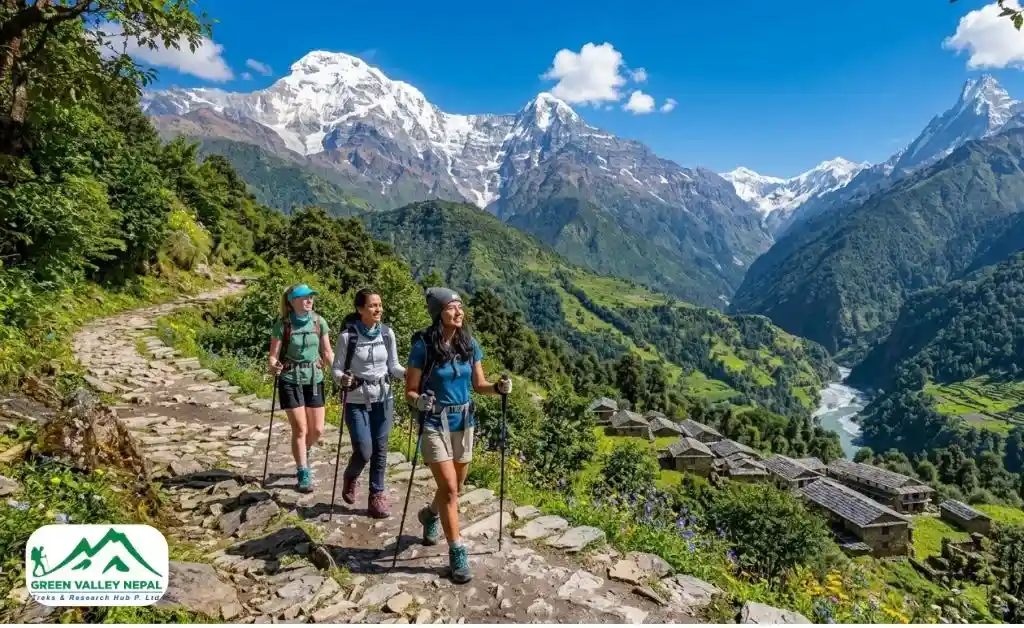
Spring earned its reputation honestly. This is when the Annapurna region transforms into what locals call "the garden of the gods."
March: The Transition Month
Early March still feels like winter's last gasp. You will hit occasional snow patches above Deurali, and mornings require every layer you packed. But by mid-March, something magical happens: the first rhododendron buds begin to open.
- Temperature at ABC: 4°C daytime, -8°C at night (39°F / 18°F)
- Lower elevations (Chhomrong): 15-20°C daytime (59-68°F)
- Crowd level: Moderate (20% of spring trekkers)
- Best for: Those who want spring beauty without April's crowds
April: Peak Perfection (With a Price)
April is the month trekking companies advertise with. Clear blue skies most days. Rhododendron forests explode in crimson, pink, and white blooms covering entire hillsides. Mountain views so sharp you can count glacier crevasses. It's objectively stunning.
April feels deceptively warm during the day, too warm, actually. Below 2,500 meters, you will sweat in just a t-shirt. But the moment the sun drops behind those mountains around 5 PM, temperatures plummet. That pleasant 20°C afternoon becomes a 2°C evening in under an hour.
- Temperature at ABC: 8°C daytime, -4°C at night (46°F / 24°F)
- Lower elevations: 18-25°C daytime (64-77°F)
- Crowd level: Very High (55% of spring trekkers)
- The catch: Teahouses book solid weeks in advance. You will wait for hot showers. Dining halls feel like crowded cafeterias. The trail from Bamboo to Base Camp can look like a slow-moving parade.
May: The Forgotten Month
May is spring's rebellious teenager: warmer, moodier, and underestimated. Lower elevations can feel uncomfortably hot during midday trekking. Humidity creeps in. Afternoon clouds roll in more frequently, occasionally blocking that perfect sunset view. Pre-monsoon rain showers start appearing, usually brief, sometimes dramatic.
- Temperature at ABC: 14°C daytime, 0°C at night (57°F / 32°F)
- Lower elevations: 20-28°C daytime (68-82°F)
- Crowd level: Moderate-Low (25% of spring trekkers)
- Best for: Budget trekkers (prices drop), those who hate crowds, flexible schedules, and tolerating occasional rain
Annapurna Base Camp Trek in Autumn (September-November)
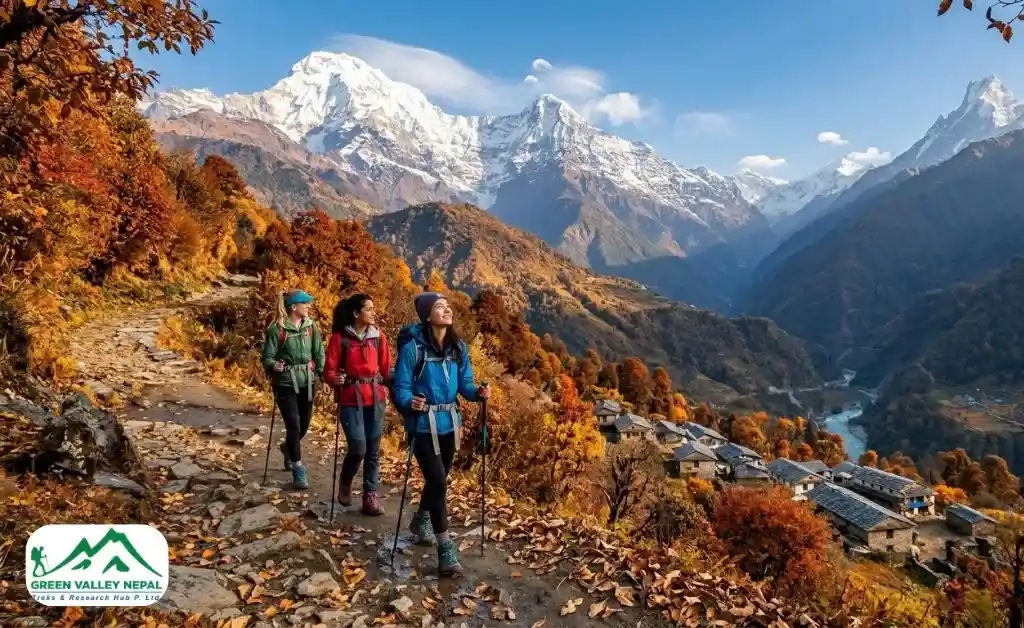
If spring is the festival of colors, autumn is the festival of visibility. Post-monsoon air feels scrubbed clean, delivering the year's sharpest mountain views.
September: The Gamble
September is autumn's awkward phase. Monsoon officially "ends" in early September, but Nepal's weather didn't get the memo. Early September can still deliver multi-day rain episodes. However, by mid-to-late September, conditions stabilize dramatically.
- Temperature at ABC: 20°C daytime, 0°C at night (68°F / 32°F)
- Lower elevations: 22-28°C daytime (72-82°F)
- Crowd level: Low-Moderate (15% of autumn trekkers)
- The advantage: Everything is GREEN. Like, unnaturally vibrant green. Monsoon rains supercharged every plant. Waterfalls thunder at maximum force. Rice terraces glow emerald. It's a completely different aesthetic than October's drier golden tones.
October: The Undisputed Champion (According to Everyone)
October earned its reputation through sheer statistical reliability. Weather stability peaks. Skies achieve that impossible deep blue. Mountains appear so close you feel you could touch them. It's objectively the clearest month.
Nepal's two biggest festivals, Dashain and Tihar, fall in October-November. While culturally fascinating, many Nepali guides and porters return to their villages for 10-15 days during Dashain, making bookings more complex. Plan accordingly.
- Temperature at ABC: 16°C daytime, -6°C at night (61°F / 21°F)
- Lower elevations: 15-22°C daytime (59-72°F)
- Crowd level: MAXIMUM (60% of autumn trekkers)
- The reality: October at ABC resembles a small temporary city. Base camp can host 150-200 trekkers on peak nights. Teahouses require booking 2-3 months ahead during the Dashain/Tihar festival weeks. Trails feel crowded, not dangerously so, but definitely not "wilderness solitude."
November: The Sweet Spot (If You Handle Cold)
November maintains October's clarity but trades warmth for cold. Nights at Base Camp become genuinely frigid. However, crowds thin significantly after mid-November as colder temperatures deter casual trekkers.
- Temperature at ABC: 11°C daytime, -10°C at night (52°F / 14°F)
- Lower elevations: 12-18°C daytime (54-64°F)
- Crowd level: Moderate (25% of autumn trekkers)
- Best for: Cold-tolerant trekkers who want clarity without October's circus
Annapurna Base Camp Trek in Winter (December-February)
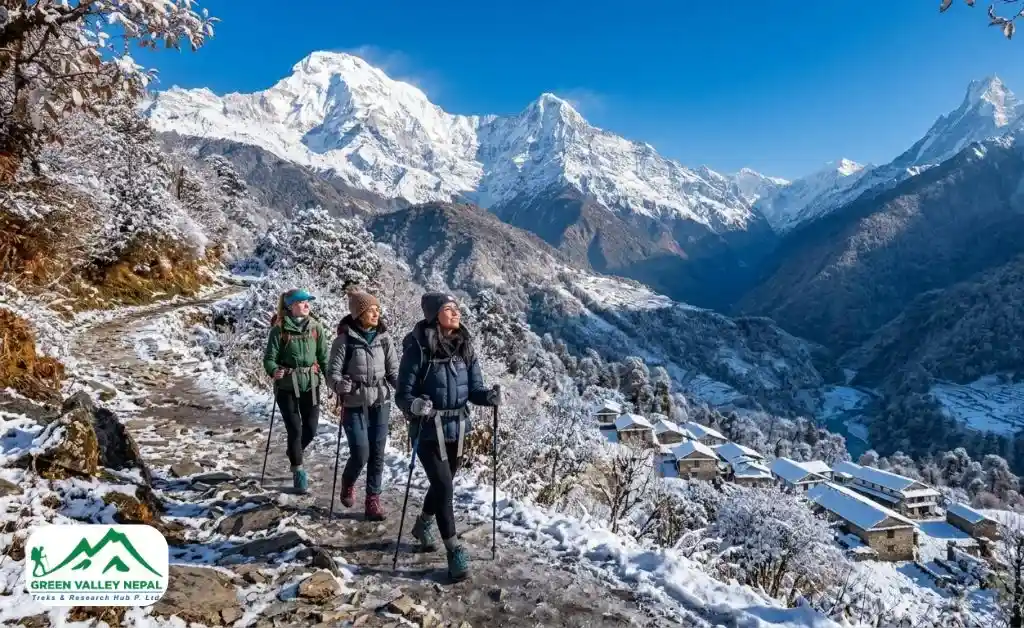
Every guidebook dismisses winter. Some for good reason, some from outdated assumptions.
December – Quiet and Freezing
December is a mix of peaceful trekking and harsh cold.
- Snowfall possible at higher elevations
- Very quiet trails
- Cold but often clear weather
- Insight: Great for solitude, but requires proper winter gear
January – Extreme Cold, Empty Trails
January is brutally cold at higher altitudes like ABC. Nights are harsh, and even inside teahouses, temperatures drop significantly.
- Water bottles freeze overnight
- Early mornings feel like walking in a freezer
- Trails are quiet with very few trekkers
- Best for: Experienced trekkers who want solitude
- Not ideal for: First-time trekkers or those sensitive to cold
February – Coldest Month of the Year
This is the coldest period on the trek. While daytime sun helps slightly, nights are extremely difficult without proper gear.
- Snow accumulation is common above Deurali
- Risk of frozen pipes and limited water availability
- Crystal-clear mountain views on sunny days
- Insight: If you’re not carrying a high-quality sleeping bag, expect uncomfortable nights
Critical Requirements:
- 4-season sleeping bag (-15°C rating minimum)
- Microspikes for icy trails
- Experienced guide mandatory
- Flexible schedule (weather delays common)
- Prior winter hiking experience strongly recommended
Annapurna Base Camp Trek in Monsoon (June-August)
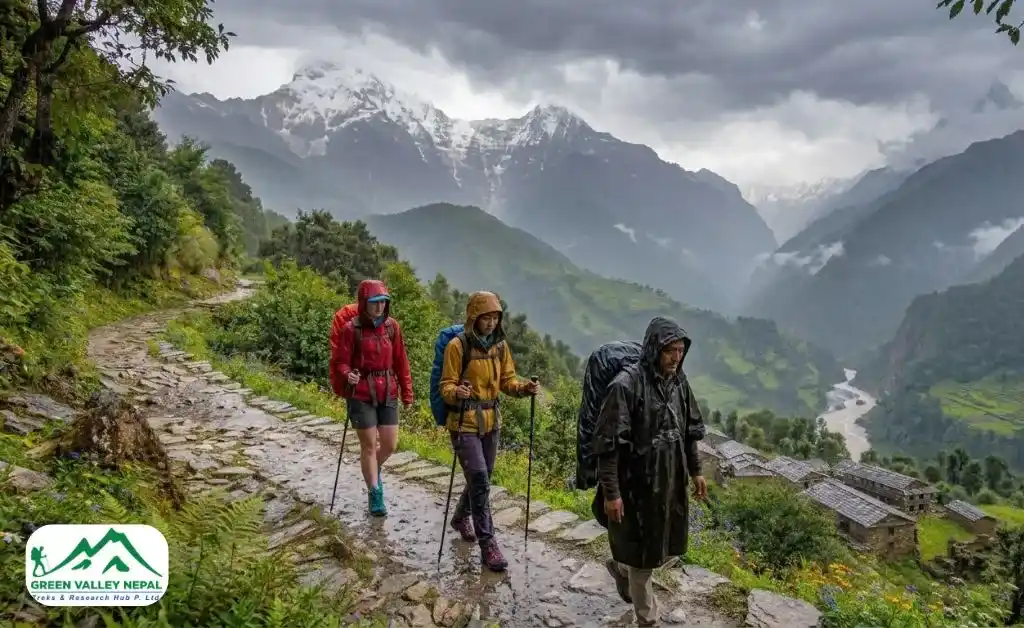
Monsoon trekking is unanimously discouraged. I'm going to explain why that's correct, then explain why a specific type of person might do it anyway.
June – Start of Monsoon
Monsoon begins affecting the region.
- Trails become slippery and muddy
- Leeches appear in forest sections
- Clouds often block mountain views
- Reality check: Temperature is comfortable, but trekking conditions worsen
July – Peak Monsoon Challenges
This is one of the least recommended months.
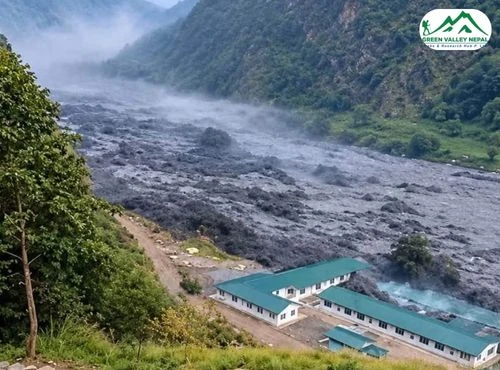
- Frequent rain and landslides
- Limited visibility on most days
- High humidity makes trekking exhausting
- Best avoided unless you specifically want off-season trekking
August – Warmest but Wettest
August has the warmest temperatures but also the heaviest rainfall.
- Lush green landscapes
- Very low visibility of peaks
- Risky trail conditions in some sections
- Insight: Good for greenery lovers, not for mountain views
Only Consider Monsoon If:
- You genuinely don't care about mountain views (focus on culture/nature)
- You are comfortable with uncertainty and plan changes
- You have proper rain gear and high-quality waterproof boots
- You are okay with leeches (they're harmless, just gross)
- You want absolute solitude and don't mind sacrificing summit views for it
When Should You Participate in the ABC Trek Journey?
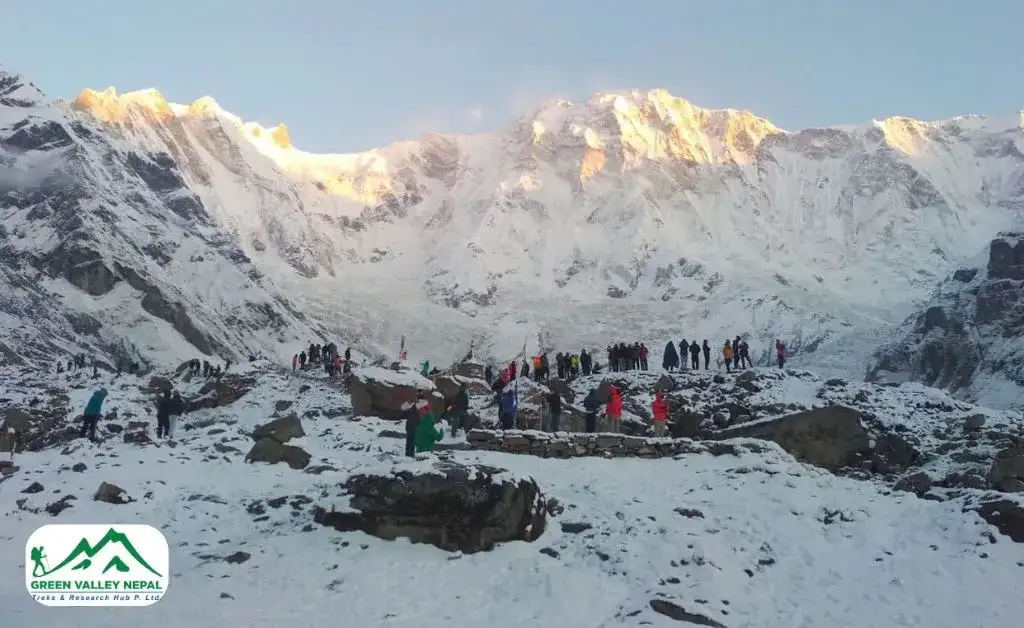
- Choose October if: You prefer the best-possible weather, are not bothered by crowds, can book your teahouse months in advance, and are most interested in mountain views.
- Choose April if: You prefer flowers, pleasant weather, are not bothered by crowds, and are flexible with your accommodation.
- Choose November if: You prefer the October conditions of fewer crowds and clearer mountain views, but can handle the cold.
- Choose March if: You prefer the spring scenery without April crowds and are prepared for the occasional snow patch.
- Choose May or September if: You prefer decent weather and fewer crowds, but can handle slightly less predictable conditions.
- Choose Winter (Dec-Feb) if: You are an experienced trekker, can handle the cold, are most interested in solitude, and are properly equipped.
- Choose Monsoon (Jun-Aug) only if: You have no other choice and truly do not care about summit views.
Conclusion
That German couple, as mentioned at the start? They decided after that rainy evening. Instead of descending defeated, they waited one extra day. The weather cleared. They reached Base Camp under partially clear skies, not the perfect blue they had imagined, but beautiful nonetheless.
"You know what?" the woman told us later. "It wasn't the trip we planned. But it was still incredible. Maybe more so, because we had to earn it."
That's the real secret about timing your ABC trek. Yes, October and April offer statistical advantages. But the "best time" is whenever you can go, prepared appropriately, with realistic expectations and mental flexibility.
The mountains will be there regardless. The only question is when you will be ready to meet them.
Frequently Asked Questions
- What is the best month to visit Annapurna Base Camp?
October is the busiest month, with clear skies and distinct mountain views after the monsoon season. April is the second most popular month, with rhododendrons in bloom and pleasant weather.
- What is the best weather for the Annapurna Base Camp trek?
The best weather falls between October and November and March–May. Expect stable skies, minimal rain, and good visibility during these windows. October delivers the clearest mountain views, while April offers the warmest and most colorful trail conditions.
- What is the worst season to climb Annapurna?
Monsoon season (June–August) is the worst time. Heavy rainfall, slippery trails, leeches, and 70–80% cloud cover blocking mountain views make it the least rewarding experience. Mid-winter (January–February) is a close second due to extreme cold and trail closures.
- What is the best time to trek Annapurna?
Spring (March–May) and Autumn (September–November) are the two golden windows. If you want flowers and warmth, go in April. If you want crystal-clear mountain views, go in October. Both seasons offer well-opened teahouses and manageable trail conditions.
- When to avoid Nepal for trekking?
Avoid June through August if mountain views are your priority, as monsoon rains dominate this period. Also, be cautious in late September, as recent years have seen the monsoon extend beyond its traditional end date due to climate change.