Why Only Langtang Route Was Affected
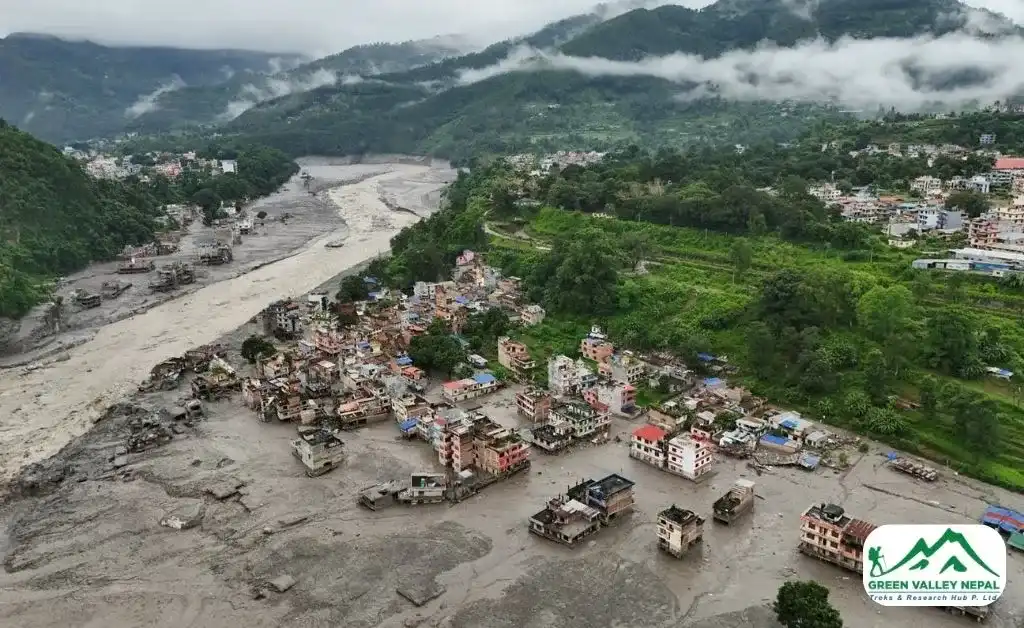
To understand why this flood didn't touch the rest of Nepal's trekking regions, it helps to understand what actually happened geographically.
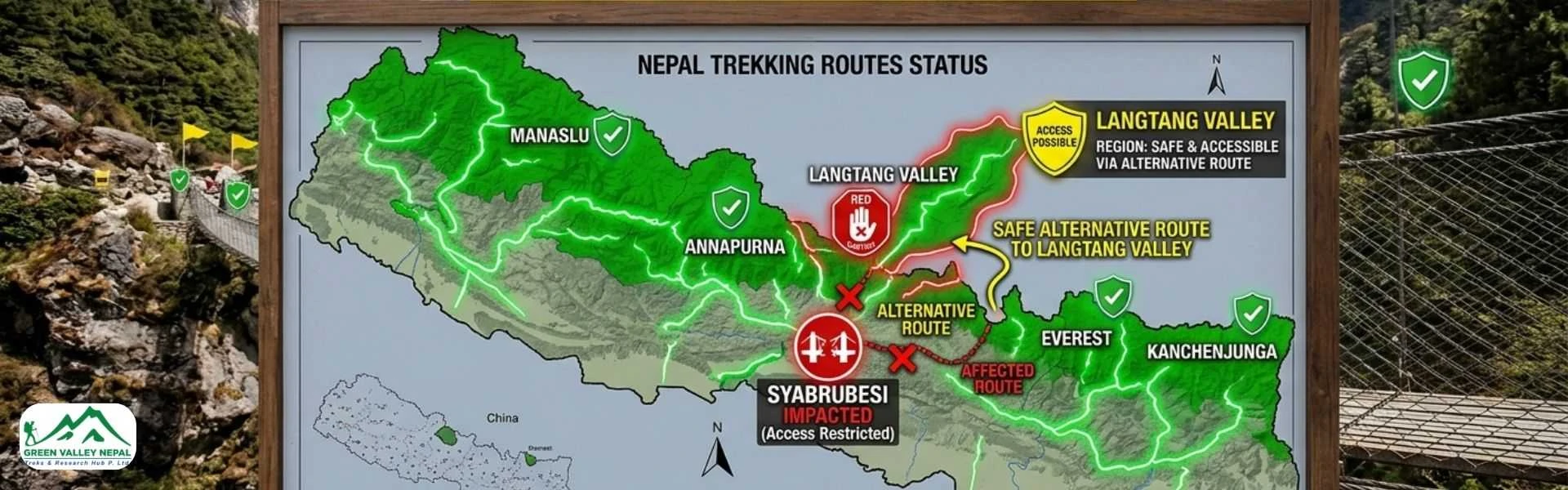
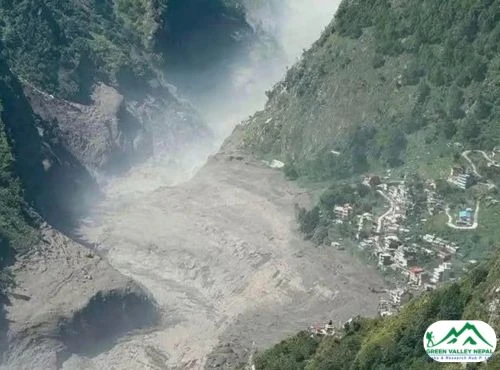
On the morning of August 26, a mass of glacier ice and rock collapsed high in the mountains on the Tibetan side of the border, roughly 20 km north of the Rasuwagadhi crossing. It fell into the Lhende River, which feeds into the Bhote Koshi River, which in turn becomes the Trishuli River further downstream. The resulting surge tore through Timure, Syabrubesi, Betrawati, and Trishuli Bazar, all of which sit specifically along this one river corridor in Rasuwa district.
This is important: Everest, Annapurna, Manaslu, Kanchenjunga, and Makalu are all fed by entirely separate river systems that have no connection whatsoever to the Bhote Koshi. Everest drains into the Dudh Koshi, Manaslu into the Budhi Gandaki, and Annapurna into the Marsyangdi and Kali Gandaki, none of which were anywhere near the flood. These regions were never physically in the path of the water, which is why they remain completely unaffected and open for trekking exactly as planned.
What This Means for Each Trekking Region in Nepal
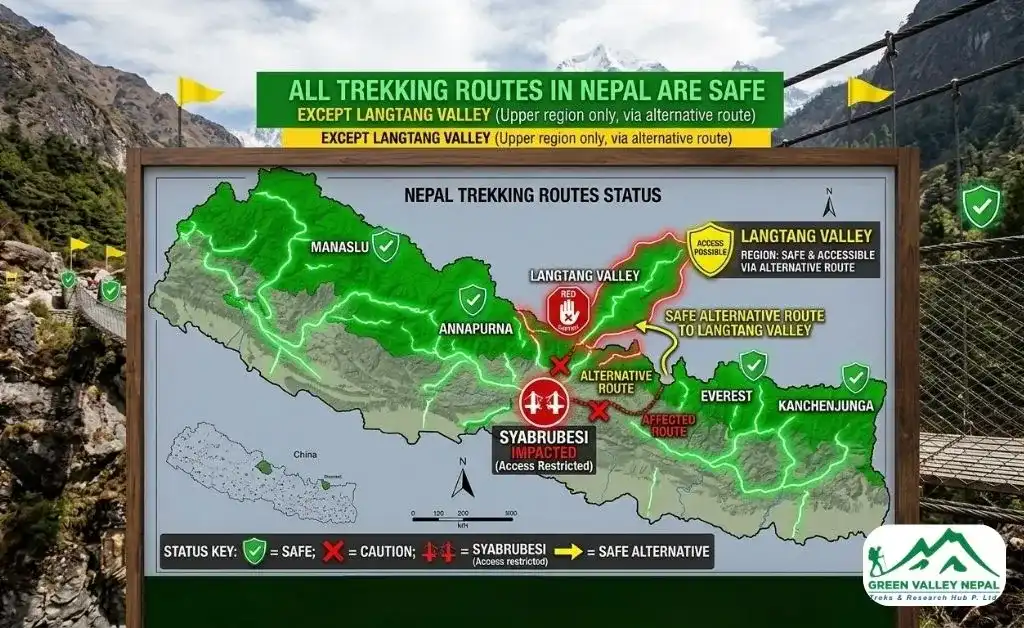
Everest Region — 100% Safe
The Everest Base Camp Trek, Lukla flights, Gokyo Valley Circuit, and the Everest Three Passes Trek are all operating on their regular schedule. Tribhuvan International Airport and all domestic flights to Lukla are running normally.
Annapurna Region — 100% Safe
The Annapurna Circuit Trek, Annapurna Base Camp Trek, Mardi Himal Trek, Poon Hill Trek, and Upper Mustang Trek are all unaffected. Flights to Pokhara and Jomsom continue as usual.
Manaslu Region — 100% Safe
The Manaslu Circuit Trek is accessed via Arughat in Gorkha district, a completely different route from the one affected by the flood. Trekking here continues without any disruption.
Kanchenjunga Region — 100% Safe
Nepal's remote far-eastern trekking region, including the Kanchenjunga Circuit Trek, sits nowhere near the Bhote Koshi corridor and has seen zero impact from this event.
Makalu Region — 100% Safe
Like Kanchenjunga, the Makalu Base Camp Trek is unaffected and open for trekking as usual.
Langtang Region — Affected, But Not Closed
This is the one region where the flood has a real, direct impact, and it's worth being precise about exactly what that impact is, because it's more limited than it might sound.
What's Actually Happening in Langtang Route?
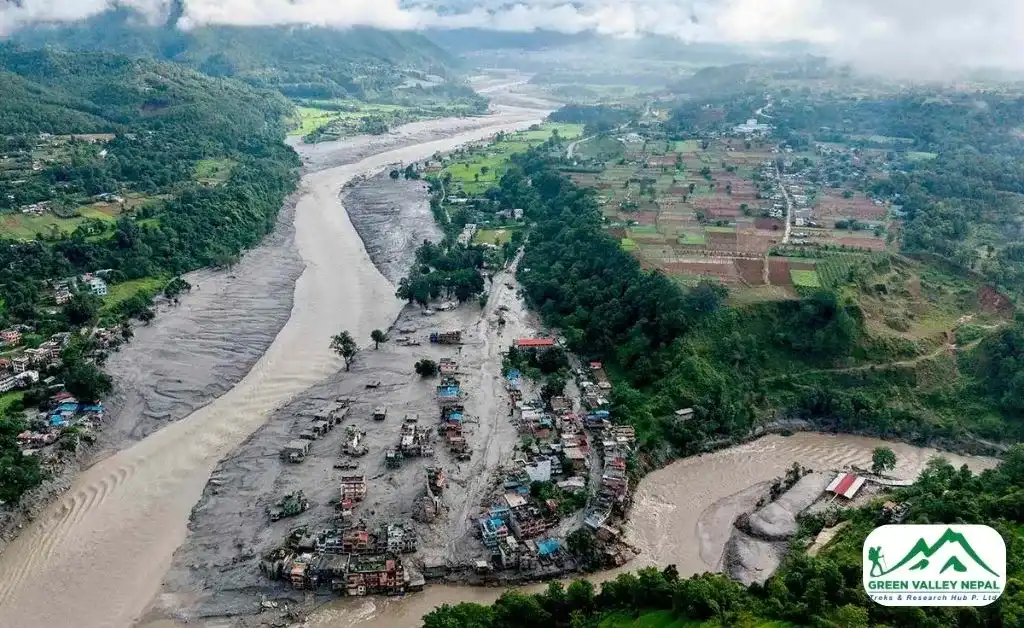
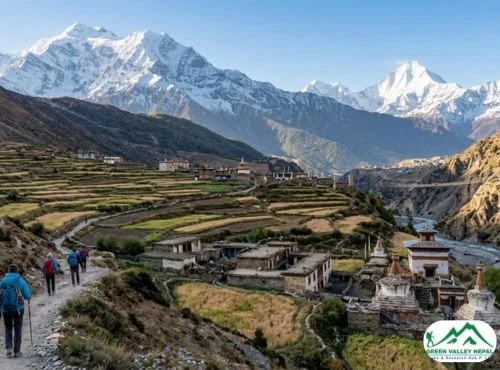
Here's the detail that most headlines miss: the Langtang trekking trail itself was not in the flood's path. The main trail runs up the Langtang Khola valley, a completely different river from the Bhote Koshi that flooded. The trekking route from Syabrubesi through Lama Hotel, Ghodatabela, Langtang village, and up to Kyanjin Gompa, the heart of our own Langtang Valley Trek 10 Days itinerary, sits on a river system the flood never touched.
What Was Affected Is The Access Route?
Specifically, the road and bridge at Syabrubesi, the usual starting point for the Langtang Valley trek. The Pasang Lhamu Highway connecting Kathmandu to Syabrubesi has sustained damage in sections, and Syabrubesi town itself, sitting at the river confluence, took structural damage. The Tamang Heritage Trail Trek, which spends more time in the northern villages closer to Timure, is more exposed than the main Langtang valley route and should be discussed with our team before booking this season.
Reliable Alternative: Trekking via Dhunche
The good news is that Langtang is not simply "closed." There is a workable alternative for clients who still want to experience this region this season: entering via Dhunche instead of Syabrubesi.
Dhunche sits higher above the river, on the same access road but well short of the worst-hit stretch of the corridor, and it's the standard gateway for our Gosaikunda Lake Trek and the combined Langtang Gosaikunda Lake Trek. Routing a Langtang-region itinerary through Dhunche avoids the most exposed section of road and settlement entirely.
The trade-off is simple and manageable: this alternative route typically adds around one extra day to your original itinerary, compared to the standard Syabrubesi-based route. For most trekkers, one additional day is a small adjustment for continuing to safely experience this beautiful region.
If you have a Langtang-region trek booked with us, our team will walk you through exactly how this adjusted routing works for your specific itinerary and dates.
What we are telling Our Clients
- If your trek is in Everest, Annapurna, Manaslu, Kanchenjunga, or Makalu: Proceed exactly as planned. There is no reason to change your dates, your flights, or your itinerary. These regions are functioning entirely normally.
- If your trek is in the Langtang region: Don't cancel. Talk to us. We are actively monitoring road conditions and will confirm the best routing for your specific departure date, whether that's the standard route (once fully reopened) or the Dhunche alternative with the one extra day built in.
- If you haven't booked yet and are hesitating because of the news: Nepal is a large and geographically diverse country. This disaster is concentrated in one river valley in one district. It does not reflect the safety or accessibility of trekking in Nepal as a whole.
A Note on why we are Being This Direct
As a trekking company working in this exact part of Nepal, we could understand the temptation to either downplay the disaster or avoid the topic altogether. We are doing neither. Our approach is to give you the same honest, specific information we would want if we were the ones booking a trip, because vague reassurance doesn't actually help you make a good decision, and neither does unnecessary alarm.
Nepal's mountains, trails, and communities, outside the specific corridor this flood hit, are exactly as ready to welcome you as they were before August 26.
Questions? We are here
If you have a booking with us, or you are planning one, and you want a direct, current answer about your specific route or dates, reach out to our team directly. We would rather give you a real answer today than have you find outdated information online.
Ready to lock in your dates? Explore our Everest Base Camp Trek, Annapurna Base Camp Trek, Manaslu Circuit Trek, or browse our full range of trekking packages in Nepal.
Frequently Asked Questions (FAQs)
- Is it safe to trek in Nepal after the August 2026 floods?
Yes. The flood on August 26, 2026 affected only the Bhote Koshi river corridor in Rasuwa district. Everest, Annapurna, Manaslu, Kanchenjunga, and Makalu regions were not touched by the flood and remain fully open and safe for trekking.
- Which trekking regions were affected by the Nepal flood?
Only the Langtang region was affected, and specifically the access route through Syabrubesi. The main trekking trail itself, which follows the separate Langtang valley, was not in the flood's path.
- Is the Everest Base Camp trek affected by the flood?
No. The Everest region drains into the Dudh Koshi river system, which has no connection to the flood-affected Bhote Koshi corridor. Lukla flights and the EBC trail are operating normally.
- Is the Annapurna Circuit or Annapurna Base Camp trek safe right now?
Yes. The Annapurna region drains into the Marsyangdi and Kali Gandaki rivers, entirely separate from the flood zone. Flights to Pokhara and Jomsom, and all Annapurna trekking routes, are running as usual.
- Is the Manaslu Circuit trek open after the flood?
Yes. The Manaslu Circuit is accessed via Arughat in Gorkha district, a different route and river system from the one affected by the flood. Trekking continues without disruption.
- Are Kanchenjunga and Makalu treks affected?
No. Both regions are located far from Rasuwa district and the Bhote Koshi corridor and have seen no impact from this disaster. Both remain fully open for trekking.
- Is the Langtang Valley trek cancelled?
No, it is not cancelled. The main trail is believed to be unaffected, since it follows a different river than the one that flooded. The usual access point, Syabrubesi, sustained damage, but treks can currently be routed through Dhunche instead.
- What is the alternative route for the Langtang trek?
Trekkers can enter the Langtang region via Dhunche instead of Syabrubesi. This route avoids the most flood-affected stretch of road and settlement. It typically adds about one extra day to the standard itinerary.
- Do I need to cancel my Nepal trekking trip because of the flood?
Not unless your trek is specifically routed through Rasuwa district or Syabrubesi. If your itinerary is in Everest, Annapurna, Manaslu, Kanchenjunga, or Makalu, no changes are needed. If it's a Langtang-region trek, contact your operator about the Dhunche alternative rather than cancelling.
- Is Kathmandu safe to visit after the flood?
Yes. Kathmandu was not in the flood's path, and the city, airport, and all international and domestic flights are operating normally.
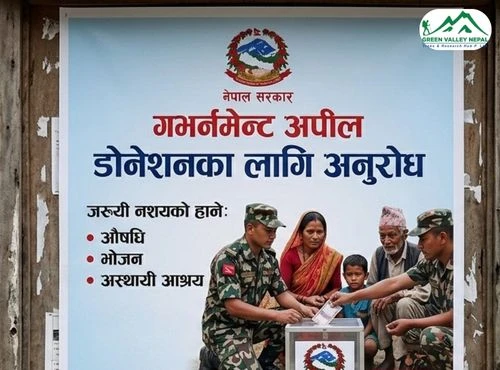
This page reflects the situation as of late August 2026 and will be updated as road access to Syabrubesi is restored. For the full account of what caused the disaster, see our report on the Bhotekoshi flood in Rasuwa, and for how you can support recovery efforts, see our flood relief donation appeal. For the latest official travel advisories, consult the Nepal Tourism Board or The Kathmandu Post.