How the ABC Trek Teahouse Food System Works?
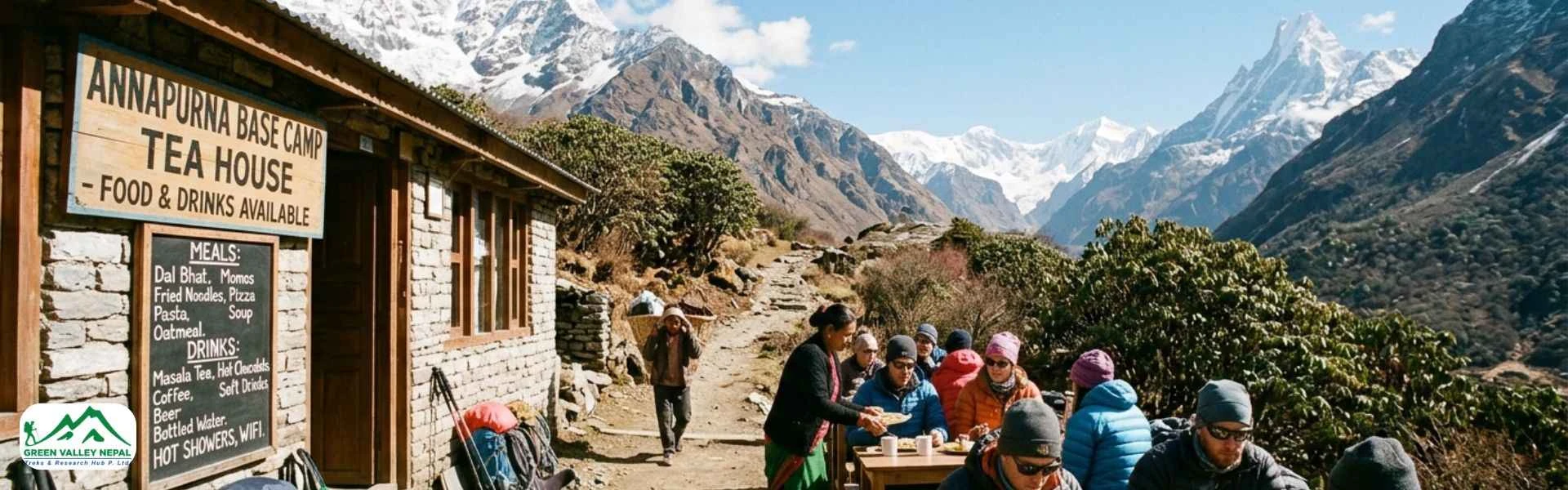
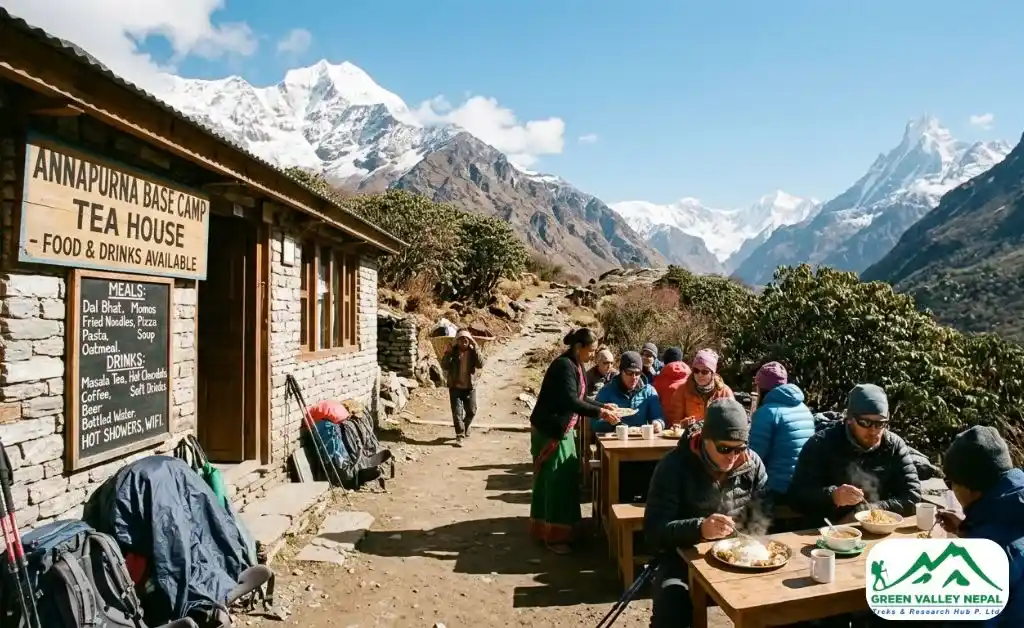
The ABC trek uses teahouses (small mountain lodges) for both sleeping and eating. The system is simple: you stay in a teahouse room and eat all your meals in that same teahouse's dining hall.
Teahouses work on a simple idea: rooms are cheap because they expect you to buy food. This is how mountain families earn income and sustain the trekking route. Walking next door to eat cheaper food breaks this system and harms the family hosting you.
What You Can Expect?
- Similar menus at most teahouses
- Freshly cooked meals
- Prices increase with altitude
- Limited menu choices above 3,500m
- Meals take 30-60 minutes to prepare
Everything above Chhomrong gets carried uphill by porters or mules. A kilogram of rice that costs NPR 80 in Pokhara might cost NPR 200 at Annapurna Base Camp. This explains why a simple meal costs $8-12 at high altitude.
Dal Bhat Power 24 Hour
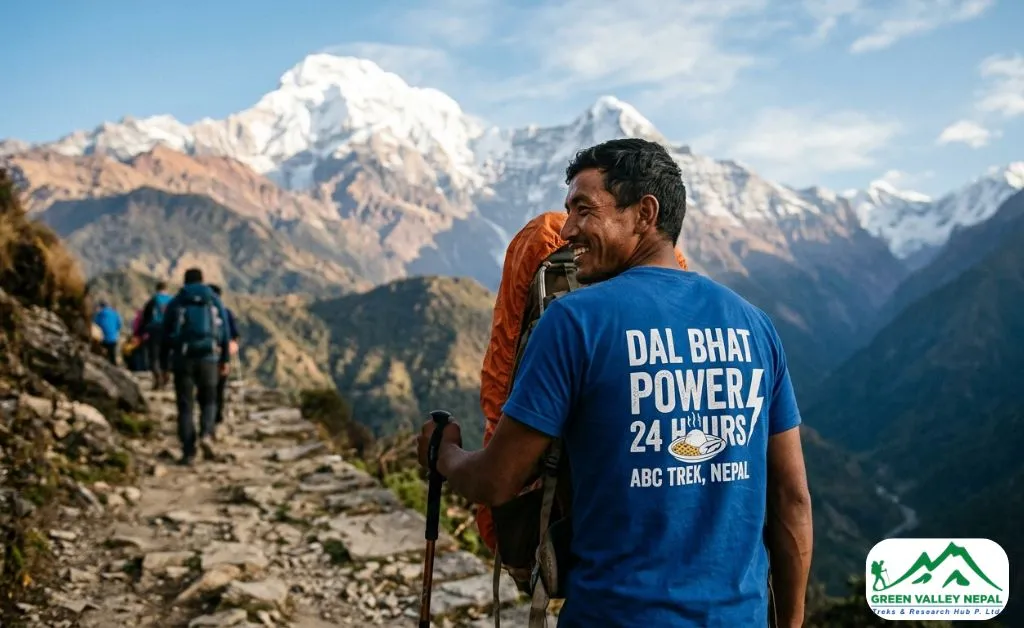
Dal Bhat is Nepal's national dish and the most important meal on the ABC trek. This combination of steamed rice (bhat), lentil soup (dal), vegetable curry, pickled vegetables, and sometimes papad provides complete nutrition for trekking. In every season or time you participate in the ABC Trek, the Dal Bhat option perfectly fits your food option.
Why Trekkers Rely on Dal Bhat?
- Cheap and Unlimited refills at most teahouses (no extra charge)
- High carbohydrates for sustained energy
- Complete protein from rice + lentils
- Always vegetarian and freshly cooked
- Best value for money (fixed price with refills)
- Easier to digest than Western food at altitude.
The famous trekking phrase "Dal Bhat power, 24 hours" is accurate. The slow-release carbs from rice, combined with the protein from lentils, provide steady energy for 5-7 hours of trekking.
Dal Bhat Costs by Elevation
- Below 2,500m: NPR 450-600 ($3.50-4.50)
- 2,500-3,500m: NPR 600-800 ($4.50-6)
- Above 3,500m: NPR 800-950 ($6-7)
Most experienced trekkers eat Dal Bhat for at least one meal daily, often dinner. This strategy saves money and provides better nutrition than constantly ordering Western food.
Breakfast Options on the ABC Trek
Breakfast happens early; most trekkers start walking by 7:00-8:00 AM. A good breakfast provides energy for 4-5 hours until your lunch stop.
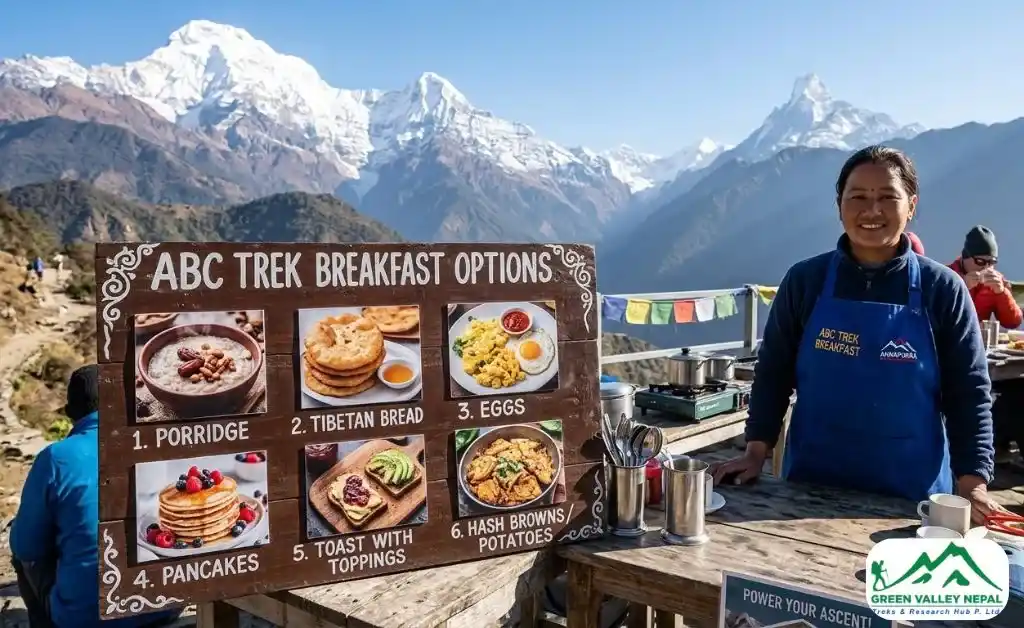
Common Breakfast Items
Porridge (NPR 400-700 / $3-5)
- Oatmeal or muesli with milk and honey
- Best for sustained energy release
- Lighter than bread-based options
Tibetan Bread (NPR 150-300 / $1-2)
- Thick fried bread, served with jam, honey, or peanut butter
- Very filling, high calories
- Popular choice at lower elevations
Eggs (NPR 200-400 / $1.50-3)
- Boiled, fried, scrambled, or omelet
- Good protein source
- Freshness decreases above 3,000m
Pancakes (NPR 400-600 / $3-4.50)
- Plain, banana, apple, or chocolate
- Satisfying but heavy
- Takes longer to prepare
Toast with Toppings (NPR 250-400 / $2-3)
- Jam, honey, peanut butter, or cheese
- Quick to prepare
- Light option
Hash Browns/Potatoes (NPR 300-500 / $2-4)
- Available at some teahouses
- Filling carbohydrate source
Breakfast usually includes one hot drink (tea or instant coffee). Additional drinks cost extra.
Smart Breakfast Strategy: Order the night before to reduce morning waiting time. Many trekkers choose porridge + eggs for balanced nutrition, or Tibetan bread + eggs for maximum energy.
Lunch Options on the ABC Trek Trail
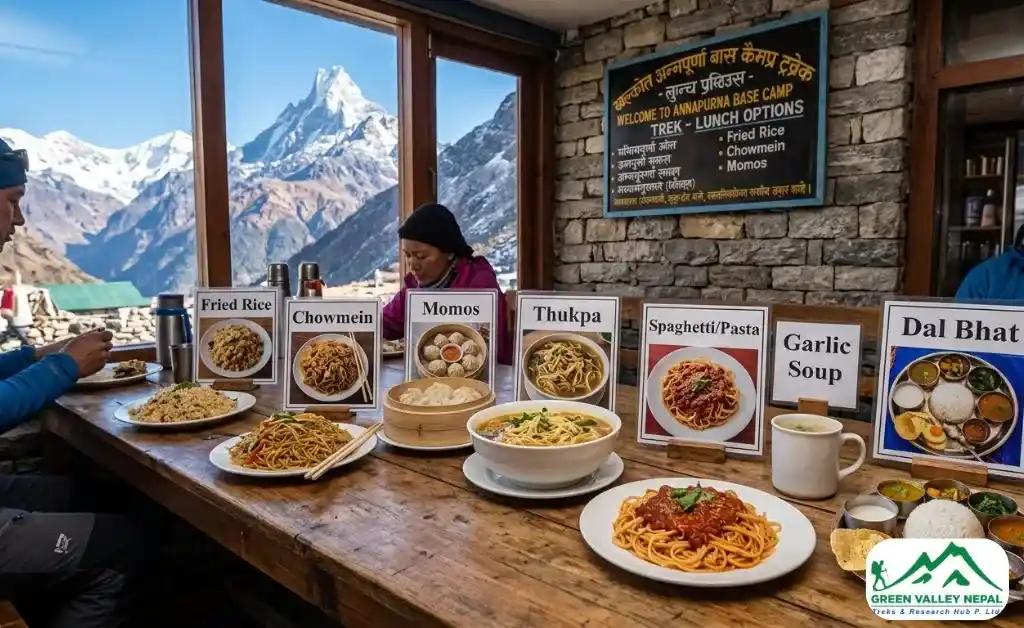
Lunch stops happen at villages along the route, usually around midday after 3-4 hours of morning trekking. Meals take 45-90 minutes, including cooking and eating time.
Popular Lunch Options
Fried Rice (NPR 500-800 / $4-6)
- Vegetable, egg, or chicken versions
- Filling and familiar
- Easier to digest than noodles for some people
Chow Mein (NPR 500-800 / $4-6)
- Stir-fried noodles with vegetables
- Sometimes heavy and oily
- Popular comfort food
Momos (NPR 400-700 / $3-5)
- Steamed or fried dumplings
- Vegetable, potato, or cheese filling (meat at lower elevations)
- Usually 8-10 pieces per order
Thukpa (NPR 500-800 / $4-6)
- Tibetan noodle soup
- Warm, hydrating, and filling
- Excellent choice for cold or rainy days
Spaghetti/Pasta (NPR 600-900 / $4.50-7)
- Tomato sauce or vegetable sauce
- Quality varies by teahouse
- Can be oily at higher elevations
Garlic Soup (NPR 400-600 / $3-4.50)
- Popular at higher altitudes
- Believed to help with acclimatization
- Warming and hydrating
Lunch portions are generous. Sharing between two trekkers is common and acceptable.
Dinner Options on the ABC Trek
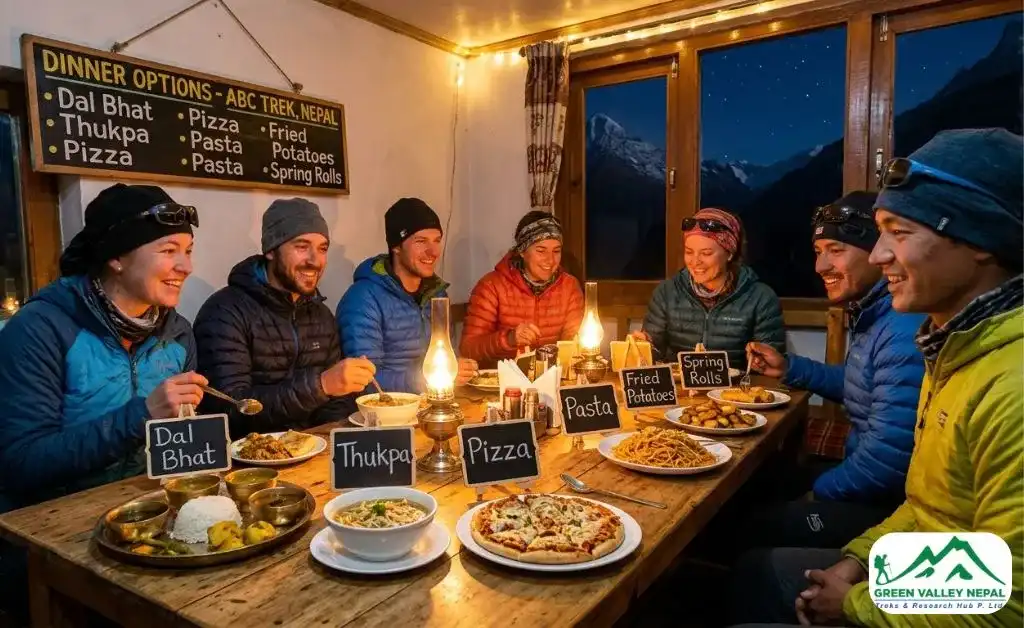
Dinner is the main meal of the day. After trekking ends (usually by 3:00-4:00 PM), trekkers gather in the dining hall around the central stove (Bukhari). This is when trekking groups mix, share experiences, and rest together.
Dinner Menu Options
- Dal Bhat - Most common choice, unlimited refills
- Thukpa - Warms you up after cold trekking days
Pizza (NPR 800-1,400 / $6-10)
- Basic mountain-style pizza
- Thin crust, limited toppings
- Yak cheese at higher elevations
- Quality varies significantly
- Novelty factor makes it popular despite the high price
Pasta dishes (NPR 700-1,100 / $5-8)
- Spaghetti, macaroni, or penne
- Tomato or cream sauce
- Often oily
Fried Potatoes (NPR 400-700 / $3-5)
- Simple but satisfying
- Good carbohydrate source
Spring Rolls (NPR 500-800 / $4-6)
- Vegetable filling
- Fried snack option
At Machhapuchhre Base Camp (3,700m) and Annapurna Base Camp (4,130m), menu choices shrink. Dal Bhat, noodles, soup, and basic rice dishes dominate. Complicated Western dishes disappear at high altitude because ingredients are limited and preparation becomes difficult.
Snacks and Desserts on ABC Trek
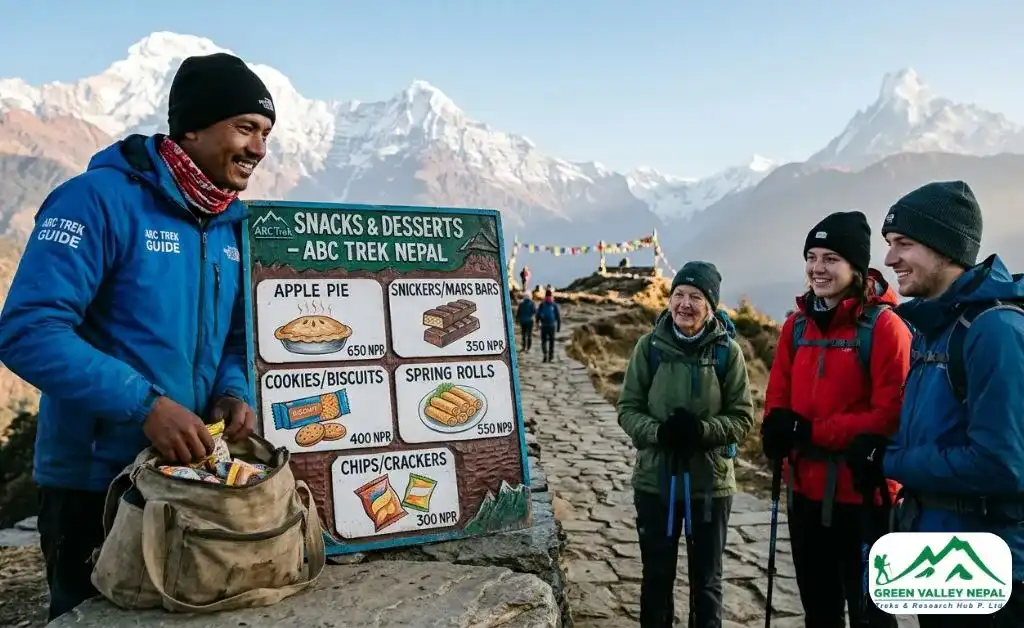
Apple Pie (NPR 400-700 / $3-5)
- ABC trek specialty (The Annapurna region grows apples)
- Served warm, sometimes with custard
- Comfort food favorite
- Available at most stops
Snickers/Mars Bars (NPR 150-400 / $1-3)
- Prices increase dramatically with altitude
- Quick energy boost
- Psychological comfort of familiar food
Cookies/Biscuits (NPR 100-300 / $0.75-2)
- Packaged varieties available for purchase
- Good for trail snacking
Spring Rolls (NPR 500-800 / $4-6)
- Vegetable-filled, fried
- Popular appetizer
Chips/Crackers (NPR 150-350 / $1-2.50)
- Limited variety
- Expensive at high altitude
Pro tip: Buy snacks in Pokhara before starting the trek. A Snickers bar costs NPR 60 in Pokhara but NPR 300-400 at ABC. Stock up on energy bars, chocolate, and nuts for significant savings.
Hot Drinks Options on ABC Trek
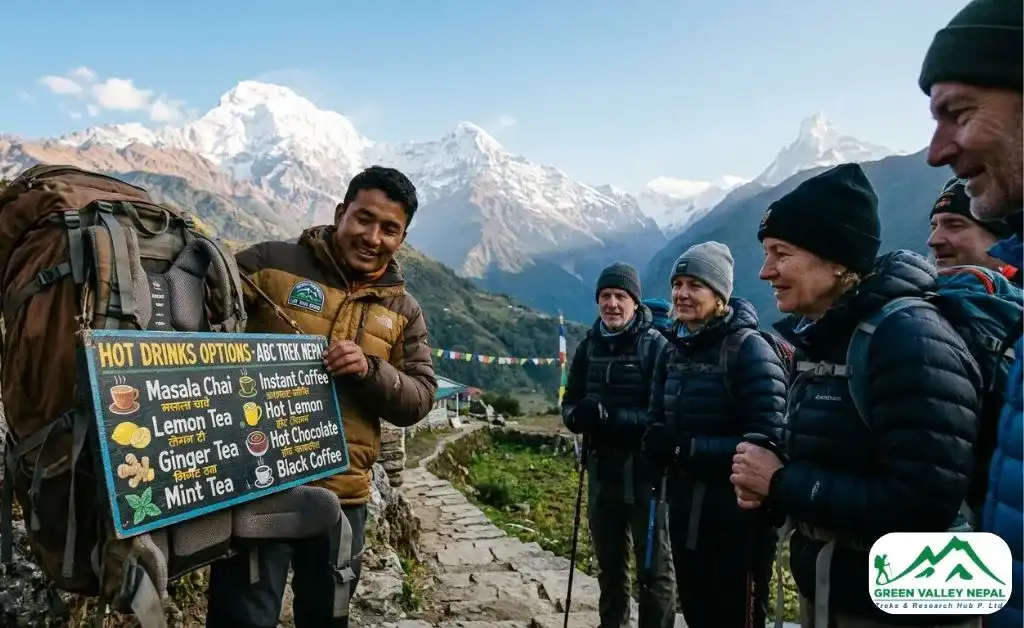
Masala Chai (NPR 100-250 / $0.75-2)
- Spiced milk tea with cardamom, ginger, and cinnamon
- The most popular drink on the trail
- Cultural experience
- Warming and comforting
Lemon Tea (NPR 100-200 / $0.75-1.50)
- Black tea with lemon and honey
- Lighter alternative to milk tea
- Good for hydration
Ginger Tea (NPR 150-250 / $1-2)
- Helps with nausea and digestion
- Recommended at higher altitudes
- Strong warming effect
Mint Tea (NPR 150-250 / $1-2)
- Herbal option
- Soothes stomach
Instant Coffee (NPR 150-300 / $1-2.25)
- Nescafé with hot water and milk
- Don't expect real coffee quality
- Provides caffeine boost
Hot Lemon (NPR 100-200 / $0.75-1.50)
- Hot water with fresh lemon and honey
- Vitamin C boost
- Cheaper than tea
Hot Chocolate (NPR 200-350 / $1.50-2.50)
- Instant powder mix
- Sweet treat for cold evenings
Black Coffee (NPR 100-200 / $0.75-1.50)
- Instant coffee without milk
- Stronger than regular coffee
Tea is the most economical choice. Ordering multiple teas or coffees daily adds up, budget NPR 400-800 ($3-6) per day for hot drinks.
Soft Drinks and Alcohol on ABC Trek
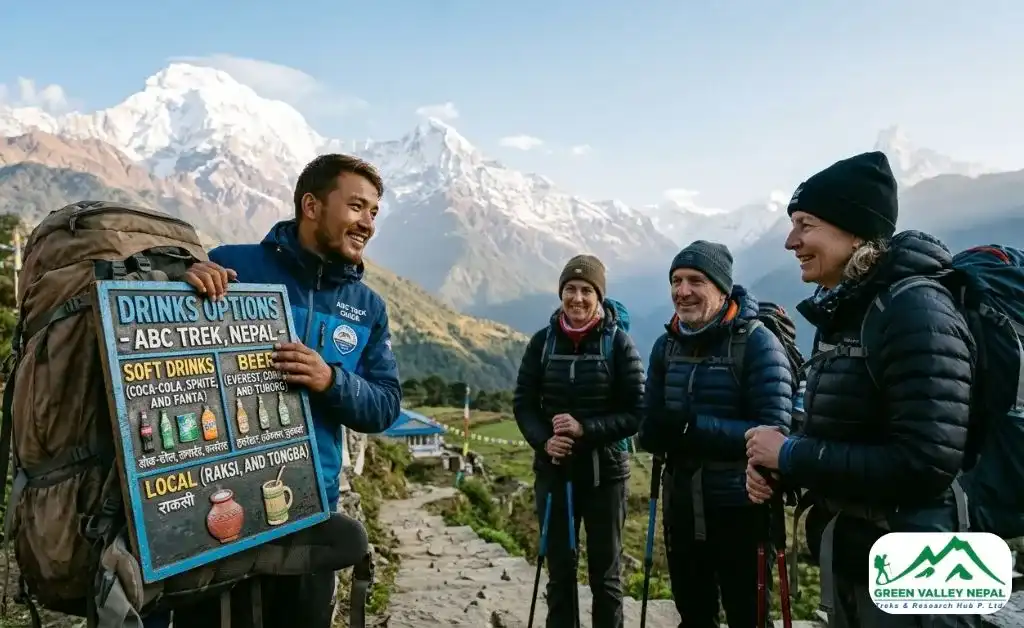
Soft Drinks
- Coca-Cola, Sprite, and Fanta are available at most teahouses
- Lower elevation: NPR 150-250 ($1-2)
- Higher elevation: NPR 300-500 ($2-4)
- ABC: NPR 400-600 ($3-4.50)
Every bottle was porter-carried uphill, explaining the altitude premium.
Beer
- Everest, Gorkha, and Tuborg brands
- Available below 3,500m
- Lower elevation: NPR 400-600 ($3-4.50)
- Higher elevation: NPR 600-900 ($4.50-7)
Important alcohol warning: Alcohol dehydrates and worsens altitude sickness. Most guides recommend avoiding alcohol above 3,000m. If you drink, do so sparingly at lower elevations and never when experiencing altitude symptoms.
Local Spirits
- Raksi (rice or millet alcohol)
- Tongba (fermented millet drink)
- Available at the lower villages
- Cultural experience, but strong
Water Safety and Hydration Strategy on ABC Trek
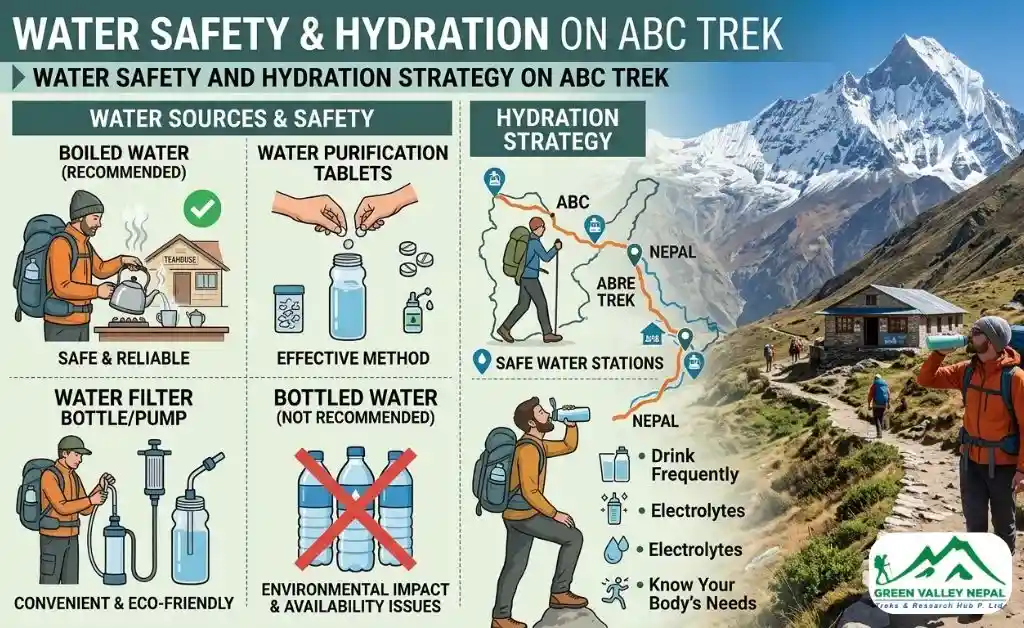
Proper hydration is critical. Aim for 3-4 liters of fluid daily, increasing at higher elevations. Never drink untreated water directly from taps or streams. Even clear mountain streams can contain harmful bacteria from upstream villages or animal grazing.
Boiled Water (Recommended)
- Available at all teahouses
- Cost: NPR 100-250 ($0.75-2) per liter
- Safe immediately after cooling
- Eco-friendly (no plastic waste)
- Bring a reusable 1-liter bottle
Water Purification Tablets
- Chlorine dioxide or iodine-based
- Cost: NPR 800-1,200 ($6-9) for entire trek
- Wait 30 minutes after treatment
- Slight chemical taste
- Lightweight and easy
Water Filter Bottle/Pump
- One-time purchase: NPR 3,000-6,000 ($22-45)
- Instant purification
- No chemical taste
- Requires carrying the device
Bottled Water (Not Recommended)
- Expensive: NPR 100-500 ($0.75-4) per bottle
- Creates plastic waste
- Heavier to carry
- Environmental burden on mountains
Use boiled water from teahouses. This supports local businesses, costs less than bottled water, and eliminates plastic waste. Over a 10-day trek, boiled water costs NPR 1,500-2,500 ($11-19) versus NPR 5,000-8,000 ($37-60) for bottled water. Bring water purification as backup for emergencies or long trekking days when teahouses are far apart.
Vegetarian and Vegan Options (Recommended)
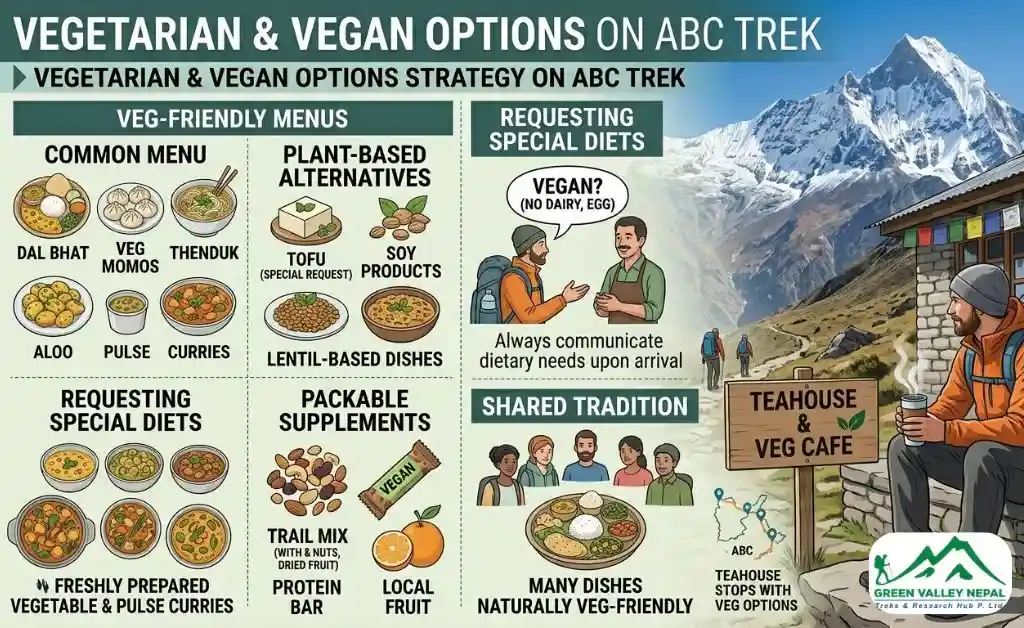
Nepal's cuisine is naturally vegetarian-friendly. Most menu items are vegetable-based or easily modified.
Vegetarian Options Everywhere
- Dal Bhat (always vegetarian)
- Vegetable fried rice
- Vegetable momos
- Pasta with tomato sauce
- Vegetable chow mein
- Potato dishes
- Pancakes
- Porridge
- Eggs (if you eat them)
Simply inform the teahouse staff you're a vegetarian. They understand and accommodate easily.
Vegan options: Ask teahouses to prepare without:
- Butter/ghee
- Milk/dairy
- Eggs
- Cheese
Dal Bhat can be made vegan (request no ghee in rice). Vegetable curry, fried rice, noodles, and soups work well for vegans with modifications.
Important: Communicate dietary restrictions clearly. "No meat" doesn't always mean no eggs or dairy in the Nepali context. Specify exactly what you avoid. Bring supplemental protein sources (nuts, protein powder) if you are concerned about protein intake on a vegan diet.
Foods That Help You on High Altitude
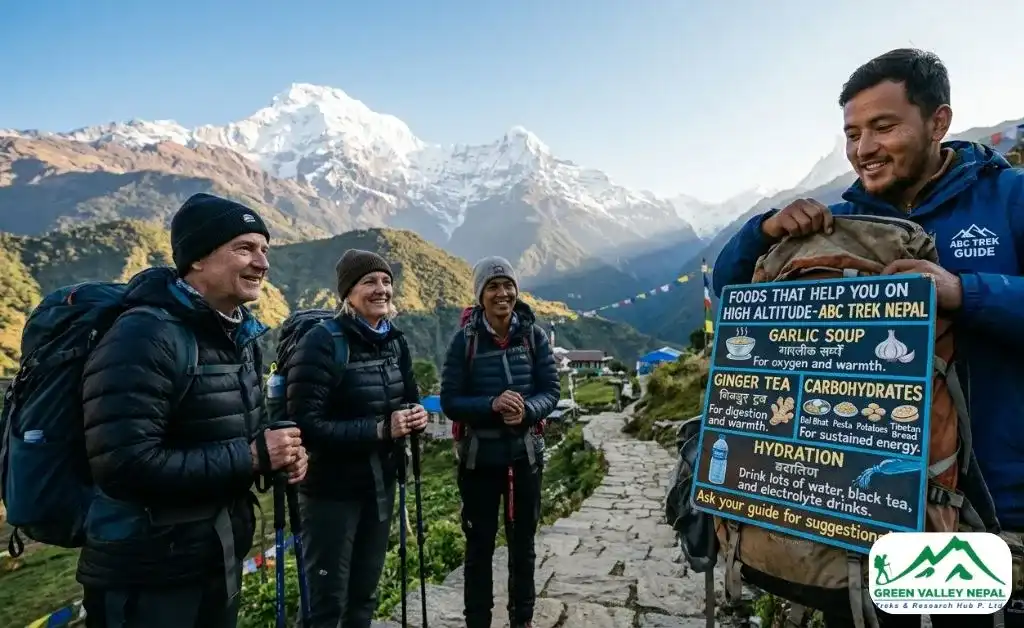
Understanding how altitude affects your body is just as important as knowing what to eat. Check the ABC Trek altitude and route map to see exactly where the elevation challenges begin.
Certain foods and drinks are believed to help with altitude acclimatization. While not medical treatments, many trekkers find them helpful:
Garlic Soup
- Traditional Nepali remedy
- Believed to thin blood and improve circulation
- Warming and nutritious
- Available at most teahouses
- Cost: NPR 400-650 ($3-5)
Ginger Tea
- Helps with nausea and digestion
- Warming effect
- Anti-inflammatory properties
- Common at all teahouses
Carbohydrates
- The body needs extra carbs at altitude
- Dal Bhat, rice, noodles, and bread all help
- Easier to digest than protein or fat
Hydration
- More important than any specific food
- 3-4 liters daily minimum
- Dehydration worsens altitude symptoms
What to avoid at altitude:
- Heavy, oily food (hard to digest)
- Large meat portions (require more oxygen to digest)
- Alcohol (dehydrates and worsens altitude sickness)
- Excessive dairy (can cause digestive issues)
- Spicy food (if you have a sensitive stomach)
Food Safety Tips during ABC Trek
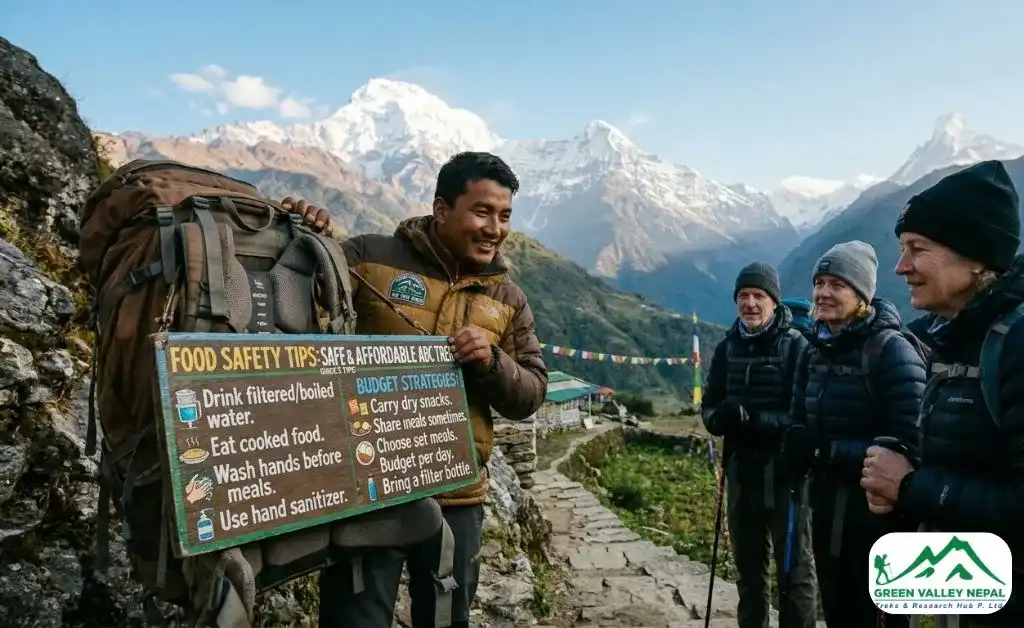
Most trekkers complete ABC without stomach issues, but precautions help:
- Eat hot, freshly cooked food - Avoid anything that's been sitting out
- Skip raw vegetables above 3,000m - Water quality for washing is uncertain
- Avoid meat at high altitude - No reliable refrigeration above 3,000m
- Wash hands before meals - Soap and water or hand sanitizer
- Peel fruits yourself - If eating fruit, peel it yourself
- Avoid ice - Made from uncertain water sources
- Stick to bottled drinks - For soft drinks and beer
- Watch other trekkers - If many people avoid a particular teahouse's food, there's usually a reason
Carry Basic Medications
- Anti-diarrheal (Imodium)
- Rehydration salts (ORS)
- Antibiotics (with doctor's prescription)
- Antacids
Most stomach issues resolve within 24-48 hours with rest and hydration. Serious problems require descending to a lower altitude and seeking medical help.
What You Won't Find on ABC Trek?
Set realistic expectations. The ABC trek doesn't offer:
- Fast food chains
- Fresh seafood
- Smoothies or juice bars
- Cappuccino or latte art
- Fancy desserts
- Salad bars
- Ice cream
- Fresh milk (mostly powdered milk)
- Extensive meat options
- Refrigerated items
This is mountain trekking. Food is simple, hearty, and functional.
Practical Eating Tips
- Order early - Meals take 30-60 minutes to prepare, especially during dinner rush
- Eat where you sleep - It's expected and supports the family hosting you
- Don't waste food - Order only what you can finish
- Tip appropriately - 10% is standard if the service is good
- Try local dishes - Dal Bhat and momos are authentic experiences
- Share with trekking partners - Portions are often large enough to split
- Bring your own snacks - Buy energy bars and chocolate in Pokhara
- Stay flexible - If something's unavailable, choose alternatives without complaint
Budget Strategies on ABC Trek Food Costing
- Eat Dal Bhat twice daily: Save $80-120 over 10 days
- Drink tea instead of coffee: Save $20-30 over 10 days
- Use boiled water, not bottled: Save $25-40 over 10 days
- Skip desserts and snacks on the trail: Save $40-60 over 10 days
- Avoid alcohol: Save $30-60 over 10 days
Daily Food Budget Estimates
- Budget trekker: $18-25 (mainly Dal Bhat, tea, boiled water)
- Standard trekker: $25-35 (mix of meals, coffee, occasional treats)
- Comfort trekker: $35-50 (Western food, multiple coffees, desserts, beer)
Note: Total food costs for 10-day trek: $220-450
Final Thoughts
Food on the Annapurna Base Camp trek won't impress food critics, but it serves its purpose perfectly. It fuels your body through demanding climbs, warms you in freezing temperatures, and brings people together in mountain dining halls.
The best meals on the ABC trek aren't the ones that taste the best. They are the ones you earn through effort, share with strangers who become friends, and eat while surrounded by some of the planet's most magnificent mountains.
If you would like detailed information about meal inclusions, special diet arrangements, or food costs during the trek, feel free to get in touch. Contact us anytime and trek with confidence knowing your meals are sorted.
Frequently Asked Questions
- Is the food safe to eat on the Annapurna Base Camp trek?
Yes, food is generally safe when you follow basic precautions. Eat hot, freshly cooked meals, avoid raw vegetables at high altitude, wash hands regularly, and use purified water. Most trekkers complete ABC without stomach problems.
- Can vegetarians find enough food options on the ABC trek?
Absolutely. Nepali cuisine is naturally vegetarian-friendly. Dal Bhat, vegetable curry, momos, fried rice, noodles, pasta, and many other options are available at all teahouses. Simply inform staff you're a vegetarian.
- How much should I budget for food per day on the ABC trek?
Budget $20-35 per day for most trekkers. Budget trekkers eating mainly Dal Bhat spend $18-25 daily. Comfortable trekkers ordering Western food, coffee, and treats spend $30-45 daily.
- What is Dal Bhat, and why do trekkers eat it so much?
Dal Bhat is Nepal's staple meal of rice, lentil soup, vegetable curry, and pickles. Trekkers eat it because it includes unlimited refills, provides sustained energy from complex carbs, costs less than other meals, and is always vegetarian and freshly cooked.
- Is tap water safe to drink on the Annapurna Base Camp trek?
No, never drink untreated tap water. Use boiled water from teahouses (NPR 100-250/liter), water purification tablets, or filter systems. Untreated water can contain harmful bacteria even if it looks clear.
- What foods help with altitude sickness on the ABC trek?
Garlic soup and ginger tea are traditional remedies believed to help with acclimatization. High-carbohydrate foods (rice, noodles, bread) provide energy while being easier to digest at altitude. Proper hydration (3-4 liters daily) is most important.